
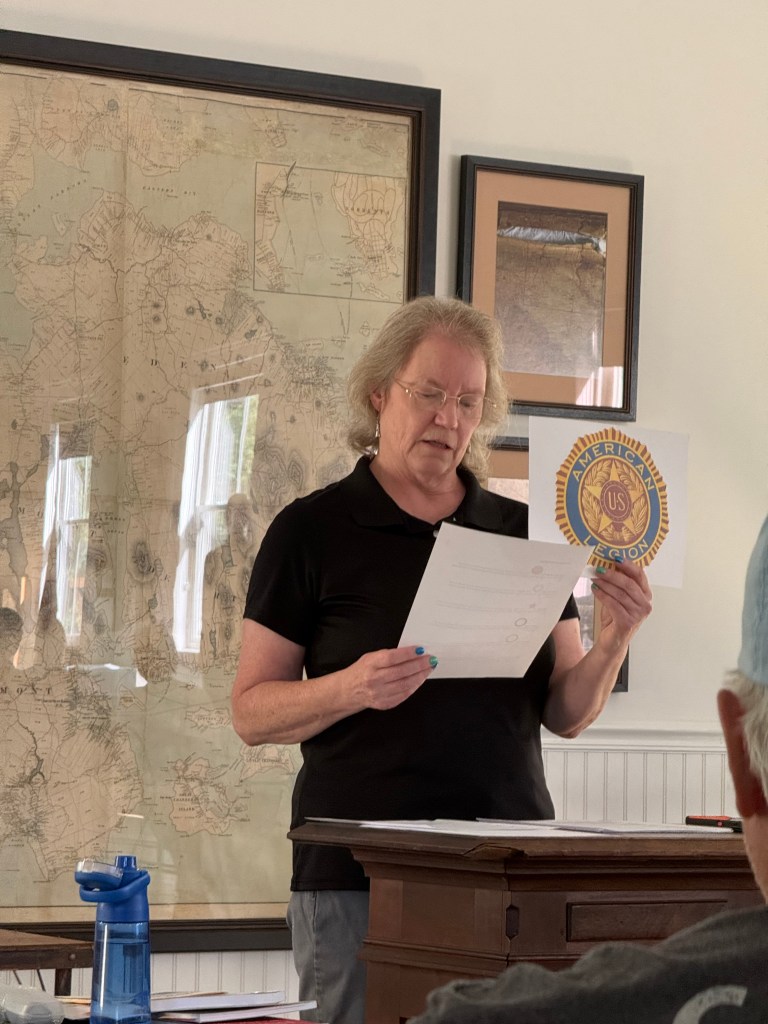
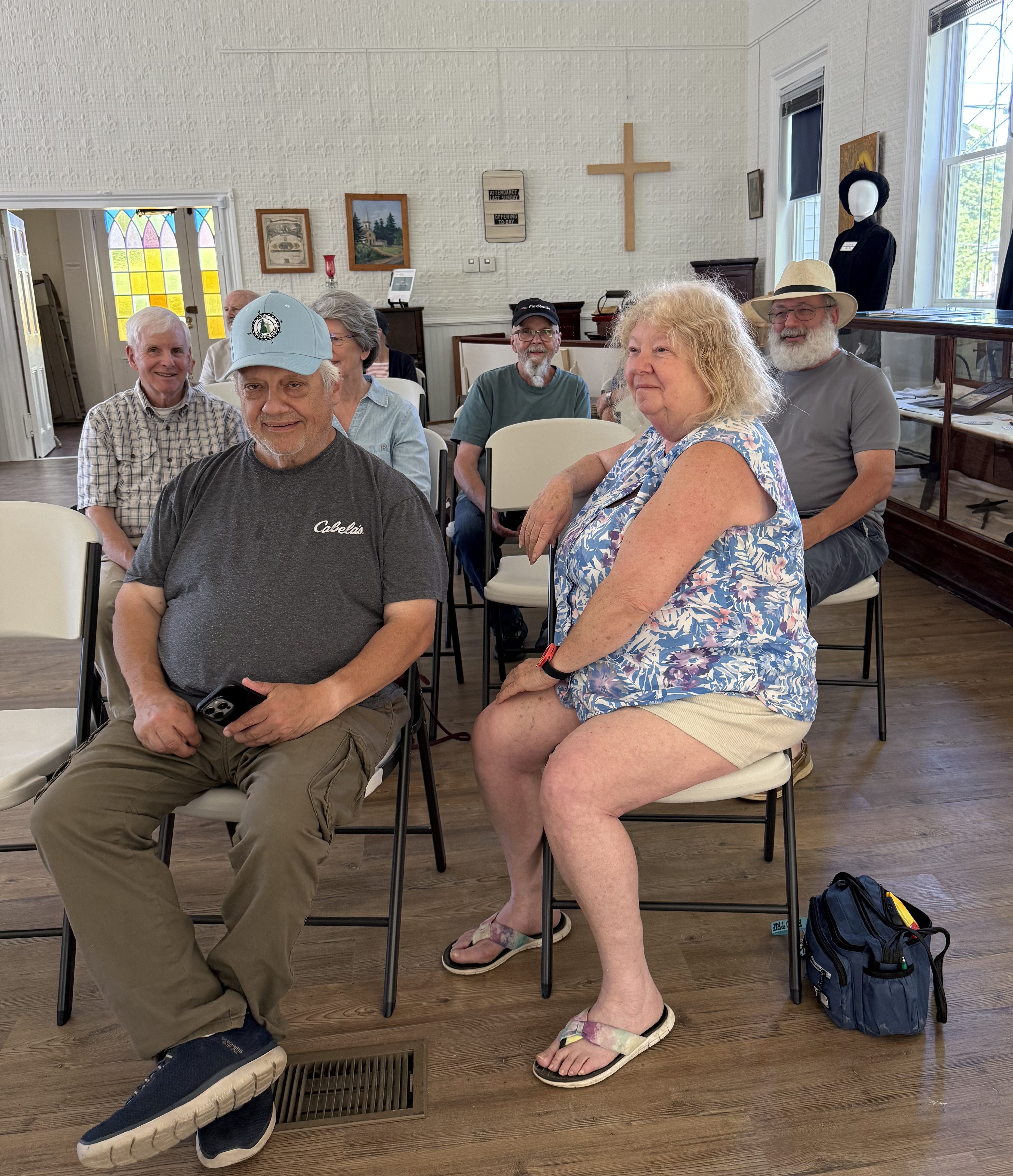
On Saturday afternoon, July 25, as part of the Southwest Harbor Historical Society’s annual summer programming, Barbara KC1SSY gave an inspiring presentation on WW1 heroes George Edwin Kirk, Eugene M. Norwood, Lester Lurvey, and Alessandro Fabbri. The first three men are memorialized by sharing their names with the American Legion Posts across Mount Desert Island, specifically the George Edwin Kirk American Legion Post 25 in Bar Harbor (Link), the Eugene M. Norwood American Legion Post 69 in Southwest Harbor, and the Lurvey-Wright American Legion Post 103 in Northeast Harbor.
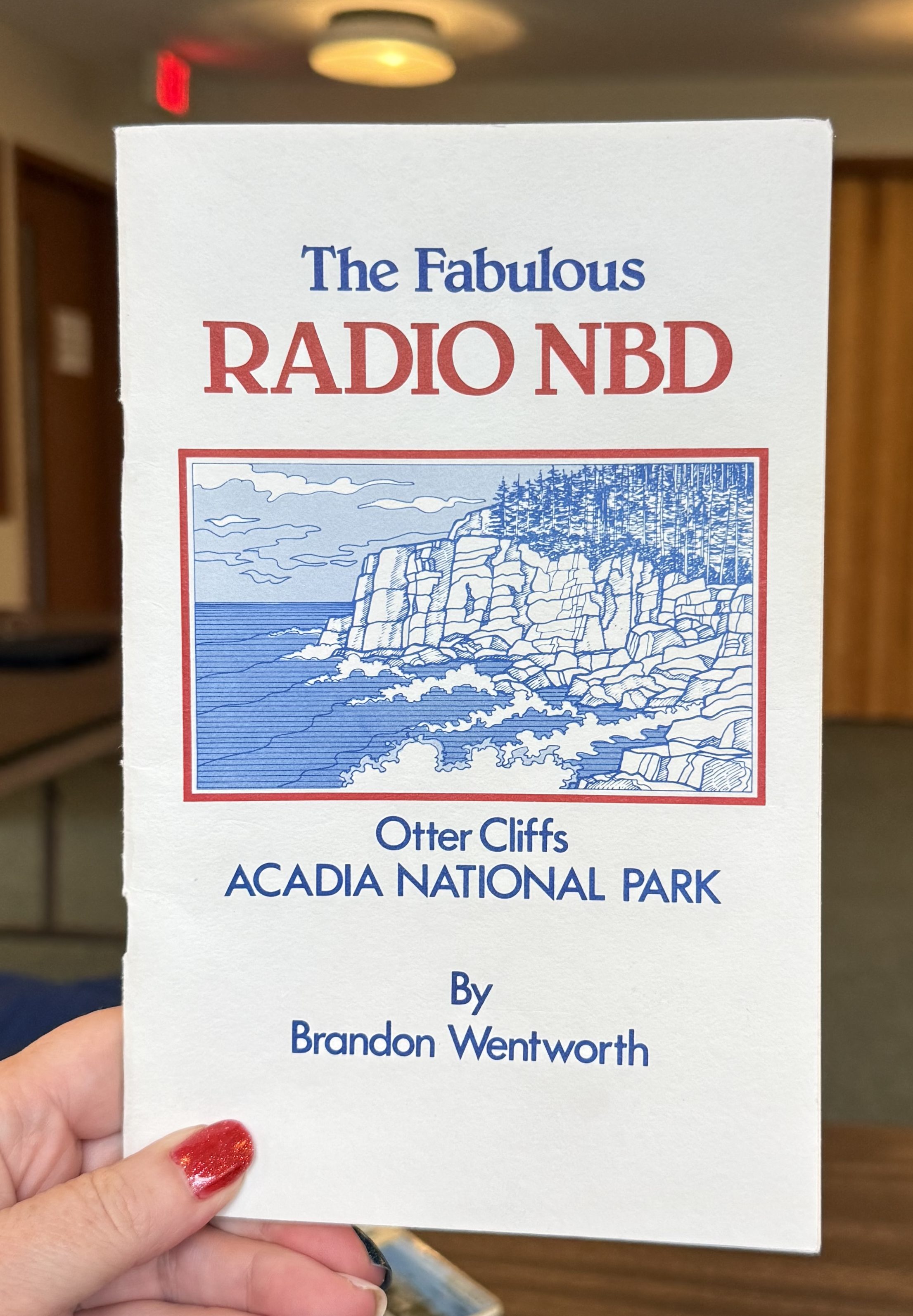
The EAWA is connected to this presentation in several ways beyond the close geographic proximity. Alessandro Fabbri built one of the first wireless radio stations with impressive antennas, allowing his messages to reach Europe. When the U.S. government began issuing radio licenses in 1912, Fabbri was the 10th person to receive a callsign: 1AJ. Fabbri’s station was commissioned on August 28, 1917 by the U.S. Navy as the Otter Cliffs Radio Station (Link). Over the years the callsign of the station changed to AA2, K2B, and finally NBD. The EAWA’s namesake, Charlie Ellsworth, was assigned to the station as the Chief Radioman (Link). The station expanded to include a remote transmitter station at Seawall. In 1933 the station was moved to Schoodic Peninsula to make way for Acadia National Park.
During WW1 the Otter Cliffs station was the Navy’s best transatlantic radio receiver because of its remote location, unobstructed ocean path from Europe, and the outstanding, cutting edge receiver technology. Today visitors to Acadia National Park may be familiar wth the Fabbri Picnic Area, and perhaps noticed the plaque placed between the picnic area and the cove. Few visitors may know that the station located there received many important transmissions, including a message on October 6, 1918, in which Germany requested to meet with the President of the United States to discuss peace. This was the first message that prompted talks that eventually lead to the Armistice of November 11, 1918.
Barbara’s talk was thought-provoking and powerful. While the focus was, as it should be, on these heroes, the radio operators in the room also reflected on the important role an amateur radio operator, then a summer resident in Bar Harbor, played in shaping history. In many ways Fabbri set the stage for the role of emergency communications in modern radio operations. Perhaps this rich history of amateur radio should be shared more often.
Written by Marion, W1GRL

