Weekend Sessions: Sunday, Nov 8, noon to 2pm
Next Monthly Meeting: Thursday, Nov 12, 7pm
Nets: Every Tuesday & Wednesday at 7:00pm
Clandestine Coffee: Every Wednesday at 9:30am
All are Welcome to Attend, Licensed or Not

Ellsworth Amateur Wireless Association
Weekend Sessions: Sunday, Nov 8, noon to 2pm
Next Monthly Meeting: Thursday, Nov 12, 7pm
Nets: Every Tuesday & Wednesday at 7:00pm
Clandestine Coffee: Every Wednesday at 9:30am
All are Welcome to Attend, Licensed or Not
The 2026 MDI Marathon and Half-Marathon went off without a hitch on Sunday, October 18. As a destination race, known for its beautiful yet very challenging course, over 2,000 runners from around the world made their way around Mt. Desert Island. A quick search of the MDI Marathon website and local news will give you all the stories of triumph, persistence, and celebrations. The runners are truly inspiring! That said, this is a story about the Communications Team who worked behind the scenes with other volunteer groups and various local and state agencies to create the best experience for the runners.
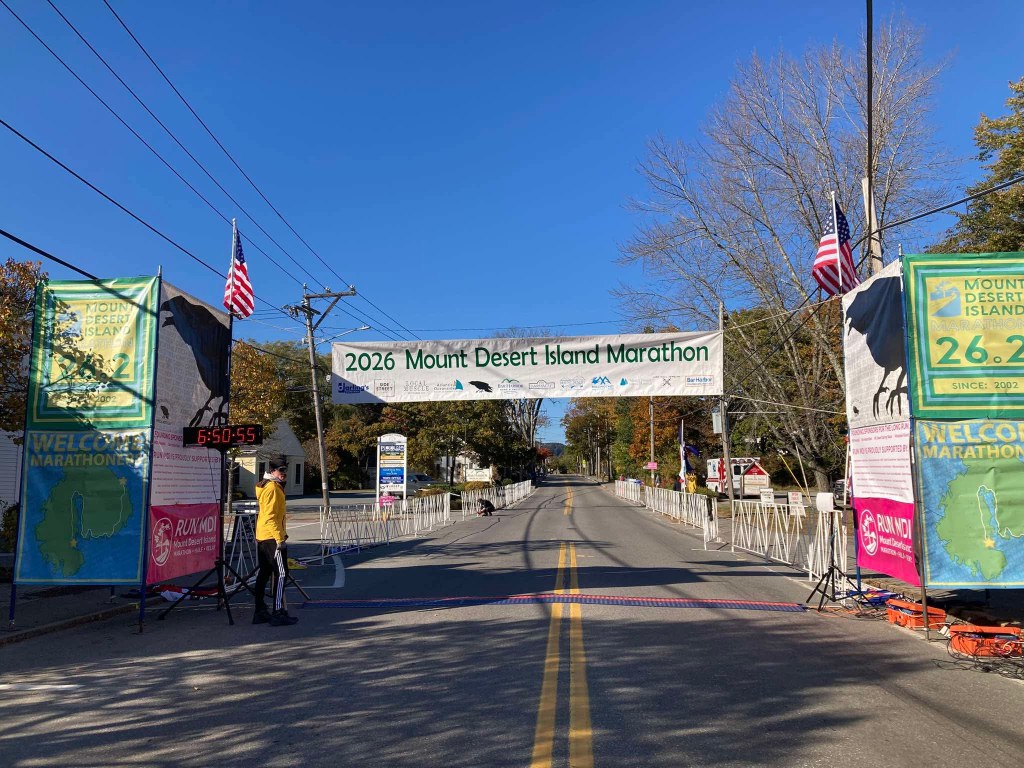
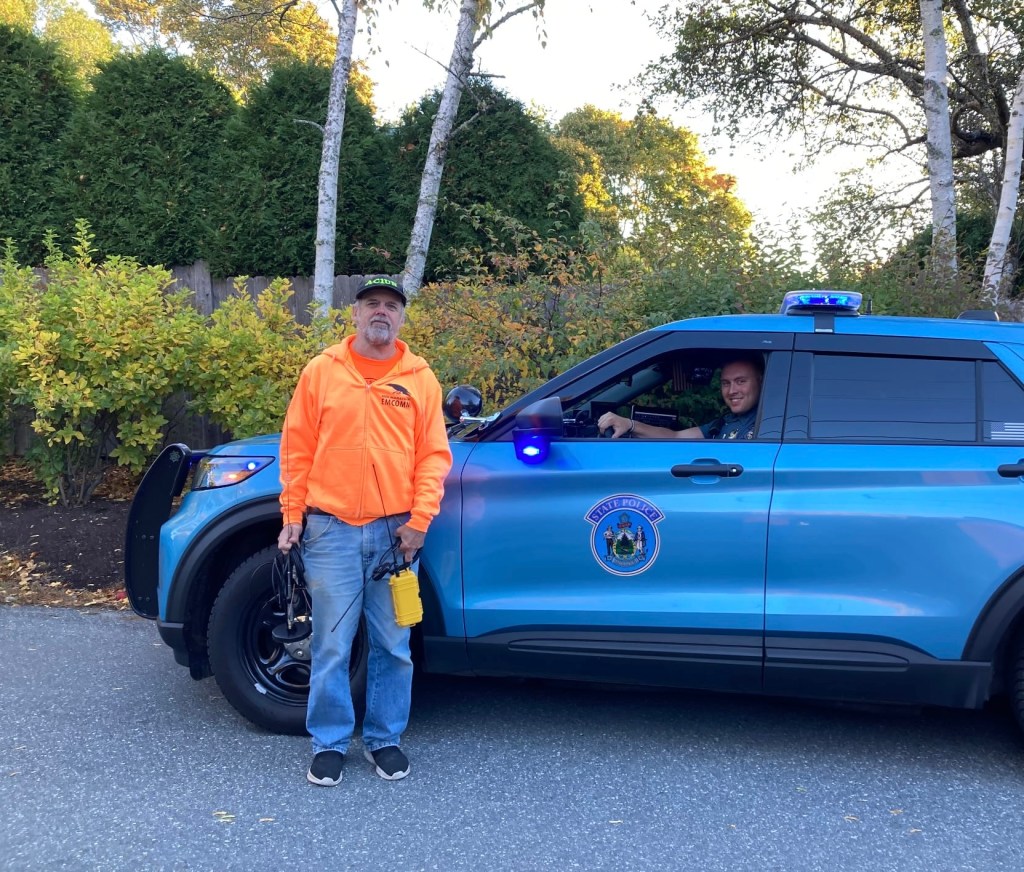
Led by Barbara KC1SSY and Joan W1DLC, the team included members of the Ellsworth Amateur Wireless Association, Hancock County ARES, Hancock County EMA, Waldo County Amateur Wireless Association, Waldo County ARES, Waldo County EMA, Pine State Amateur Wireless Club, Penobscot County ARES, and Penobscot County EMA.
Members of the Comms Team arrived on their assigned sites as the sun was rising and temperatures were below freezing. Many needed to set-up power sources (batteries, generators, solar panels), connect their radios, multiple antennas, and test their systems. Before the race began, there were check-ins to the Net Control and final tweaks. For most of the radio operators, this is an 8-10 hour event.
The primary task of each station was to radio in the bib numbers of the first three male and female runners in both the full and half marathons, and runners who injured or decided to leave the race. Stations also reported the last few runners as the race time drew to a close. In the down times, operators were among the many spectators cheering and encouraging the racers. Responsible for their own needs, operators also took advantage of down times for snacks.
There were 10 assigned stations along the course, with other members in cars checking on runners and Comms Teams throughout the day. Olin KC1IRK rode in the lead car for the marathon, and once the winners passed the finish line, he rode in the vehicle checking on the last runners.
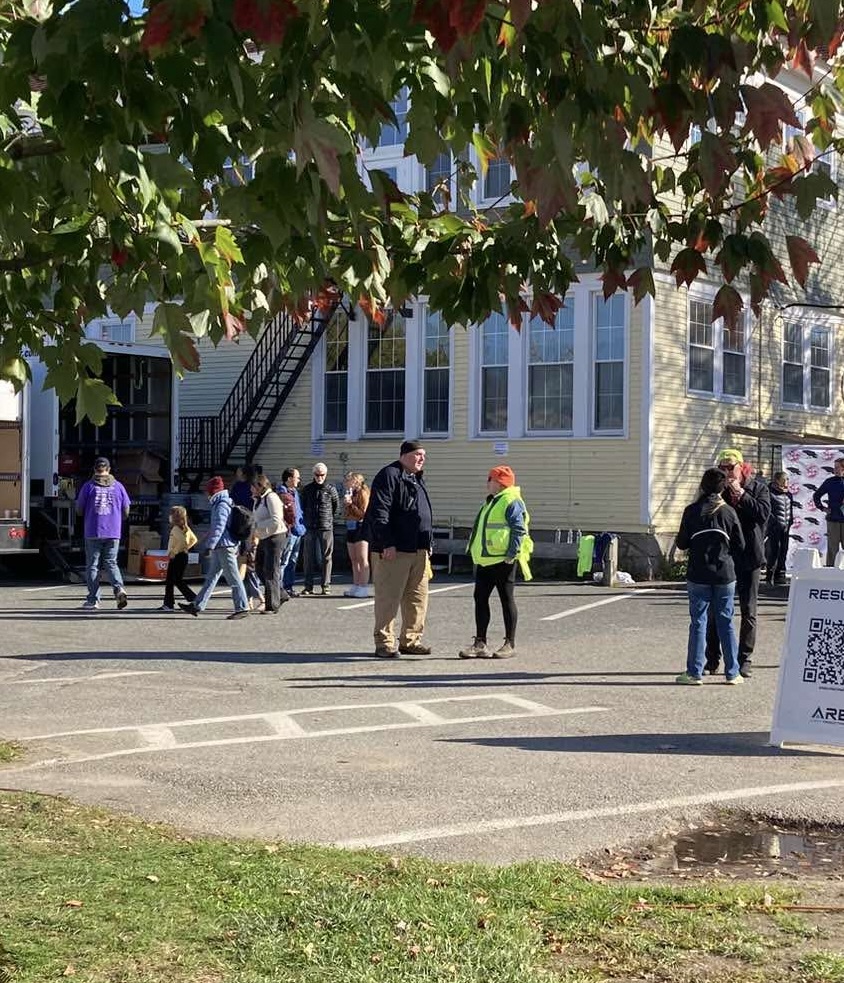
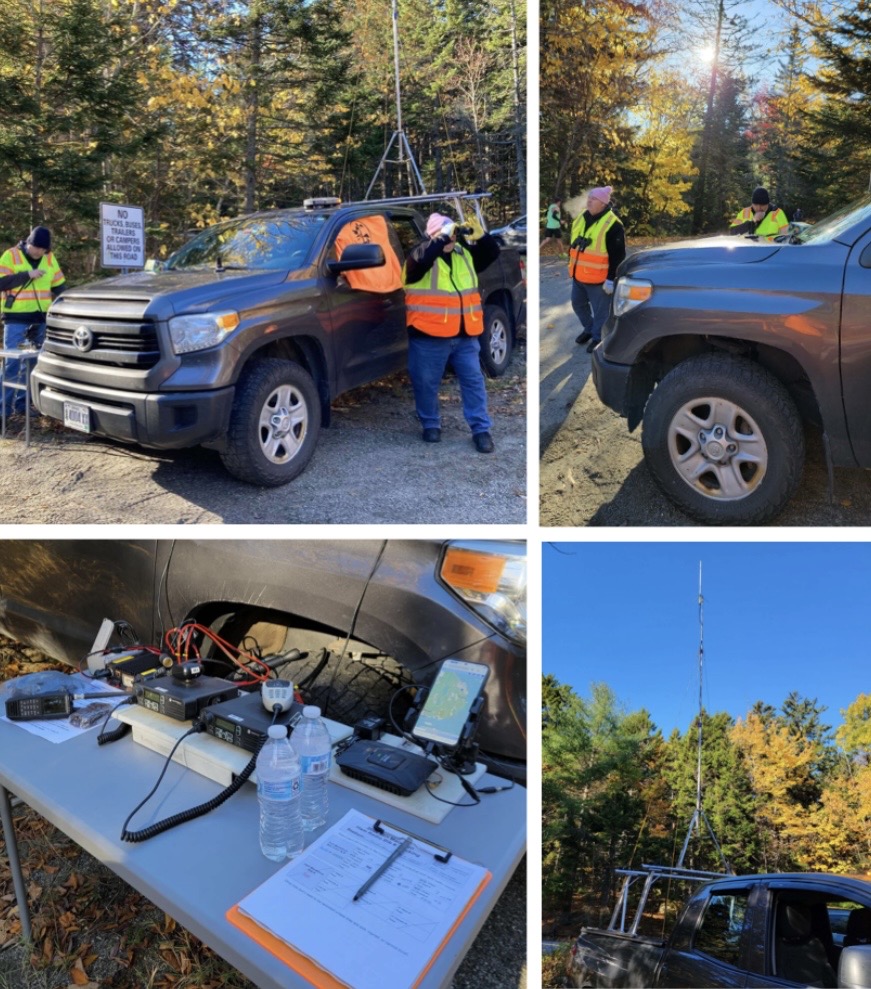
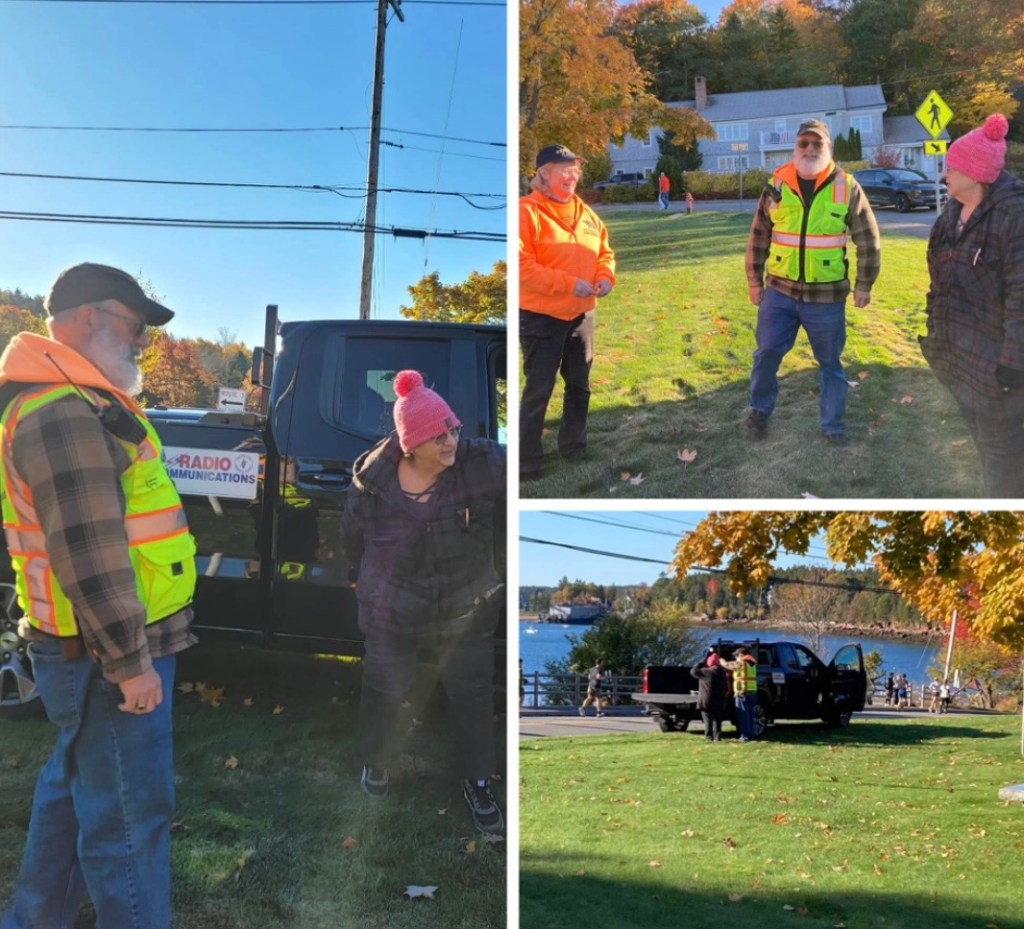
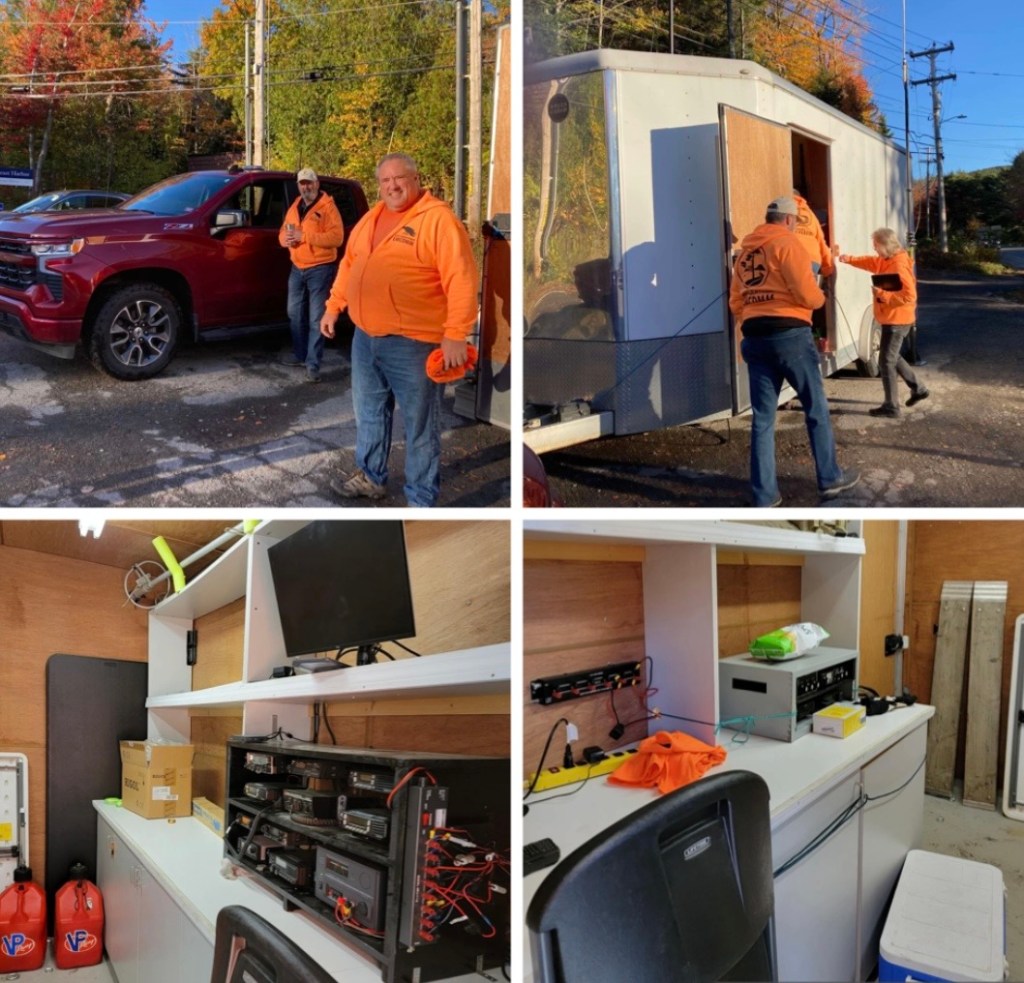
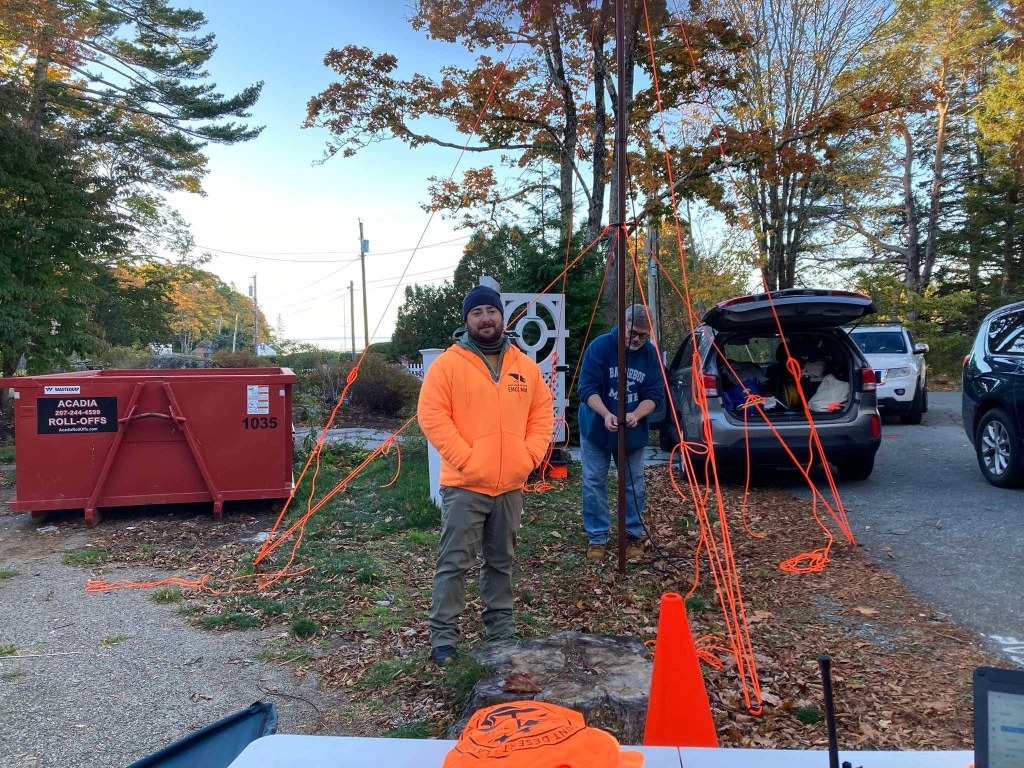
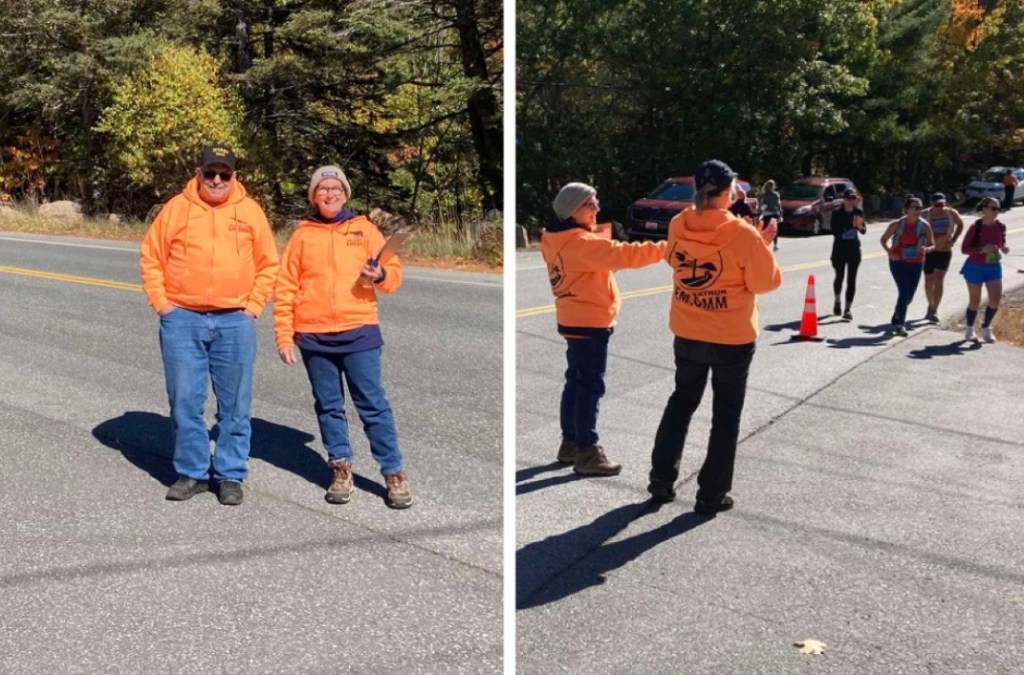
This was the first year for yours truly, Marion W1GRL, to work at a station along the route. The precision of the Net Control system, with operators following a standard protocol, was impressive. Honestly, I expected to witness the professionalism of the operators. There were two things I didn’t expect. I found it tricky to accurately read bib numbers as runners are galloping by, particularly if the top runners were bunched together. The second unexpected item was the sincere gratitude of the runners! So many runners said, “Thank you,” and “Thanks for being here.” They appreciated seeing someone ‘official’ confirming they were on the course track. It was fun to be on the course, with all the friends and family members cheering for their runners. Seeing the struggle and gratitude of the runners made it a personally inspiring experience.
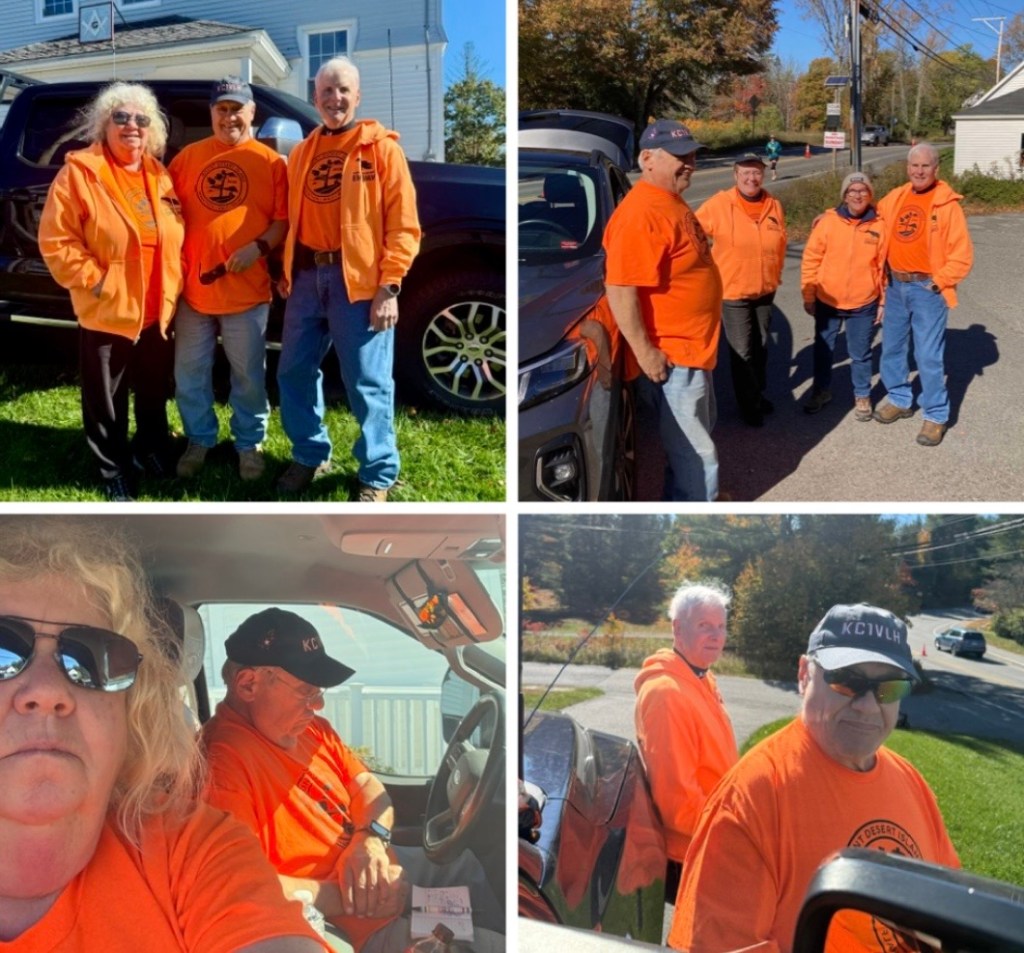
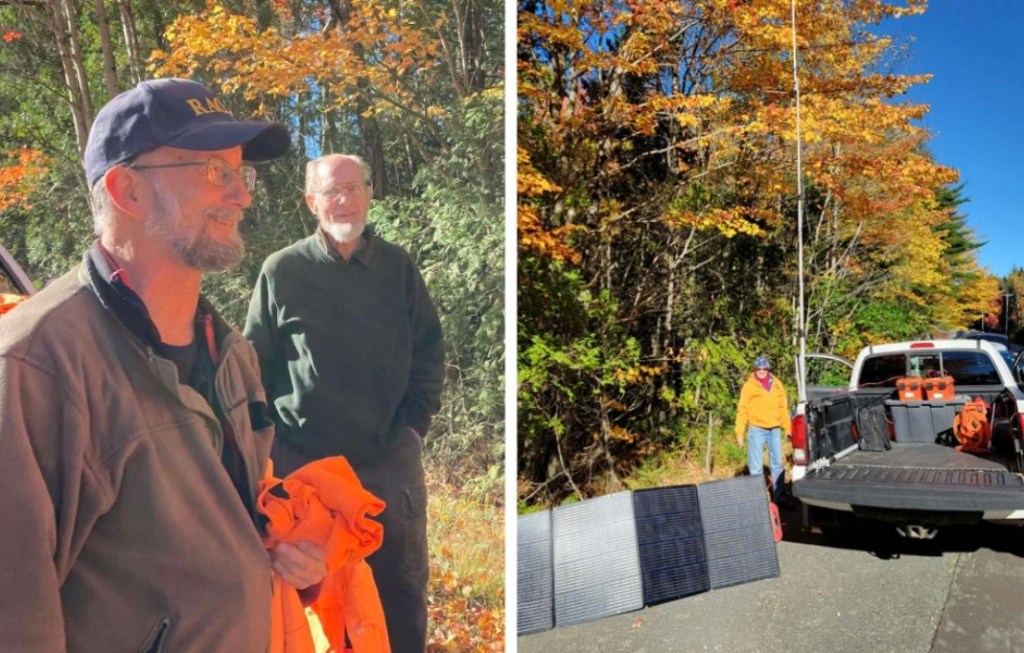
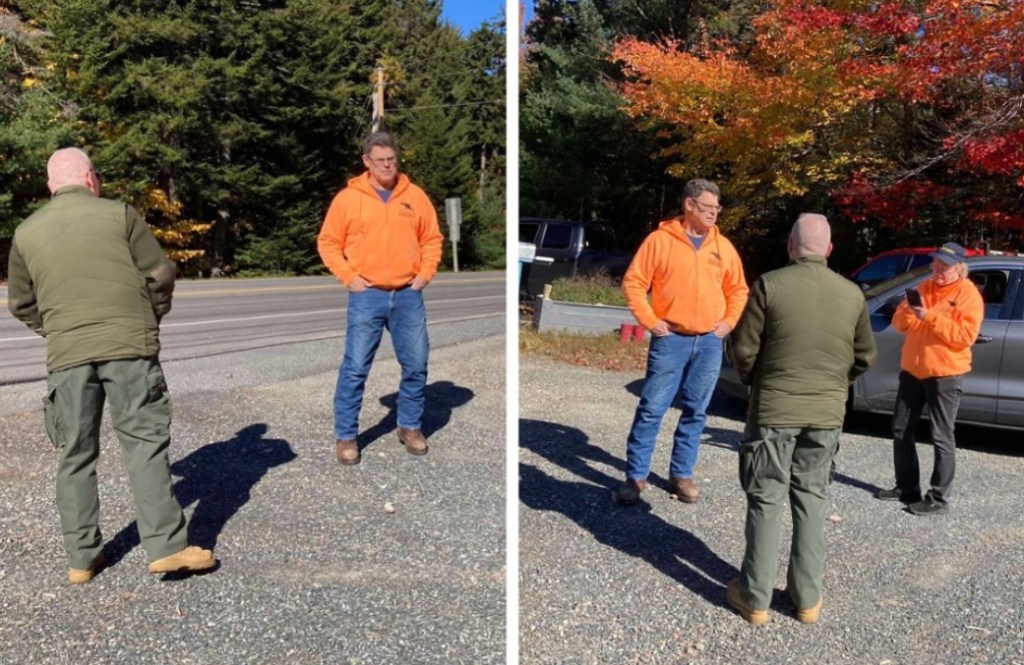
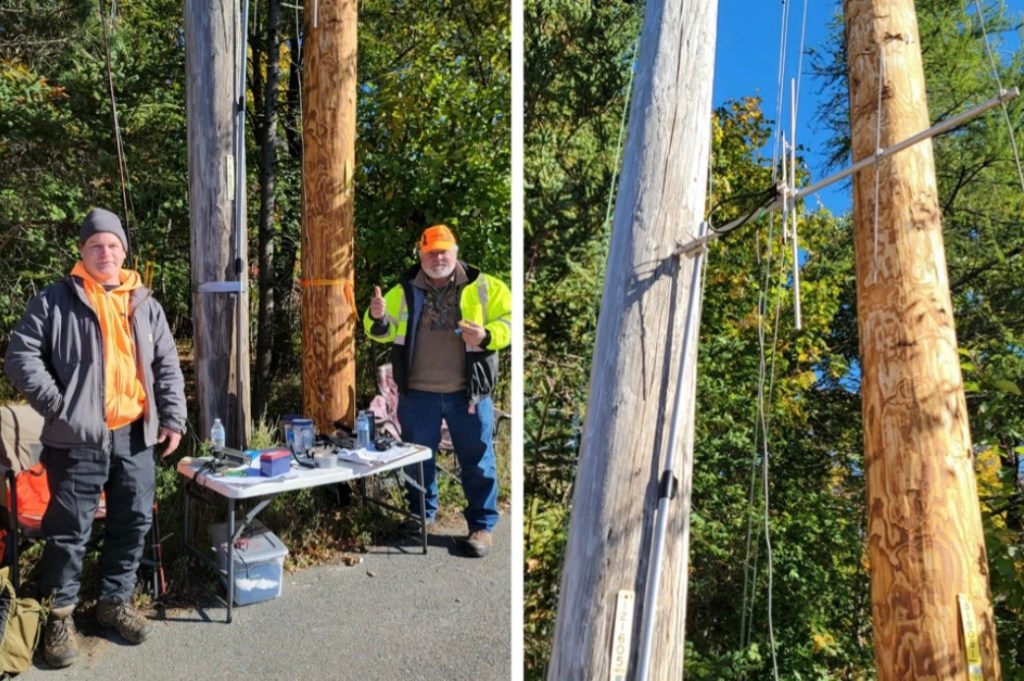
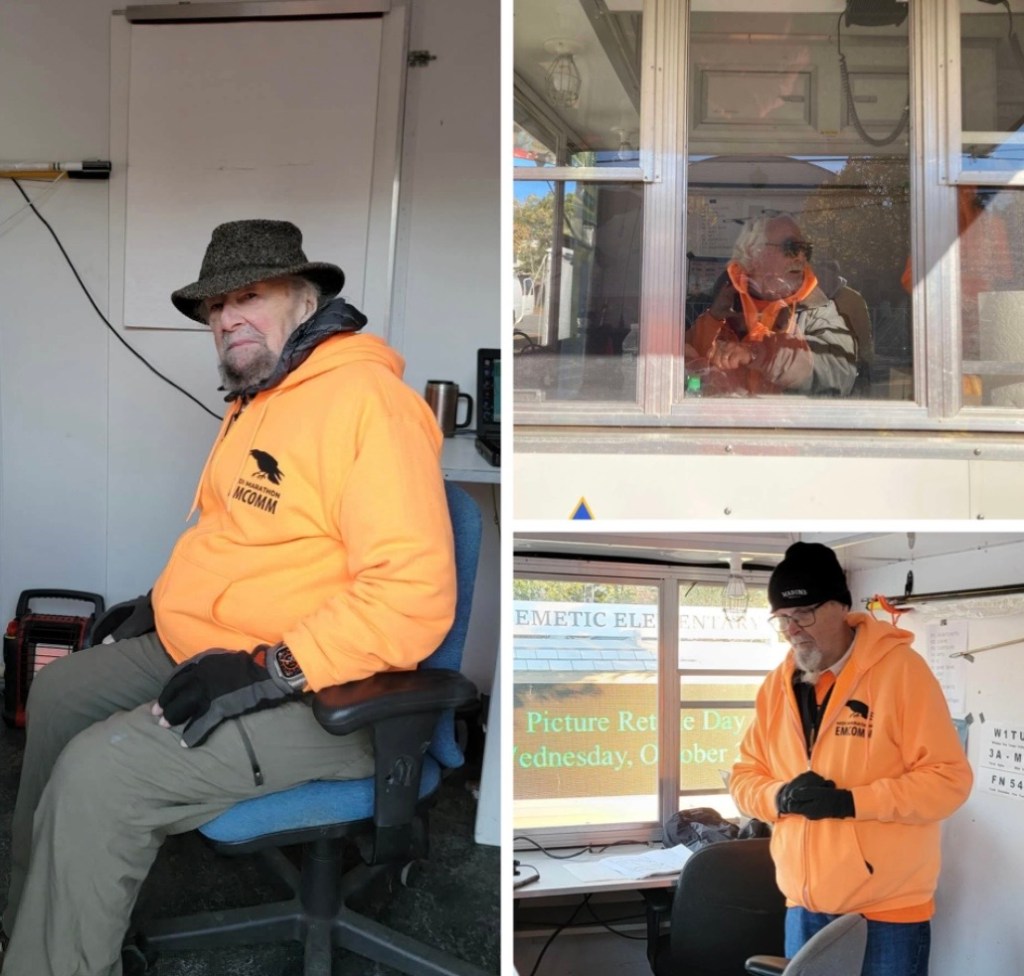
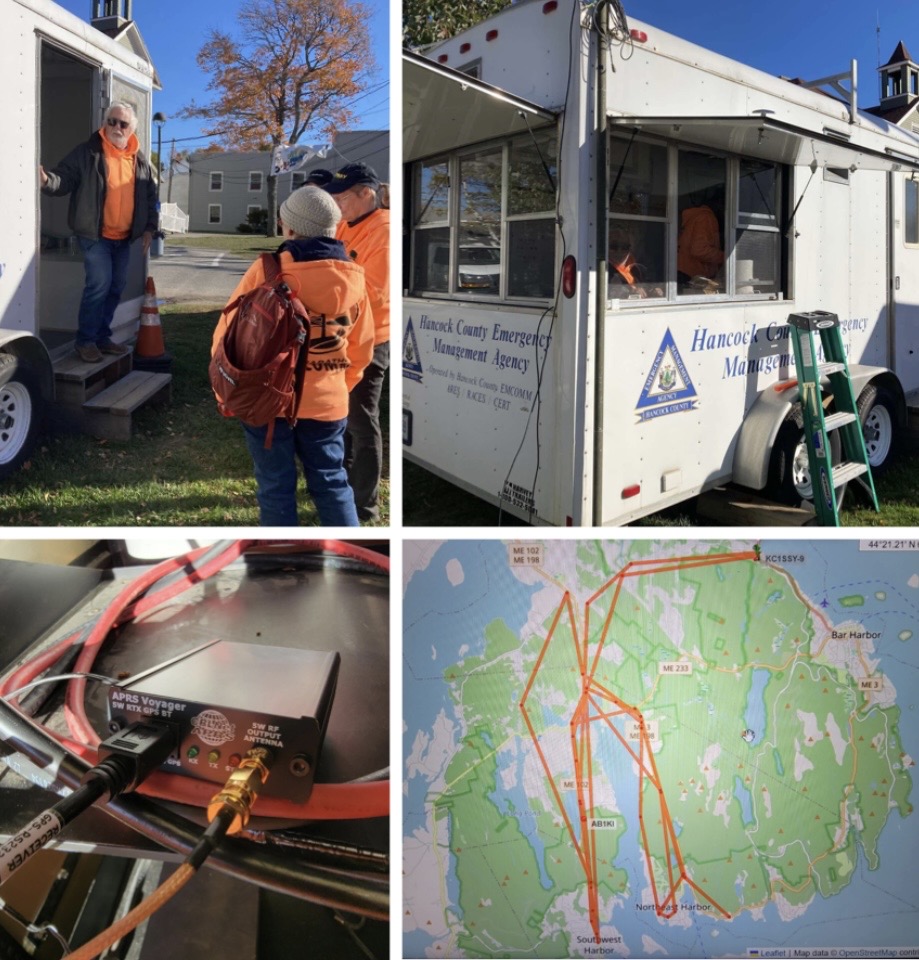
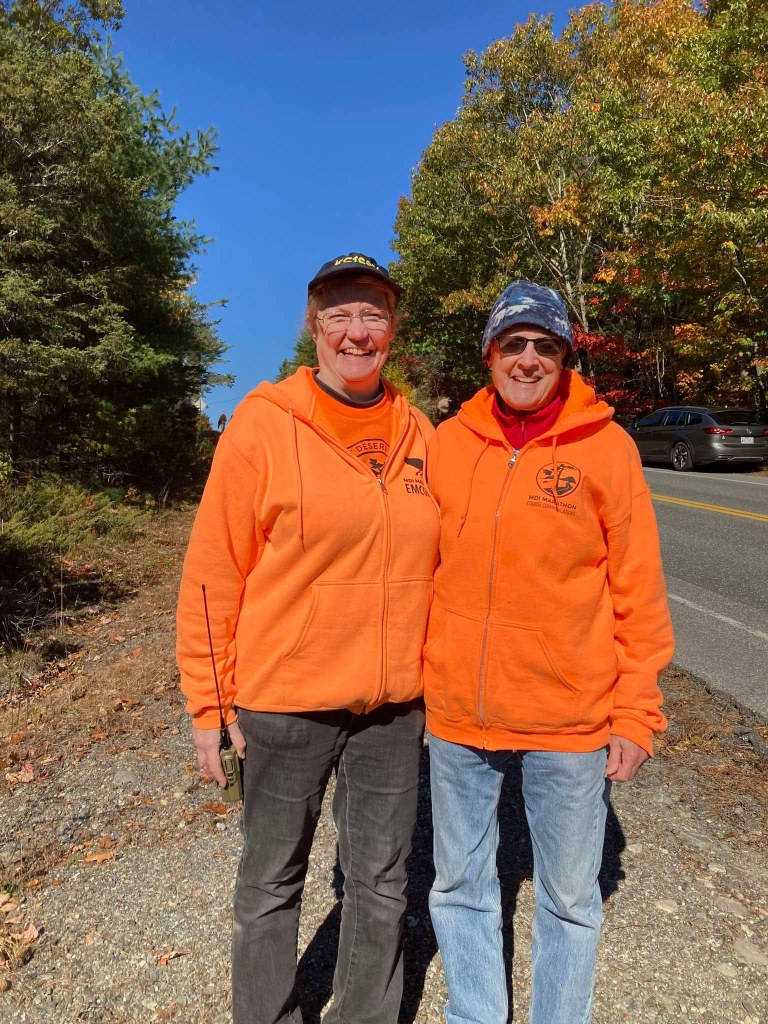
The lion’s share of the work, starting months before the race, was done by the Hancock County Emergency Coordinator and EAWA member Barbara KC1SSY and her Assistant, Joan W1DLC. They attended numerous meetings, gave a presentation for those involved at the last EAWA club meeting, coordinated ordering and distributing T-shirts, and followed up with various groups and agencies working on different aspects of the event. THANK YOU BARBARA and JOAN! This operation would not be as well planned and professional without your efforts!
So much of what we do as hams, including the fun contests and operating portable in parks, is to hone our skills should we be called upon to help in an emergency situation. The MDI Marathon, along with the annual Field Day in June, are the two primary large scale exercises for EAWA members and friends. Thanks to everyone who gave up their Sunday, shared their equipment and expertise, encouraged the runners, and performed tasks with precision. We were a great team!
Written by Marion W1GRL, Photos by Joan W1DLC & Barbara KC1SSY
The Weekend Session on Sunday, October 11, was filled with conversation, mentoring, sharing, and fun. That’s just what the bi-monthly gatherings are designed for. Here’s a quick summary of the afternoon.
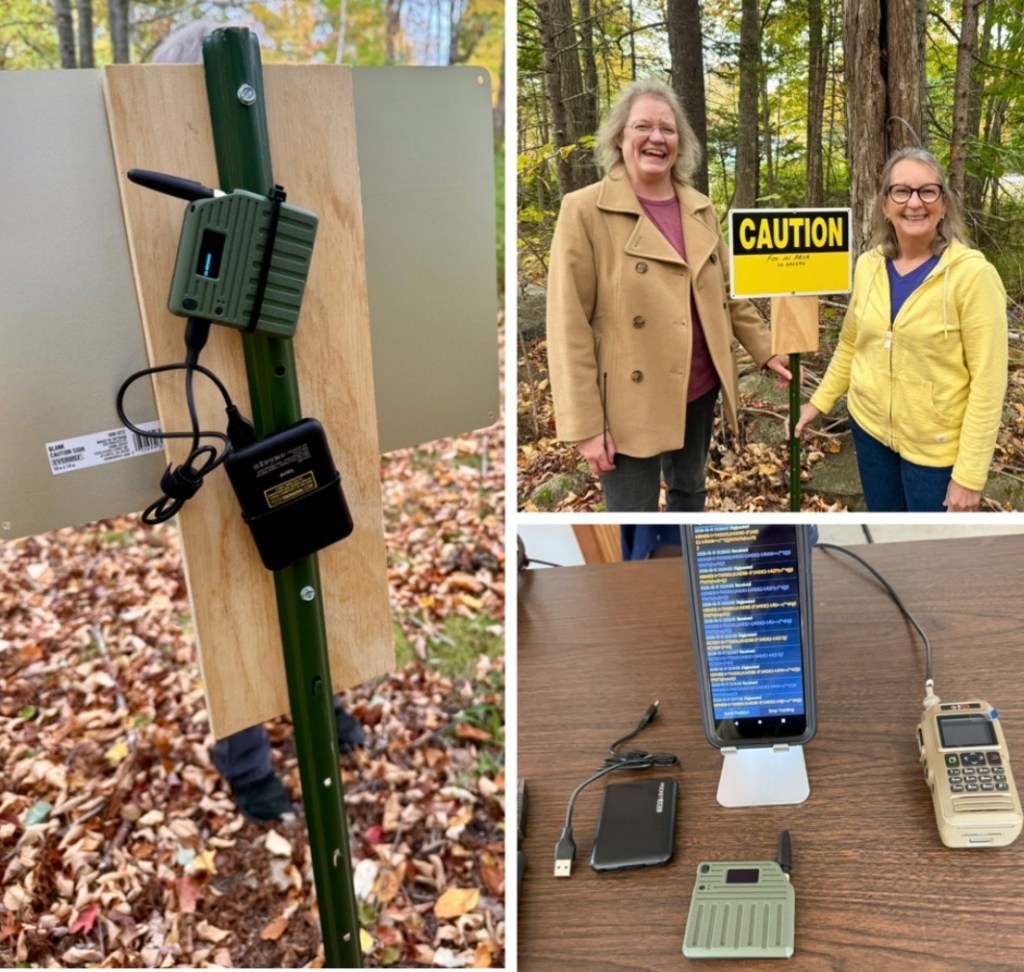
Prior to the session, Jeff KA1DBE had hidden a “fox” (transmitter) for the hunters, Barbara KC1SSY and Marion W1GRL, to find. Armed with a handheld radio, the women searched the wide area around Meadow View Apartments with success, zeroing in on the basic location. They needed a little bit of assistance to find the exact location of the fox. It was great fun on a crisp, fall day!
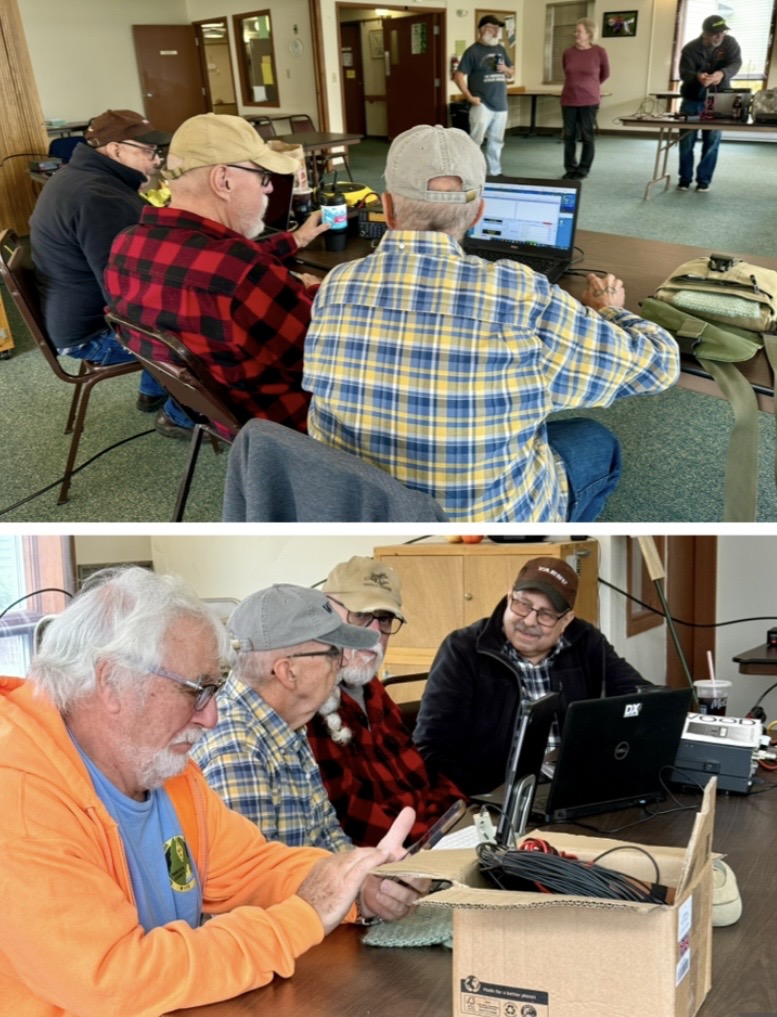
Stan W1BOY and Mark W1ABY worked with Dick W1KRP to get WSJT-X fine-tuned for FT8 operating. They also worked on setting up GridTracker. There were some tricky settings to figure out regarding the audio, but the team was successful! Also, in the bottom photo, Mel W1MEB was waiting for another ham to arrive, carefully guarding his box of goodies.
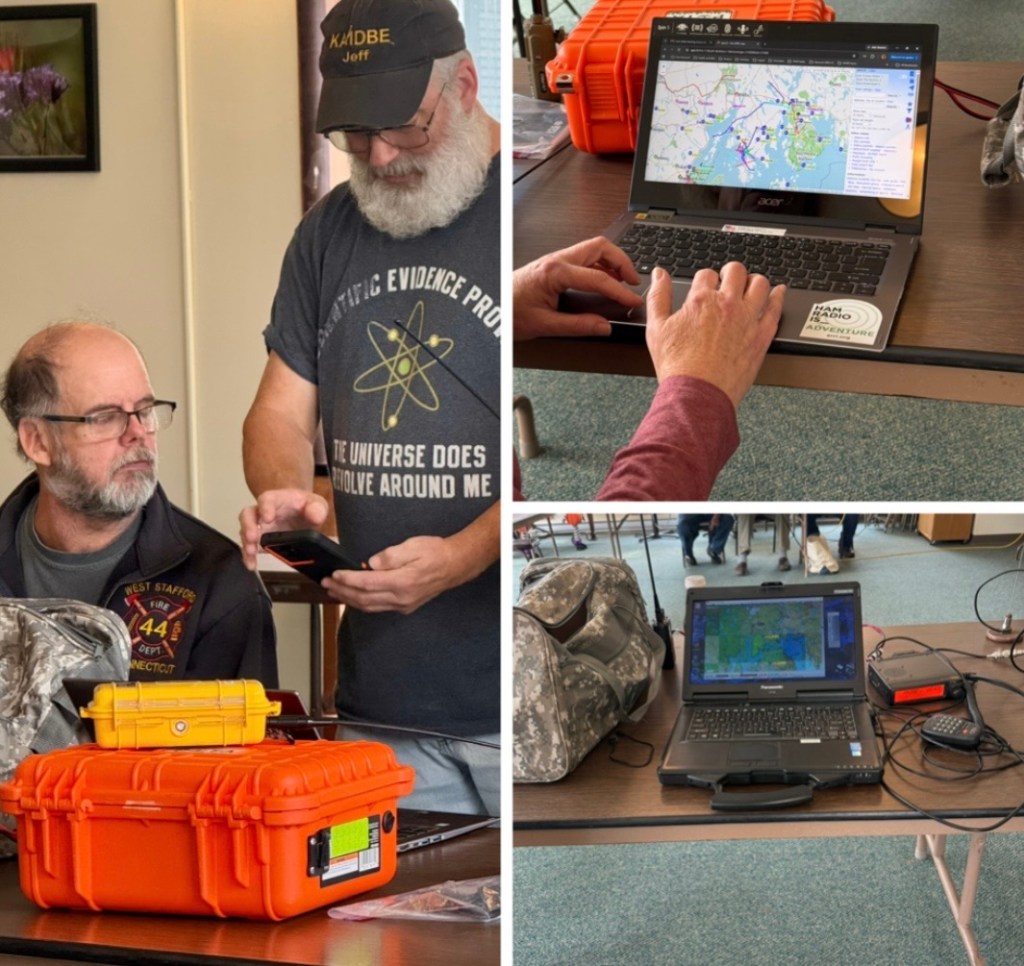
Tracey AC1UN, Jeff KA1DBE, and Barbara KC1SSY set up the APRS system that will be used in the upcoming MDI Marathon. They were able to check that the system was working properly and show the system to Stan W1BOY and Mel W1MEB, who are on the Net Control Team for the Marathon.
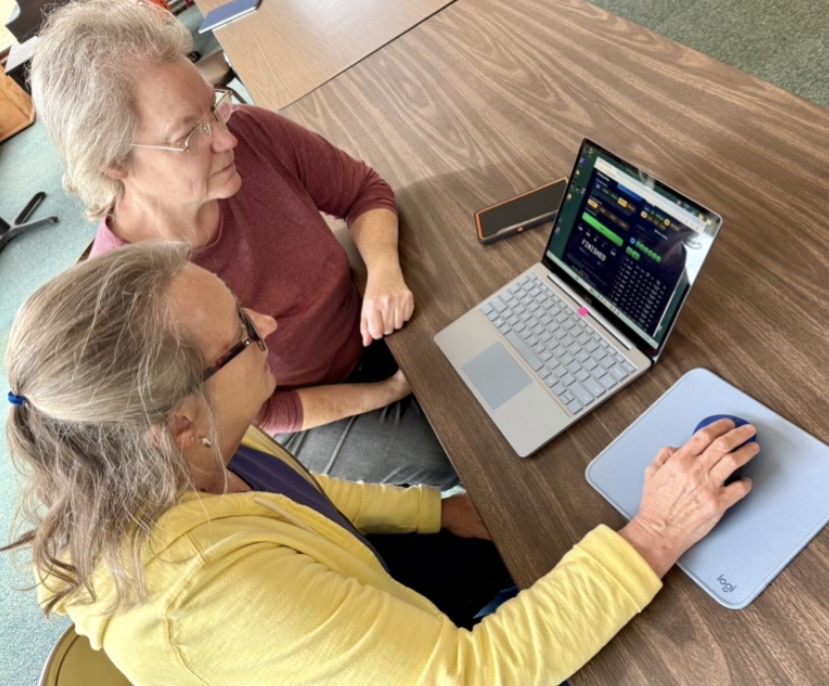
Finally, Marion W1GRL shared with Barbara KC1SSY a website-based training program she uses to practice hearing voice callsigns and accurately typing them into a logging program. The practice site, Callsign Training Platform (cw4ever.eu), is a free, no-account-needed webpage that announces callsigns for the user to type. When finished, the program will give the percentage correct and a chance to see where mistakes were made. The program can also announce voice calls in a pileup, as well as CW callsigns individually or in a pileup.
Every weekend session is unique. You never know what equipment, software, or conversation topics will appear. Knowing the space is available twice a month, hams will often arrange to meet to work on equipment and software issues. Occasionally there are small meetings discussing things that would otherwise take extra time at club meetings. The next session is scheduled for Sunday, October 25. You can find the location and the upcoming dates on our Regular Events page (here).
Written by Marion W1GRL
The October club meeting started as they always do, with introductions and a question: Are your antennas ready for winter? Most said ‘yes,’ but everyone acknowledged that Maine weather is unpredictable.
The business meeting included several key announcements. Barbara KC1SSY, acting in her role as Emergency Coordinator for Hancock County, shared details of upcoming SET (Simulated Emergency Test). Scheduled for Saturday, October 24, the exercise will involve local nets across several counties. An email will be sent out with further details.
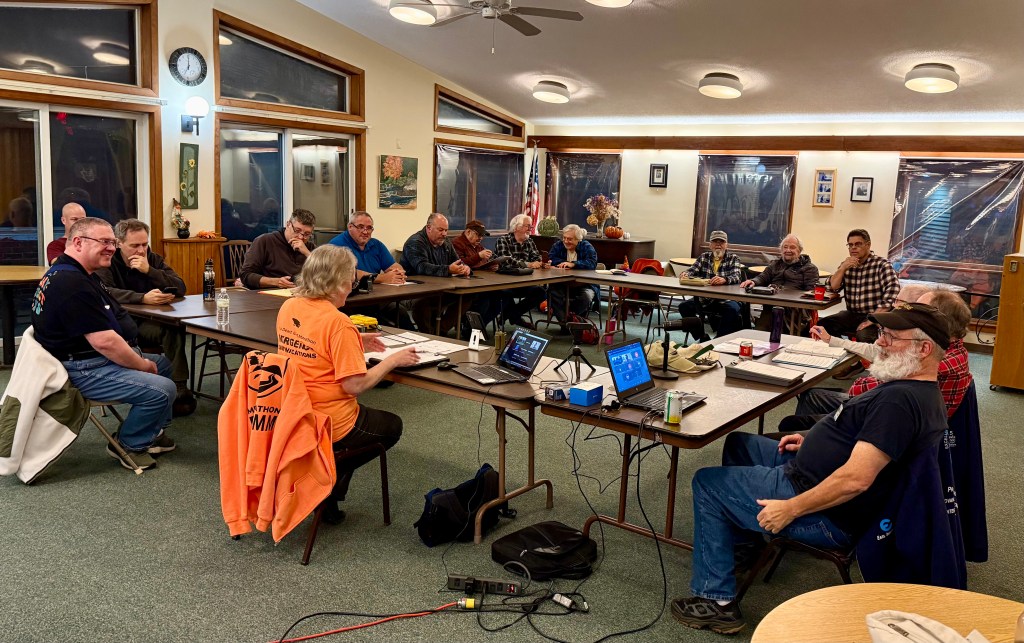
Stan W1BOY announced an information and planning meeting for the upcoming Fabbri Special Event to be held in August of 2027. The meeting, open to all interested, is scheduled for Sunday, November 8, at 12:15pm, during the Weekend Session.
John KQ1P, the club President, reminded us of an ongoing discussion regarding estate planning for our radio equipment. He encouraged us to leave instructions for loved ones regarding what to do with our equipment after our passing. As the EAWA may be the recipient of equipment, from an estate or other type of donation, it’s important that we have a clear process for moving forward with items given to us. He shared some examples of procedures we may adopt, and asked us to give some thought to our preferences moving forward.
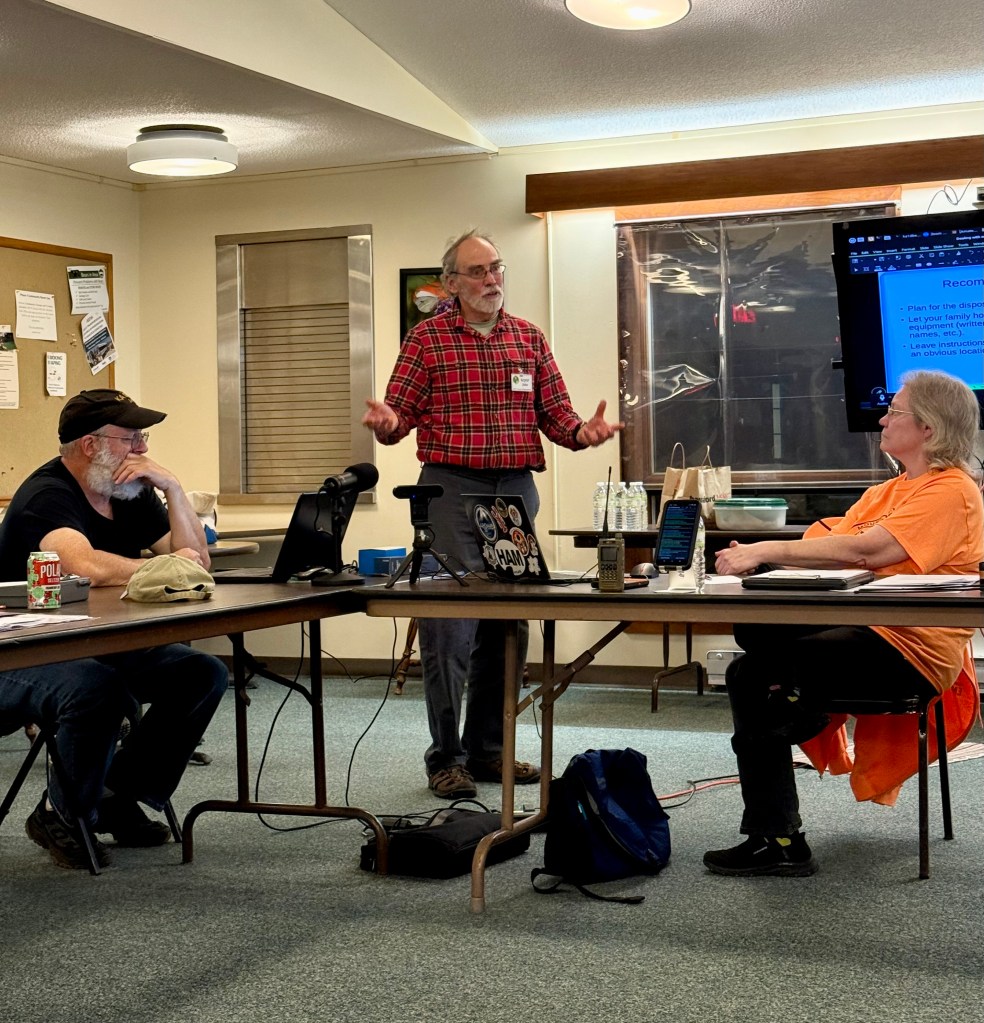
The program for the meeting was a detailed overview of the emergency communications plans for the MDI Marathon, to be held Sunday, October 18. Barbara KC1SSY and Joan W1DLC are the organizers and club liaisons to the larger group of emergency personnel involved. The EmComm team includes more than EAWA members, and some of those operators joined us. A special thanks goes to those from Hancock, Penobscot and Waldo counties who attended. Barbara started by pointing out that many of the recommendations and suggestions from last year’s After Action Report were incorporated into this year’s procedures. She then covered many important topics, including locations for stations, equipment needs, radio communication protocols, weather options, and personal comforts such as food and water.
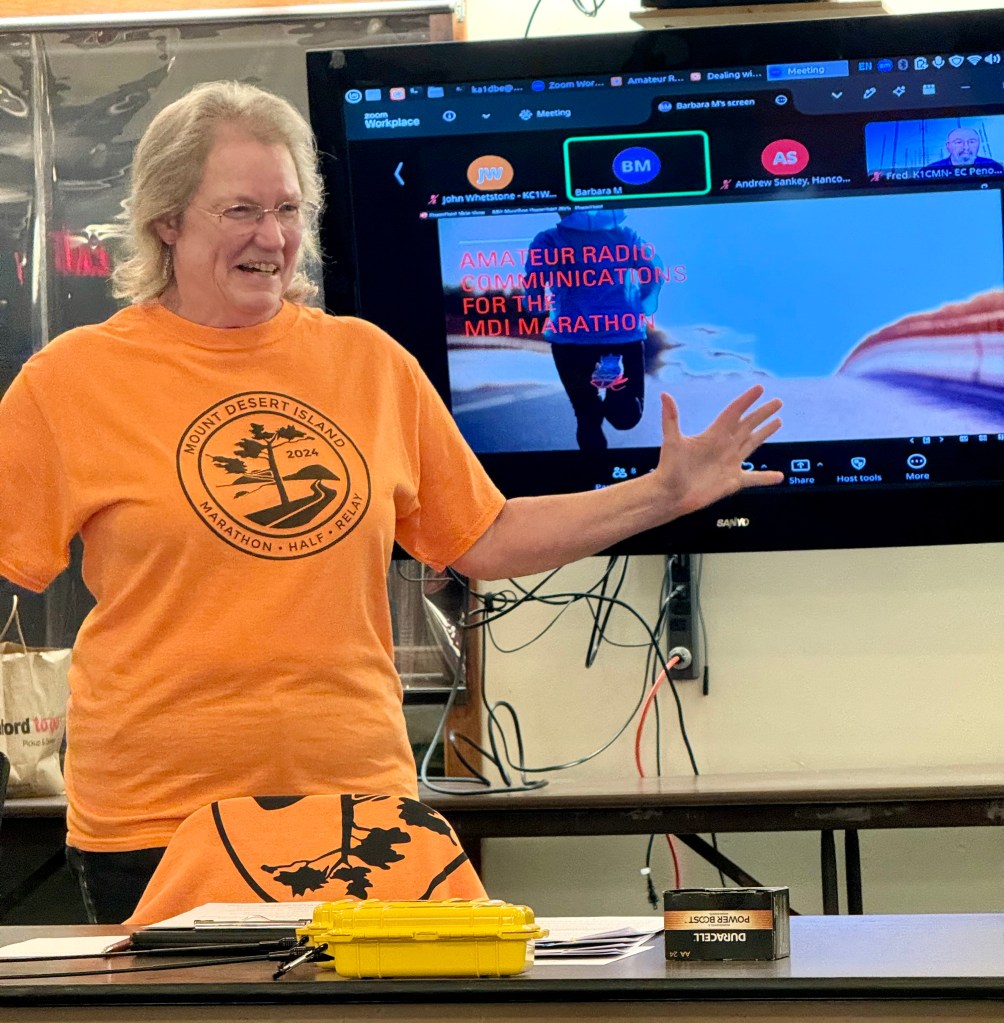
If you are serving as an EmComm participant, you should have received an email from Joan with several important attachments. Barbara will send more information by email soon. Two important items to keep in mind: (1) be at your location and ready for Net Control roll call at 7:30am, and (2) wear your orange EmComm t-shirt and hoodie (runners are told to look for the people in orange if they need help).
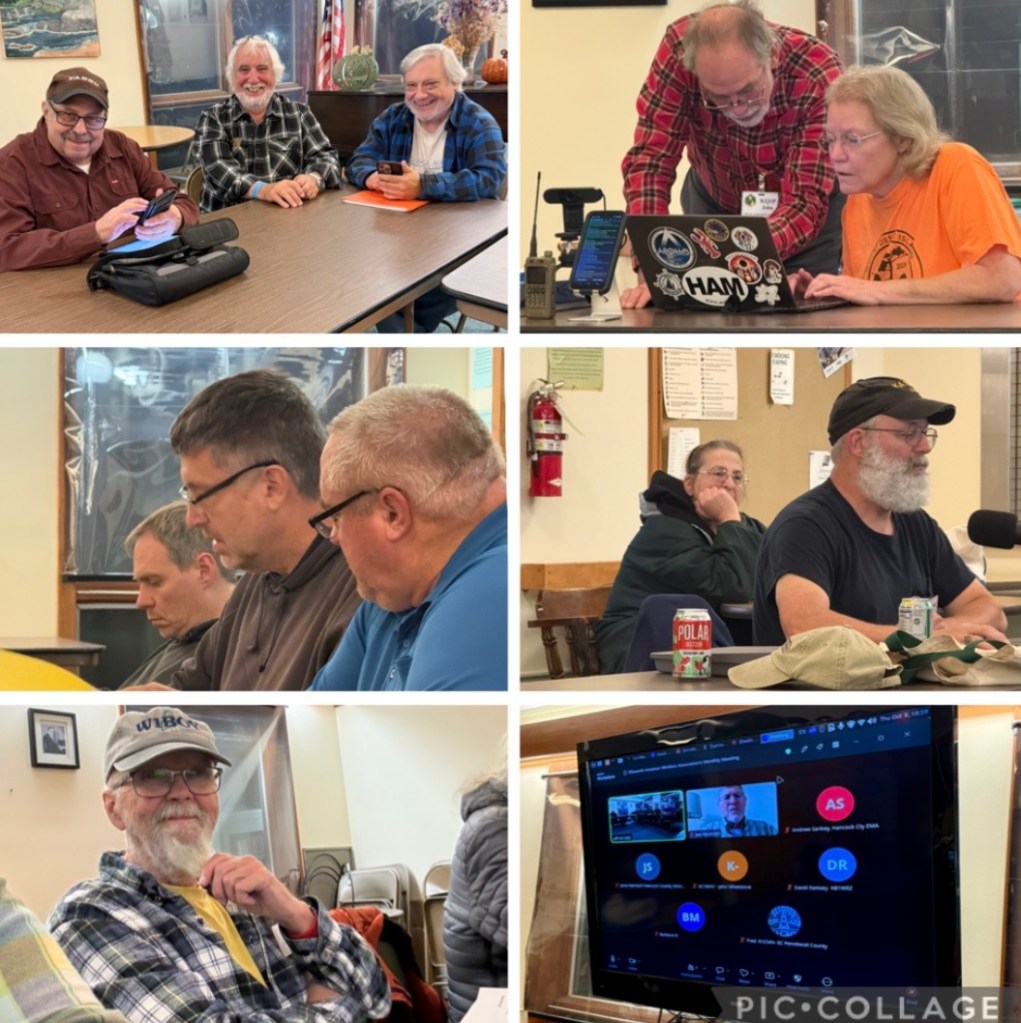
If you have not contacted Barbara about participating, the window has closed on the opportunity to be officially on the team. Don’t despair! There are many ways to join in club events and learn more about the EAWA’s role in area emergency communications. The previous article, Fall Back into Ham Radio (click here), and our Regular Events page (click here), offer many ways for you to get involved.
Written by Marion W1GRL
While most people went about their day on Wednesday, September 16, a select group around the state were working to help people who were stranded by bridge and causeway flooding, downed trees, and debris. Working without internet, these people were supporting Red Cross shelters and assisting those who were working on environmental concerns such as leaking gas and oil from damaged boats.
You didn’t hear about Hurricane Kyle? That’s because the fictitious storm and aftermath were the focus of an emergency training exercise. The Maine Emergency Management Agency (MEMA), in coordination with FEMA, created the exercise, designed to engage all 16 counties and tribal organizations. Starting with set-up at 11am, the exercise ran from noon to 8pm, with tear-down directly following the event. Currently the Hancock County operations area is in transition as a new facility is being built. With the facility unavailable, the activity was conducted from temporary shelters, similar to Field Day.
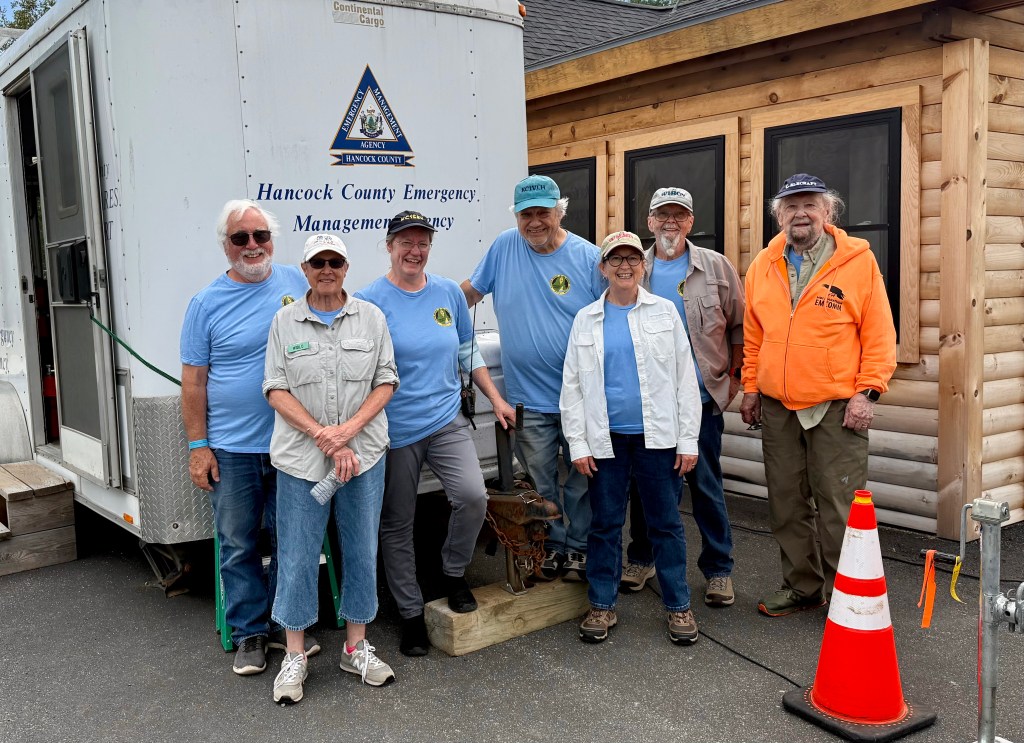
Those featured in the photo were posted at the Hancock County Emergency Operations Center (EOC), moving left to right: Mel W1MEB, Joan W1DLC, Barbara KC1SSY, Matt KC1VLH, Marion W1GRL, Stan W1BOY, and Rob W8HAP. Not in the photo is club member Mark W1ABY who participated for a brief time. Also not in the photo are Andrew W1AXS, Director of the Hancock County Emergency Management Agency (EMA), and Jesse KC1YWY, Deputy Director/Planner of the Hancock County EMA, who were working in their official roles. Phil N1EP worked from the Washington County EMA and Bill KC2NMK represented the Coast Guard at the state level in Augusta.
Barbara KC1SSY, the Hancock County Emergency Coordinator (EC) served as the liaison between the EAWA and the exercise organizers. She had advised us to participate in two on-line meetings prior to the day of the exercise. As it would be in the case of a real emergency, the club volunteers did not know what issues might arise and when. Even though we had very few details, club members were ready with food and drinks, and extra tools, radios, antennas, and batteries.
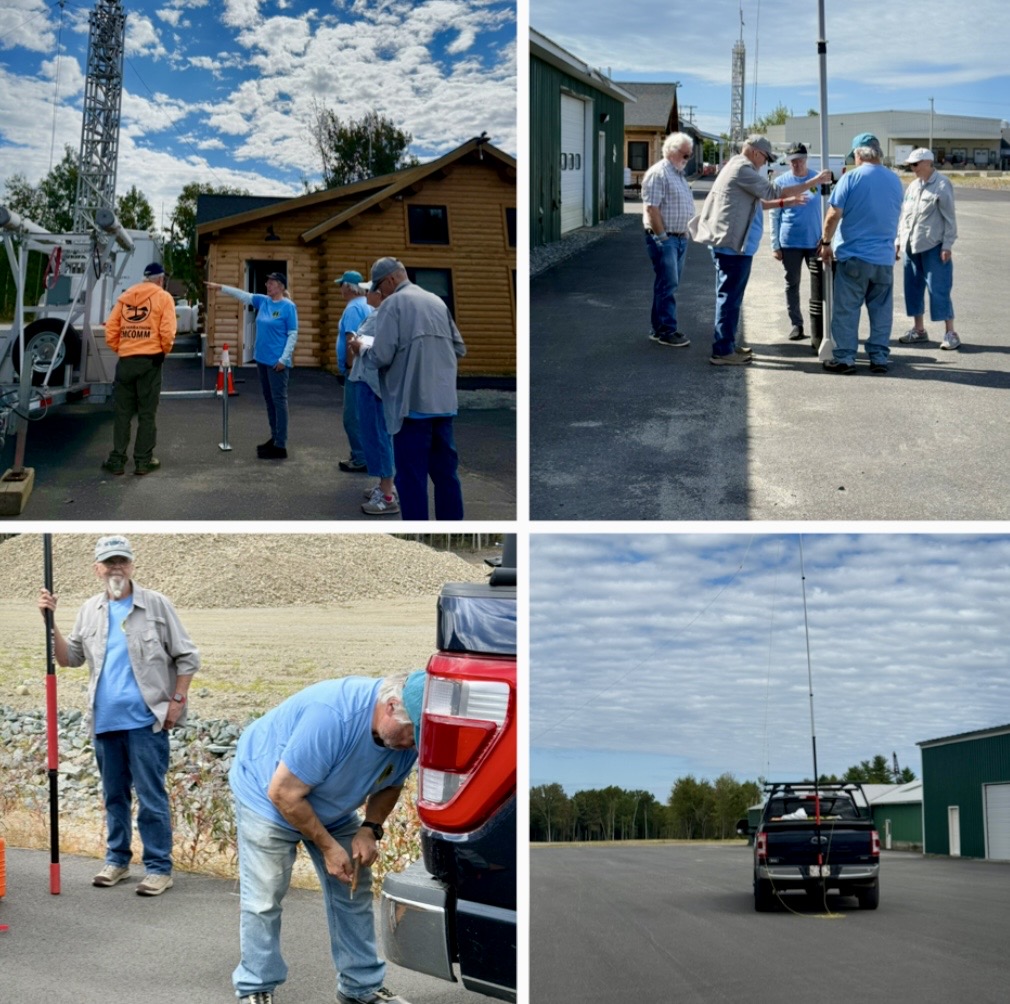
Among the first tasks was to raise the tower which supported an off-center-fed dipole for 40 and 80 meters with the two telescoping masts at each end. The tower also had a VHF/UHF vertical for local and repeater communications. These antennas were connected to radios in the trailer. In another area of the parking lot, we had an end-fed half-wave antenna for 40 meters, specifically for Winlink communications.
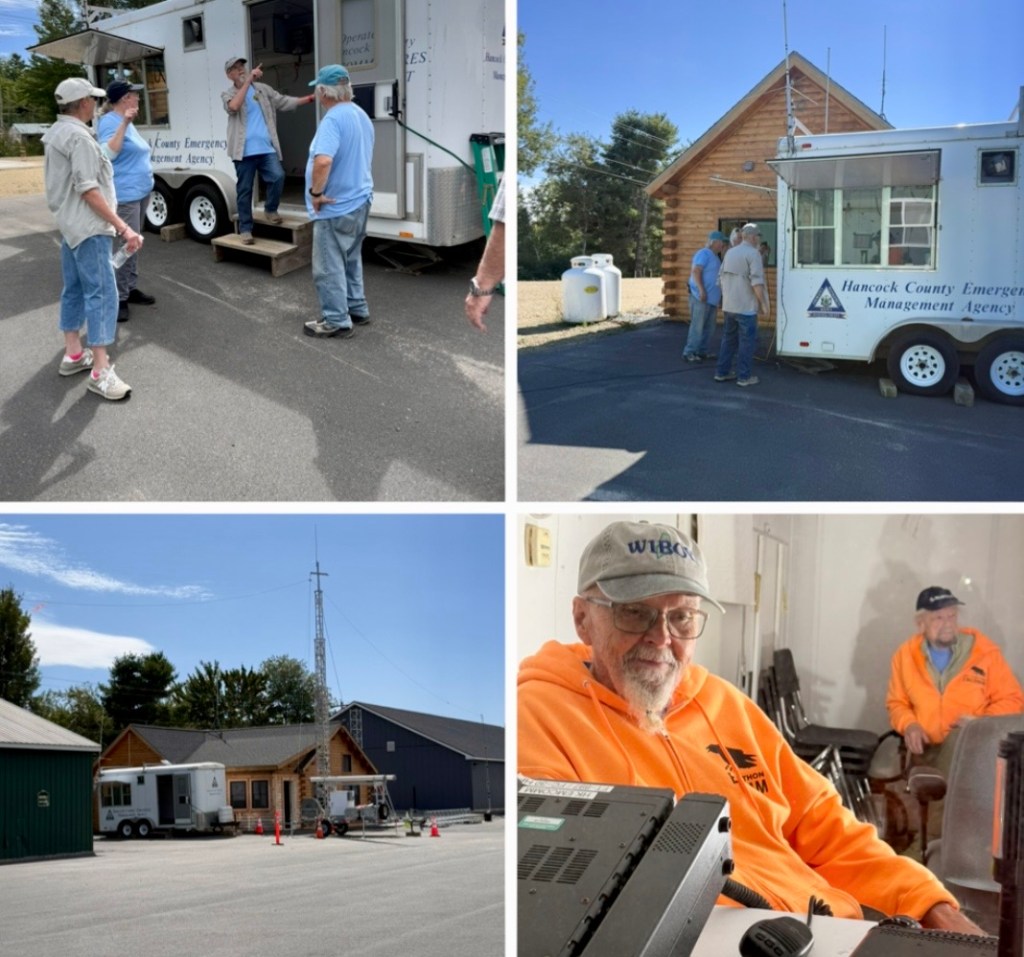
The HF voice station in the trailer was primarily staffed by Stan W1BOY and Rob W8HAP. During the exercise they checked in to hourly nets that were run by Phil N1EP. They also “passed traffic,” which means they contacted people via HF with messages regarding needed resources or information. The trailer was supplied with several base and hand-held radios so they could monitor communications between counties and the state.
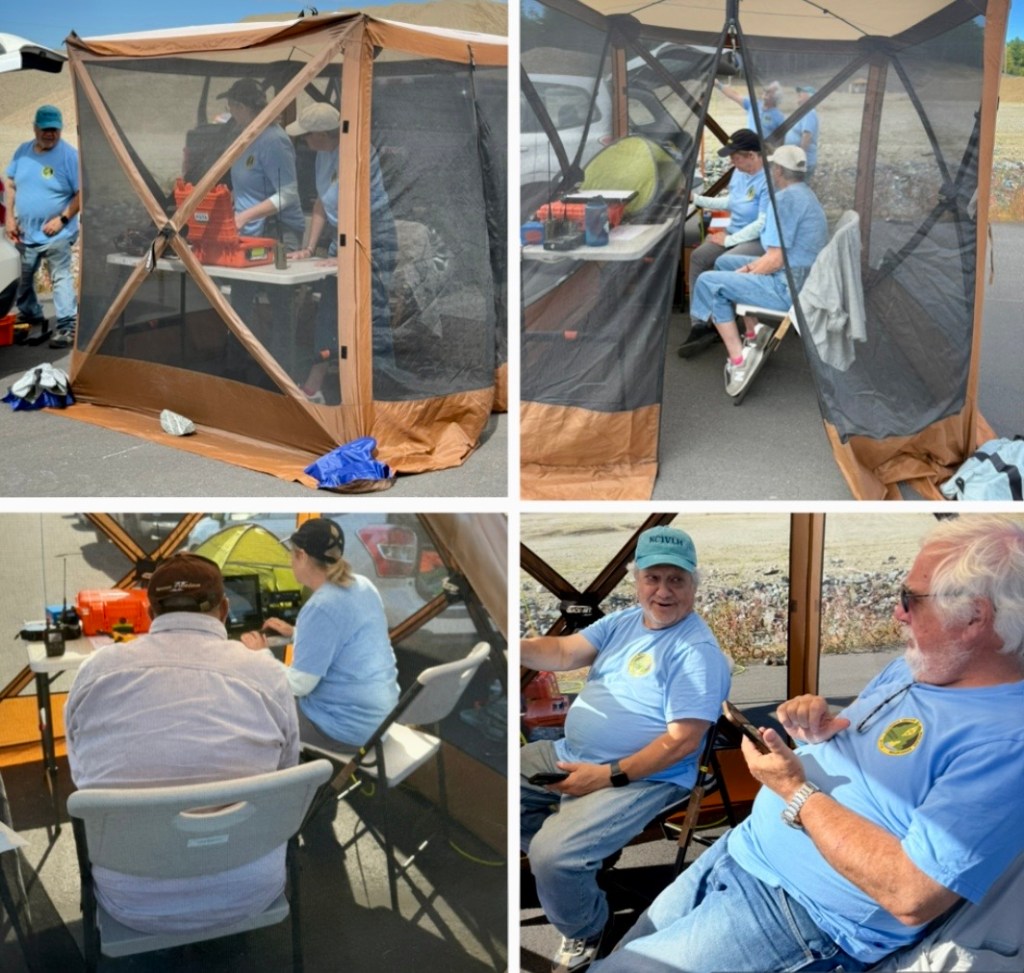
The Winlink station consisted of a tent with a table covered in radios, batteries, and a laptop. Barbara KC1SSY gave the volunteers a short introduction to several ways Winlink messages and forms may be used during an emergency, particularly when the internet is down. She also shared her procedures with us as she received and sent messages throughout the exercise.
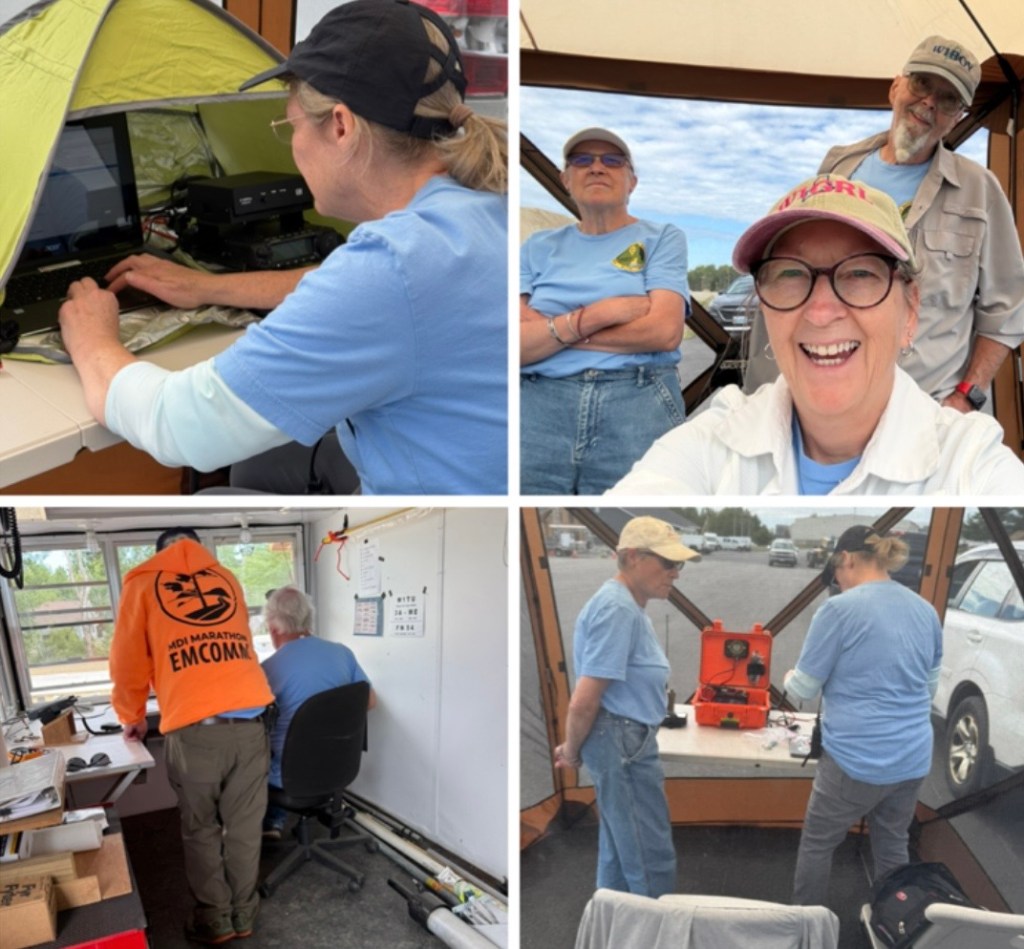
The themes of the day were training and troubleshooting. It is a key part of any emergency exercise to find the equipment or procedures that aren’t working and locate areas of improvement. As we went through the set-up, exercise activation, and tear-down of the equipment, we identified the highlights and areas we need to work on. There were challenges, as there would be in any emergency. After the event, Barbara KC1SSY, in her role as Emergency Coordinator, praised the club members for working together, sharing their knowledge and equipment, and making the most of a long day.
It was a privilege to be asked to participate in Maine Strong 2026. All of us, from the state level to the individual, are better prepared for the disaster that we hope never comes. A special THANK YOU goes to Barbara for guiding us through this exercise. A special THANK YOU also goes to the club members who provided much needed nourishment and supplies. Together we worked to meet the challenges, making the day a success.
Written by Marion W1GRL
The September club meeting started as usual, with introductions and a question: Are you equipped to run your home station on back up power? Most of the answers were “yes,” with energy sources ranging from large batteries to solar power to generators. The business part of the meeting progressed quickly through several important announcements and discussions.
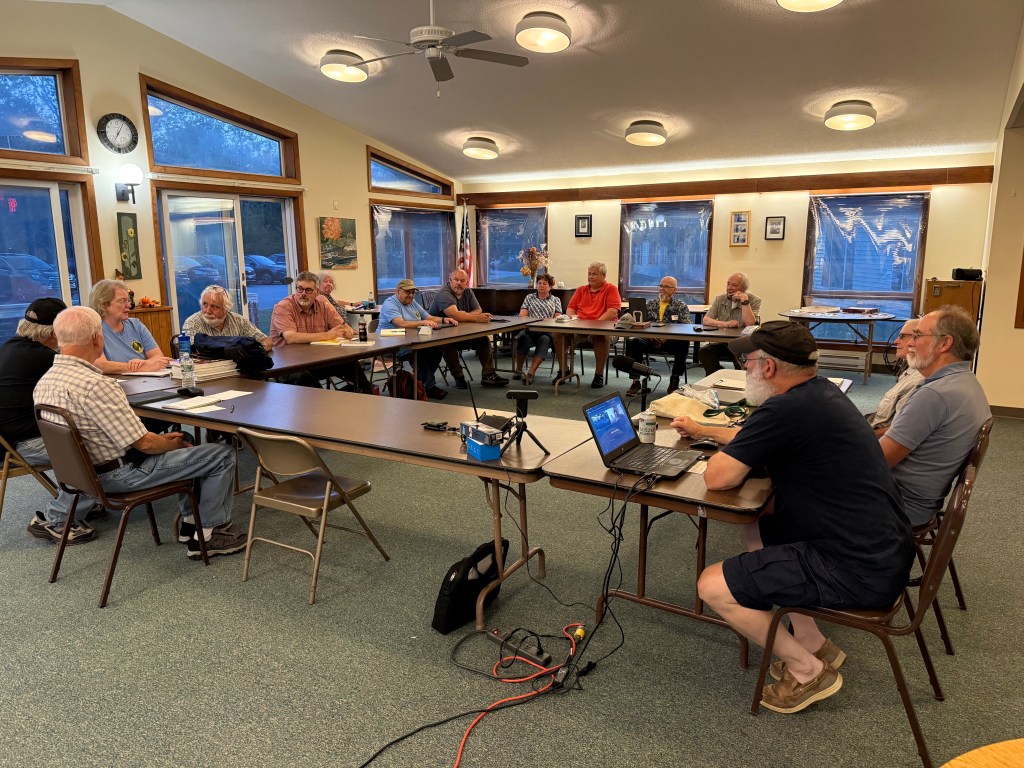
Barbara KC1SSY shared some of the preliminary planning notes for the MDI Marathon, to be held on Sunday, October 18th. Approximately 14 additional volunteers are needed for several communications points along the route. This is a great way to practice emergency communications procedures and share ham radio with the community. If you are a first-time volunteer, you will be paired with an experienced volunteer. Contact Barbara (via QRZ) or use the “Contact Us’ form on this website if you’d like to be a part of the event.
Barbara also shared that there will be a state-wide Emergency Communications Exercise held on Wednesday, September 16. If you are on local or regional nets, you may hear, “Exercise, exercise, exercise” followed by information regarding a fictitious event.
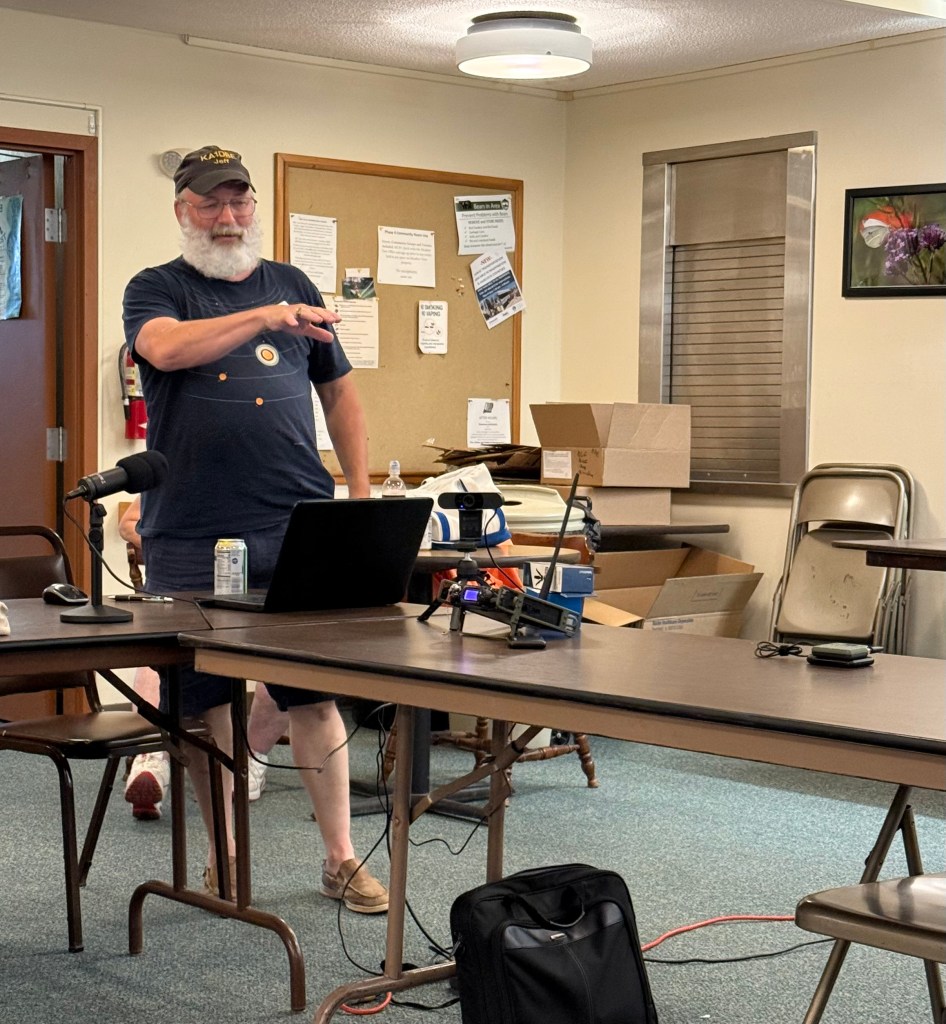
Once again, Jeff KA1DBE will coordinate the annual Ham Radio Symposium held in April. Jeff asked that club members and friends share with him ideas for presentation topics. This will help as he starts identifying potential presenters.
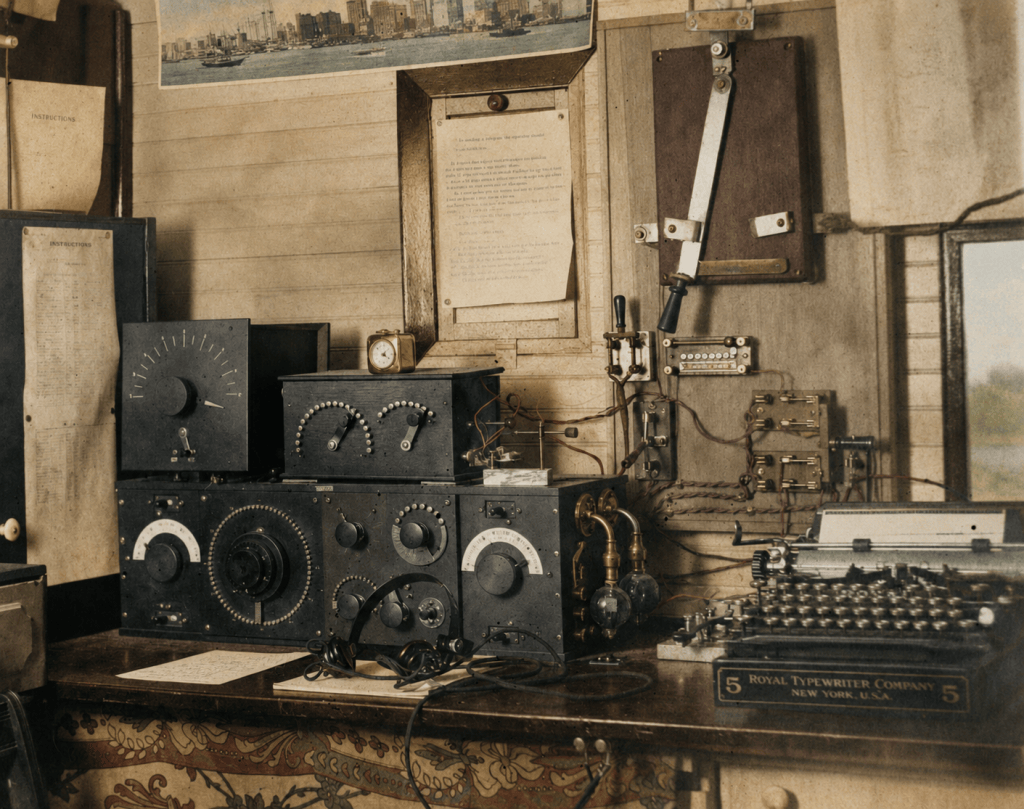
New this year, Stan W1BOY will coordinate the planning for Fabbri Special Event Stations, celebrating 110 years since the commissioning of the Otter Cliffs Radio Station on August 28th. The attendees were excited about the event, to be held on the exact anniversary day, Saturday August 28, 2027. Discussions ranged from operating as a small, POTA-style event to something similar to Field Day. Stan will share information on upcoming meetings for those interested in planning and operating in the event.
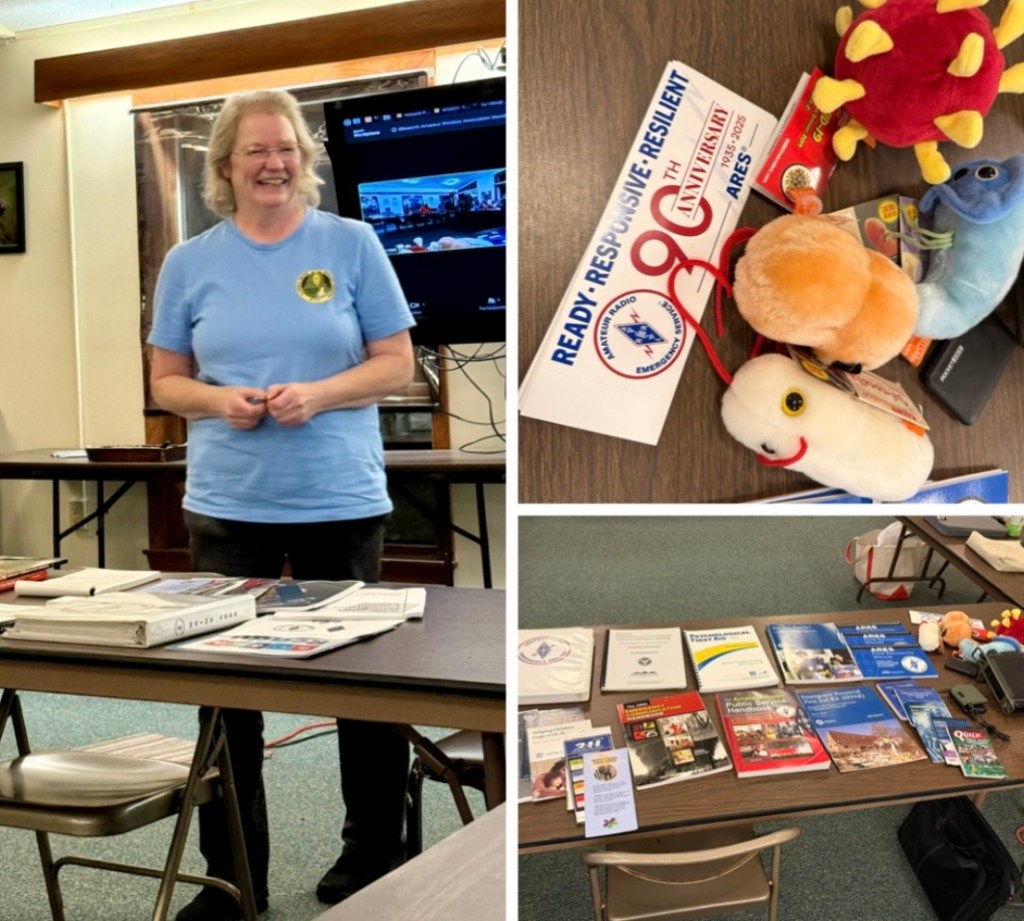
After a quick intermission that included home-made treats, we moved to the program for the evening. Barbara KC1SSY shared an overview of items recommended for personal emergency preparedness. She began with considering all the parts of your radio that may not work in an emergency, prompting us to think about back-ups. She then progressed to the environment for the radio and antennas, emphasizing potential damage from wind, rain, and lightning. She also mentioned the need for grounding and the capability to set-up and use a portable and/or mobile station quickly in an emergency.
The presentation then shifted to a wide range of topics, moving from personal safety concerns to issues affecting your home, family, pets, and others who may depend on you for assistance. Topics here included a 3 day supply of food and water, first aid supplies, fire extinguishers, smoke and carbon monoxide detectors, and copies of financial papers. Her discussion also included ‘psychological first aid,’ highlighting the stress everyone would experience during an emergency.
The September club meeting was packed with useful information, both in terms of planning for club events and planning for personal or regional emergencies. Almost everything we do as a club prepares us for the emergency that we hope never comes. Whether it is the bonds we develop by coming together for coffee, nets, and meetings, or the information shared in the programs and annual symposium, or the club efforts at Field Day and the upcoming special event — all of these things will help us be at our best if needed in an emergency.
If you are just learning about our club, please explore the website, particularly the “Regular Events.” You are always welcome to join in, whether you have a license or not.
Written by Marion W1GRL

