2026 Maine-Wide POTA Day

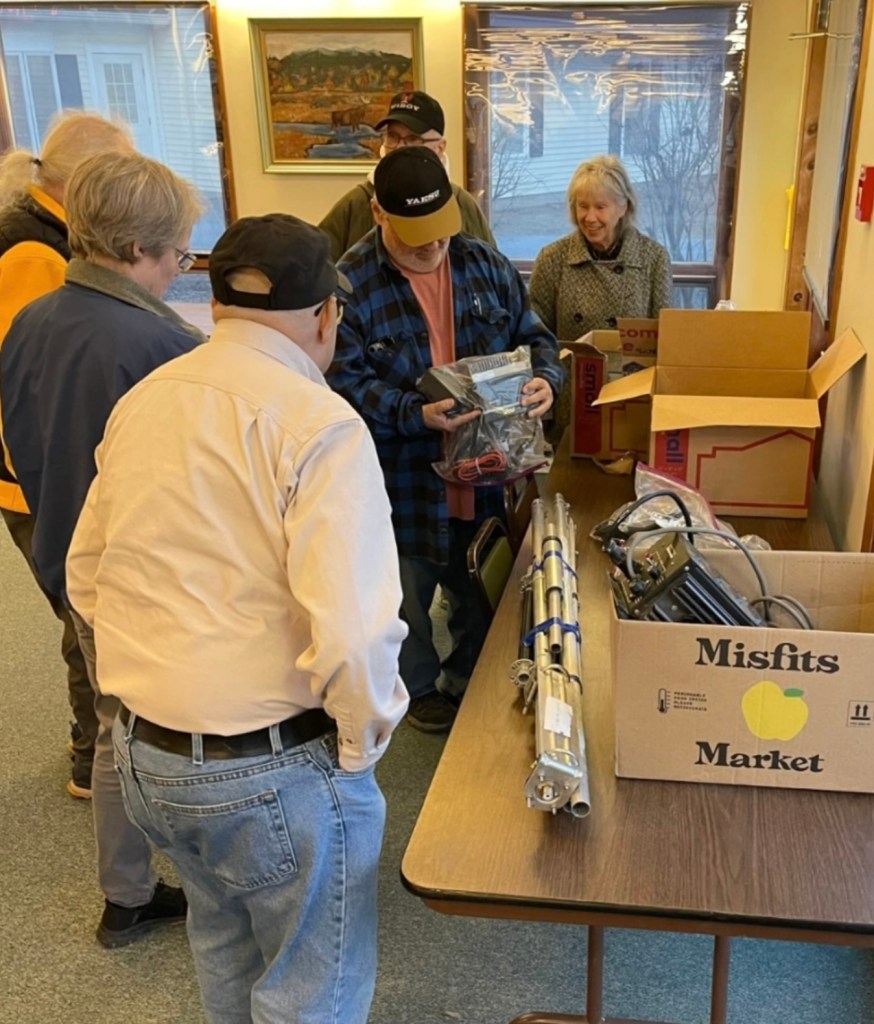
The Maine Parks On The Air (POTA) Day, held Saturday, May 16, is an annual event that many operators look forward to. Just like last year, the weather was a major influence. Unlike the rain we had last year though, this year it was the solar weather that proved to be a challenge. It’s a safe assumption that there were many EAWA members and friends who activated a park and/or were POTA hunting from home. Below are some activation summaries.

Rob W8HAP had a successful activation at Lamoine State Park, working CW on 20 meters.

Stan W1BOY and Marion W1GRL activated the Blueberry Hill area on the Schoodic Peninsula in Acadia National Park. They struggled for two hours to complete 10 phone contacts, moving between 40 and 20 meters. 

Stan W1BOY and Marion W1GRL at US-0001

Joan W1DLC activated the Strong Wildlife Management Area. She also worked for two hours to complete 14 QSOs on 20 meters.

Joan W1DLC at US-8478

Barbara KC1SSY and Tracey AC1UN operated from two parks. Their first location was Lily Bay State Park. Struggling as everyone did, they worked for an hour and a half to complete 17 contacts. They also spent two hours at Spectacle Pond Wildlife Management Area, completing an additional 2 contacts. 

Barbara KC1SSY and Tracey AC1UN at US-2394 and US-8445

Matt KC1VLH and Sue activated Roque Bluffs State Park. Matt made 31 contacts on 20 meters. His signal made it out to Texas and Utah. 

Matt KC1VLH and Sue at US-2408

Wes AA1CX managed 35 contacts over two and a half hours while activating Holbrook Island Sanctuary State Park. He found more success operating CW than phone. During his activation Wes made contacts with Stan, Marion, and Rob.

Wes AA1CX at US-2391

Some operators gave a great effort, but in the end, technical challenges, poor solar weather, and difficult terrain won the day and prevented the activations. Jeff KA1DBE and Bernie KI4VCR made a valiant effort to activate Donnell Pond State Preserve. After many struggles, the adventure ended with a plate of Irish Nachos. John KQ1P also tried an activation. Between a limited time frame in a busy day and technical issues, he also had to abort the activity. 

It’s always a learning experience, and usually a fun one(!), when we set up to activate regardless of weather and environmental challenges. Whether it is a POTA, Field Day, a contest, or a net, all of these activities sharpen our skills and put our equipment through the paces. When it’s fun we call it “a hobby” and when it’s an emergency we call ourselves “ready and willing.”
Written by Marion W1GRL

Race Comms for the 2026 Sea of Blue Walk/5K/10K

For the second year, EAWA members and friends teamed up with the Hancock County Emergency Management Agency (EMA) to provide race communications for the Sea of Blue Autism Awareness Walk/5K/10K. Directors Matt and Susan Heel do an amazing job organizing all aspects of the event, including welcoming the race communications team. (Learn more about Sea of Blue here.)

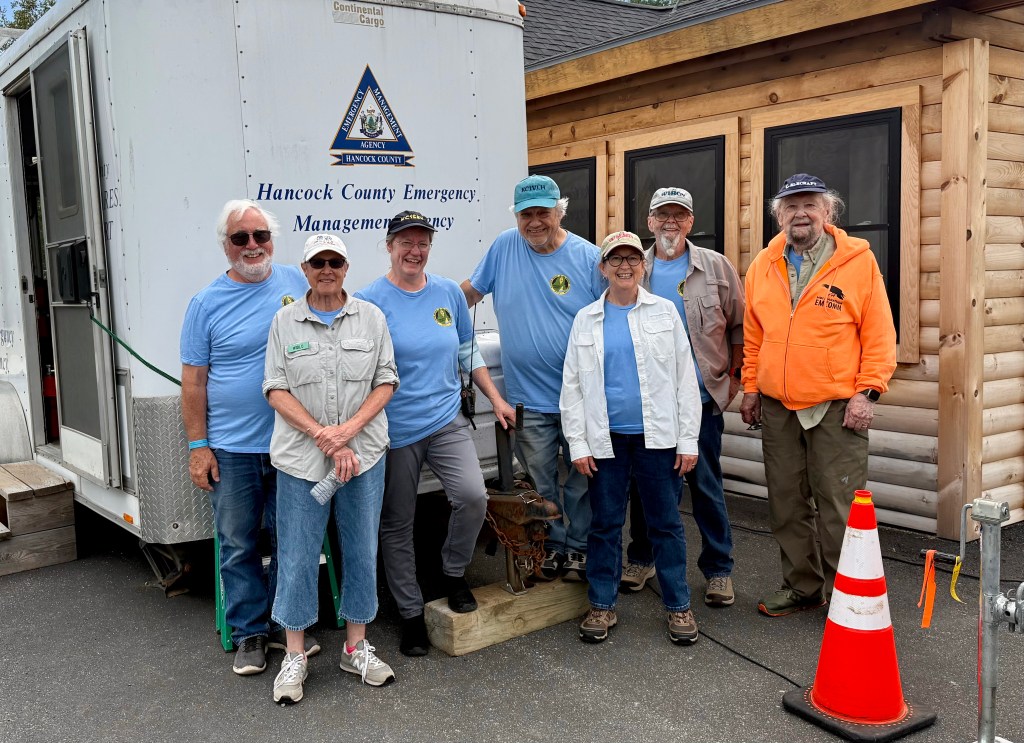
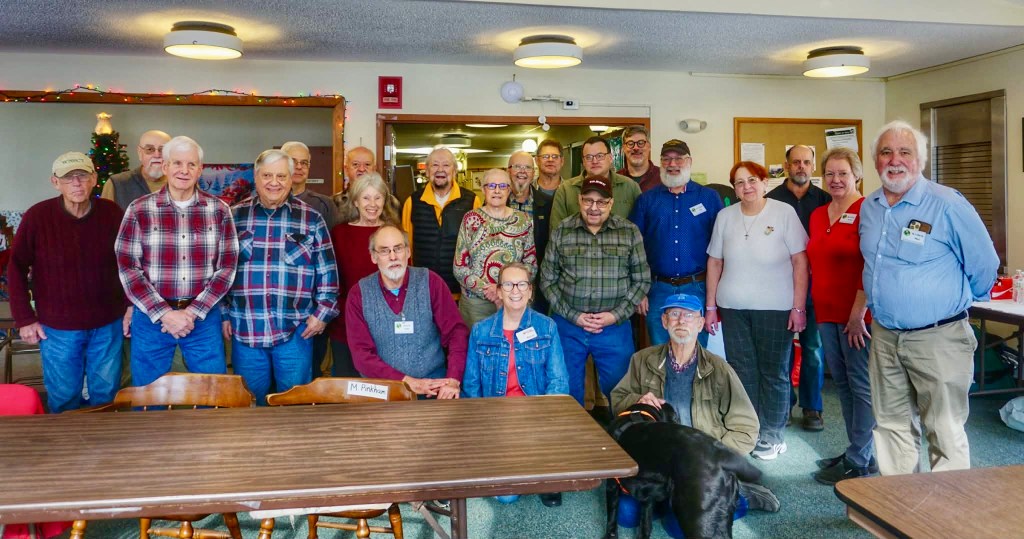
The Race Communications Team, from left to right: Tracey AC1UN, Dick W1KRP, Stan W1BOY, Mel W1MEB, Greg KC1RID, John KQ1P, Mark W1ABY, Rob W8HAP, Bernie KI4VCR, Jeff KA1DBE, Joan W1DLC, Steve KD1O, Alex KC1ZBO and his daughter, Eve, Barbara KC1SSY, Bill KC2NMK, Andrew W1AXS, Jesse KC1YWY, and Judy holding Gigi, our canine support pup.

The morning of Saturday, April 25th, started early for the operators setting up the equipment in the EMA trailer. Special thanks goes to Andrew W1AXS for authorizing use of the Hancock County EMA trailer. The warm, sunny day put everyone in a great mood! At 7:30am, in a cozy room at the Neighborhood House in Northeast Harbor, Barbara KC1SSY started the pre-race briefing. The Sea of Blue race directors graciously provided coffee and donuts, along with special race communications shirts. Also, as a gift of gratitude, the operators received coffee mugs with both the Autism Awareness logo and the EAWA club logo.

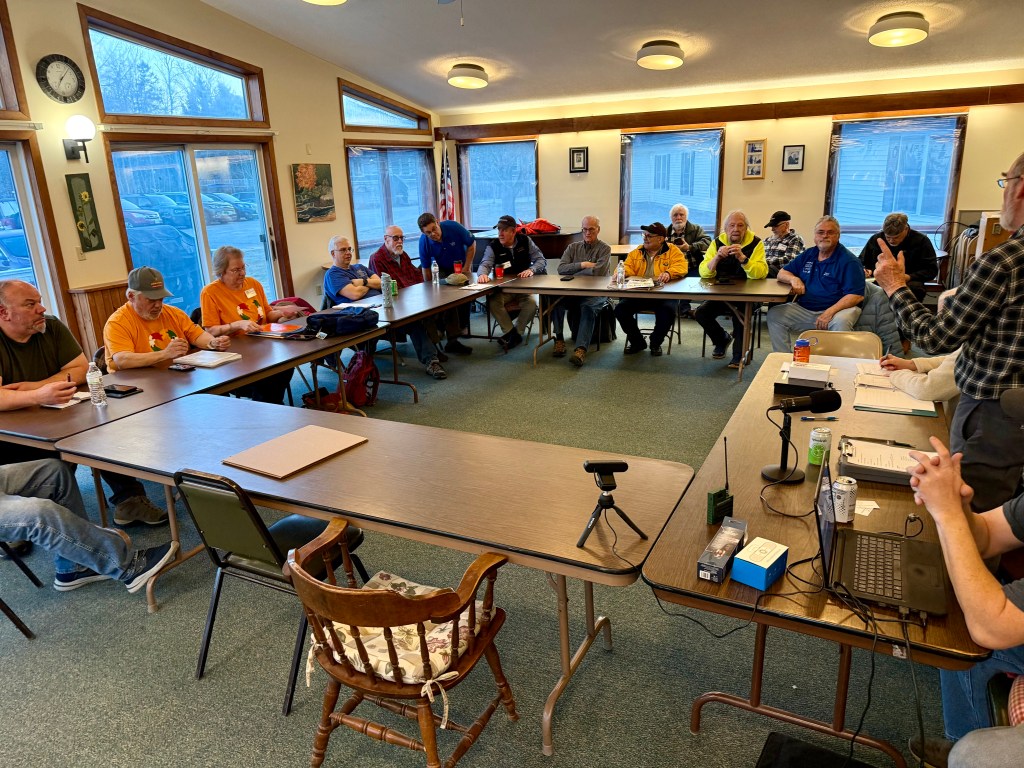
The gathering started with passing out shirts and mugs. Once the pre-race briefing began, it was time to get serious.

Following the meeting, the operators moved into their assigned positions. Joan W1DLC began the official net at 9:00am, with each station checking in using tactical callsigns. Each of the seven stations was ready to go when the event started. Those who were walking in the event started at 9:30am, and those running started at 10:00am.

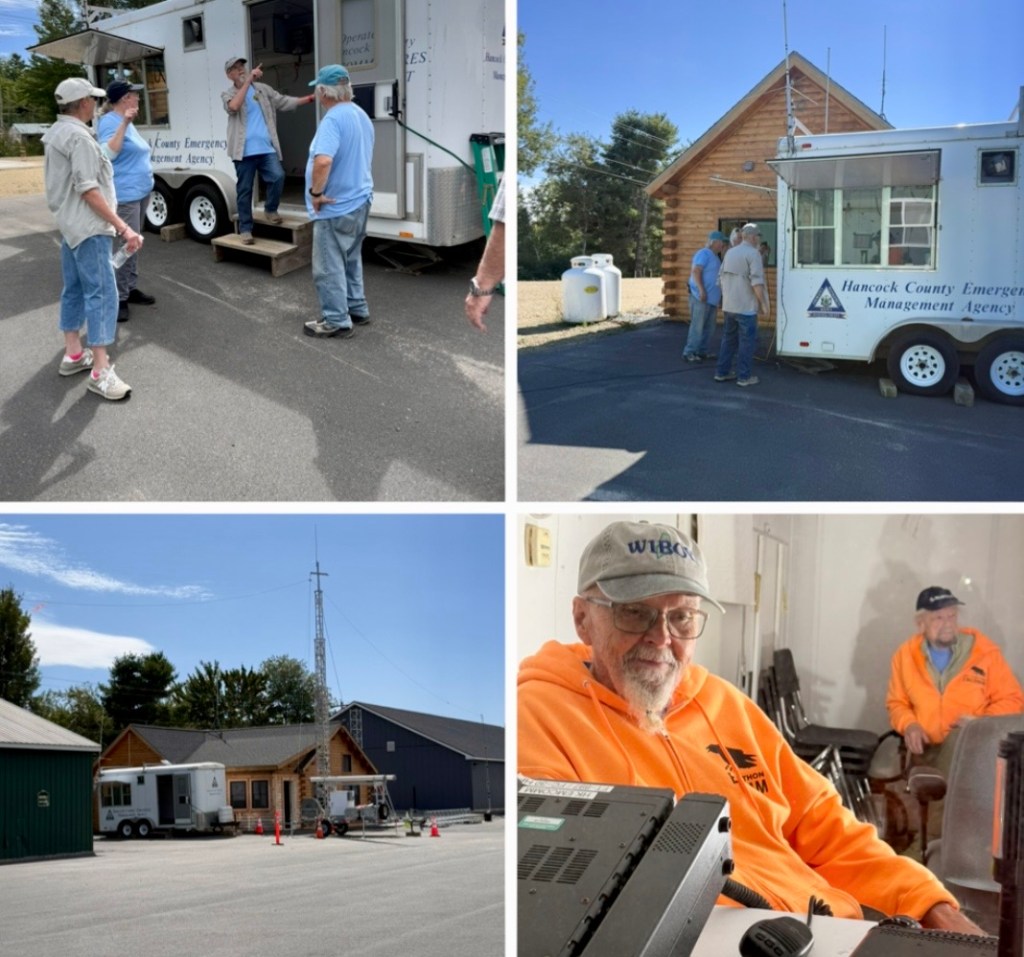
Joan W1DLC, Stan W1BOY, Jesse KC1YSY, and Rob W8HAP handled communications in the net control trailer.

Race communications ran smoothly through net control. Stations reported on the first three runners of each race and the last runner. In the net control trailer, Jesse KC1YSY, noted on a white board the locations of the lead runners and the last as they moved beyond each station. Thankfully there were no emergencies and all went as planned.

Some of the stations shared photos: Top left, Barbara KC1SSY, Tracey AC1UN, and Matt KC1VLH (race director) at Station 2, and top right, Steve KD1O at Station 4. Bottom left, Jeff KA1DBE and Bernie KI4VCR at Station 5, and Dick W1KRP stationed as a liaison between the net control trailer and the race directors, shown chatting with Jeff and Bernie.

As the last runner passed each station, operators packed up equipment and relocated to either another station or the central hub, the Neighborhood House. Along with the walkers and runners, the operators were treated to sandwiches, cookies, and other snacks at the finish line.

The operators enjoyed swapping stories while enjoying snacks and the festivities.

Community service and emergency preparedness are critically important to the EAWA and the Hancock County EMA. Thanks again to Barbara KC1SSY, Joan W1DLC, and Matt KC1VLH, for your many hours of thoughtful planning and leadership. While all of the operators enjoyed the camaraderie with other operators and the festivities, there is a serious side to this exercise. The race event presents an opportunity to hone our skills, put our equipment through the paces, and practice the art of moving information along radio channels in an accurate and timely manner.

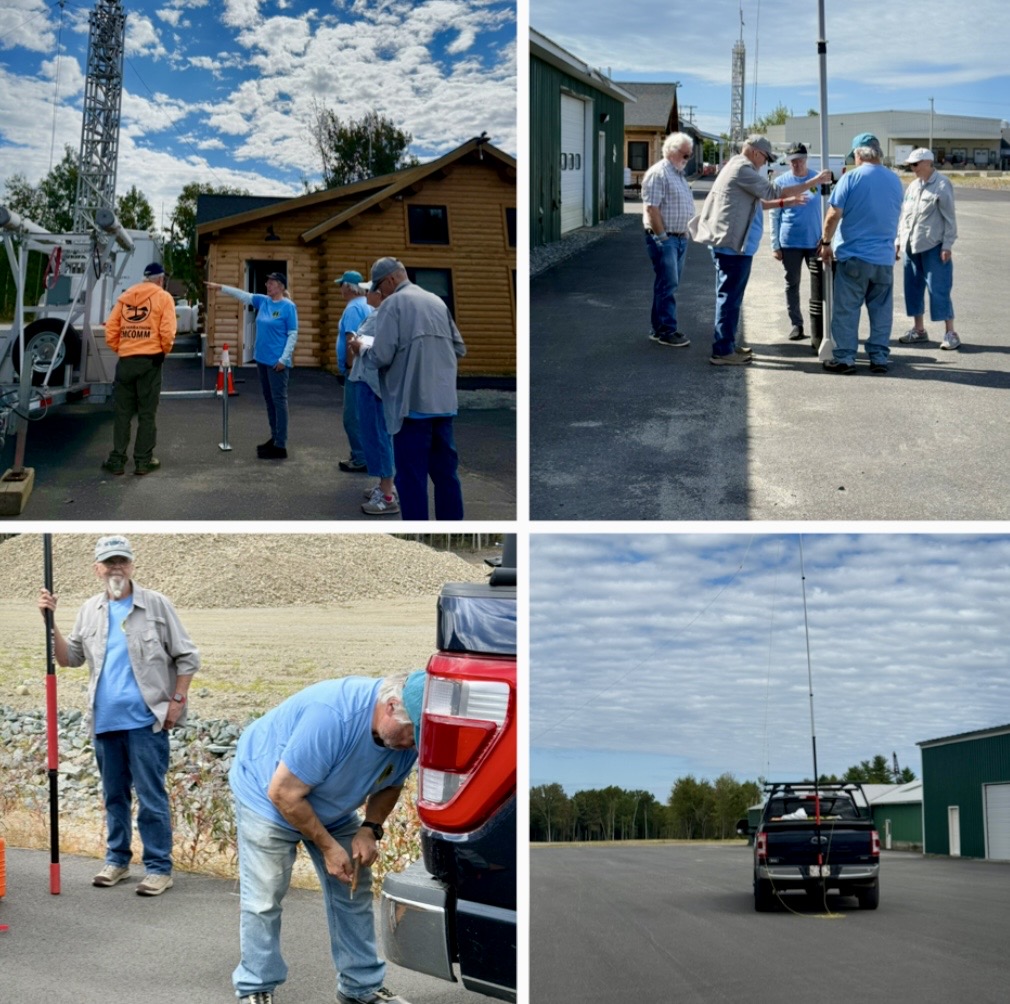
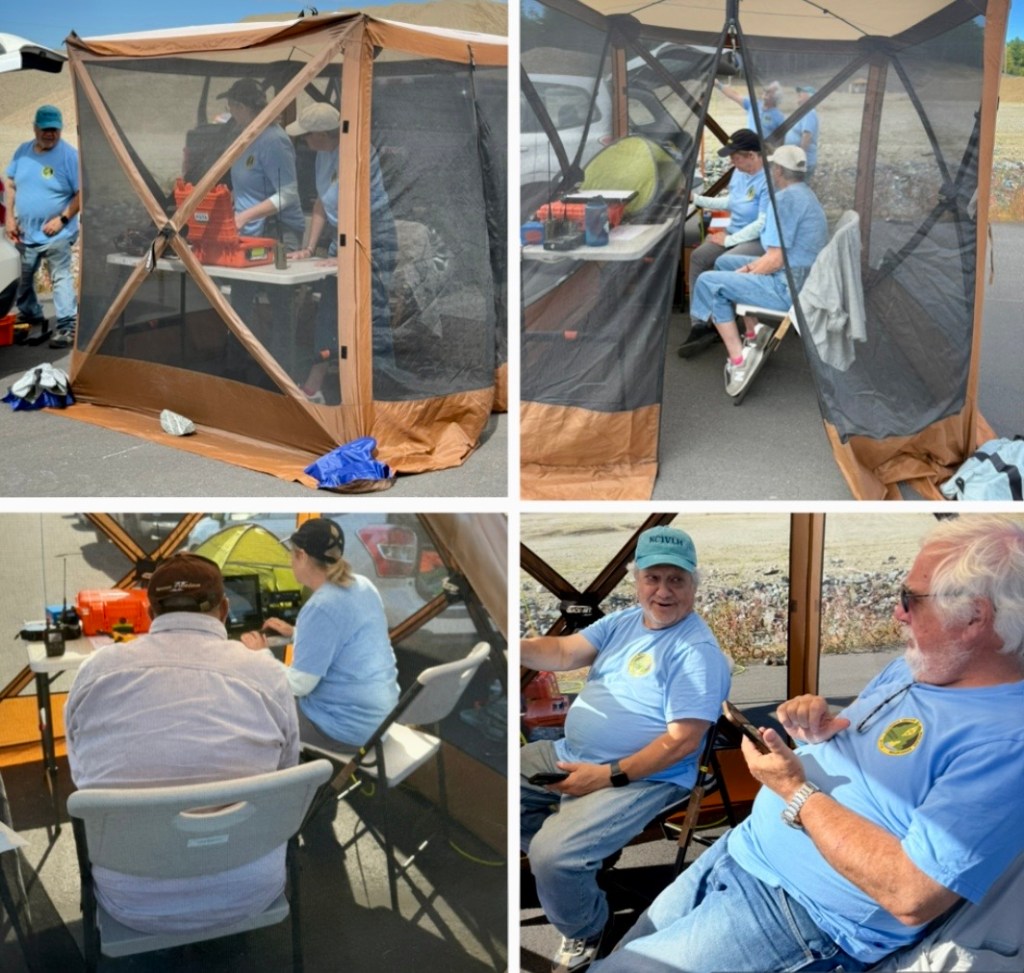
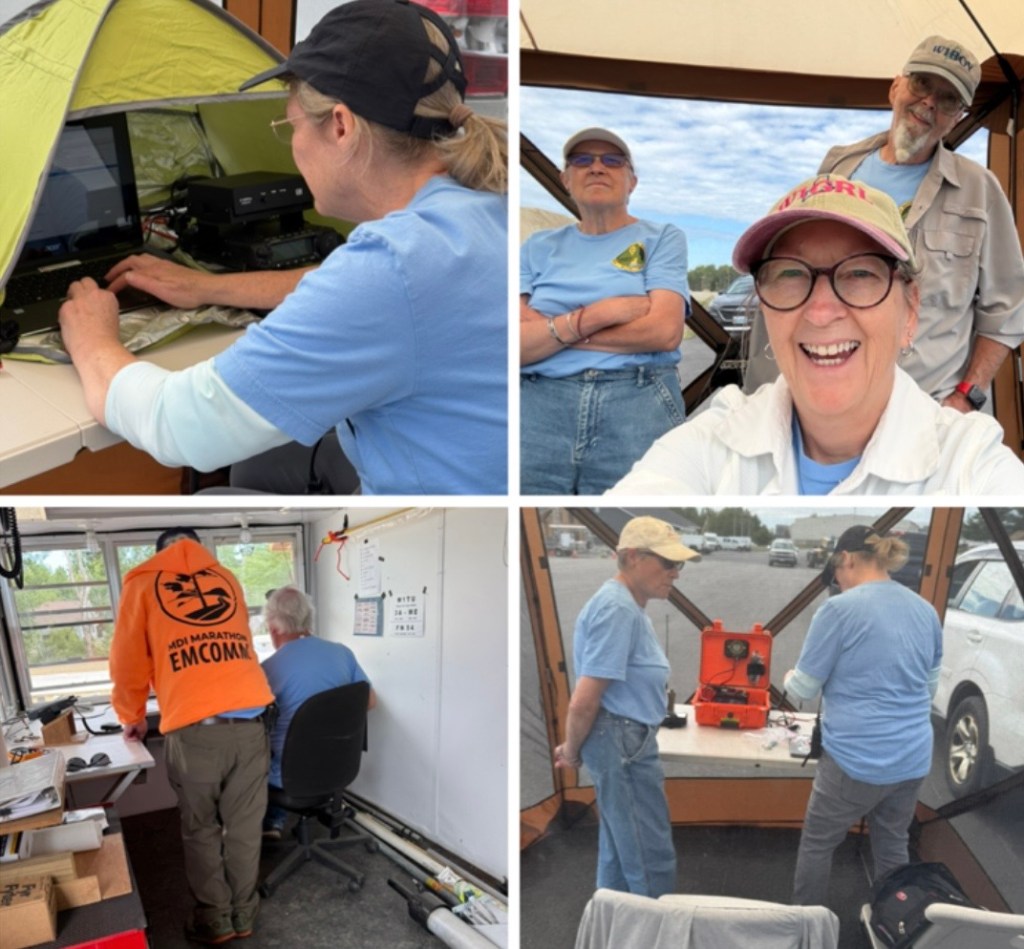
Random scenes from the day. The last two photos are yours truly, Marion W1GRL, running the 10K.

Community service, emergency practice, good food, and warm, sunny weather — we couldn’t have asked for anything better!
Written by Marion W1GRL

2026 Ham Radio Symposium: Focused Communications

The annual EAWA Ham Radio Symposium, held on Saturday, April 18, offered attendees five presentations, several information tables, a raffle, light refreshments, and wonderful conversation. The event started at noon with greetings from John KQ1P, the President of the Ellsworth Amateur Wireless Association, and Jeff KA1DBE, the Symposium Coordinator. Below is a quick review of the presentations and photos of special interest groups represented at the symposium.

Jeff KA1DEB welcomes everyone to the symposium.

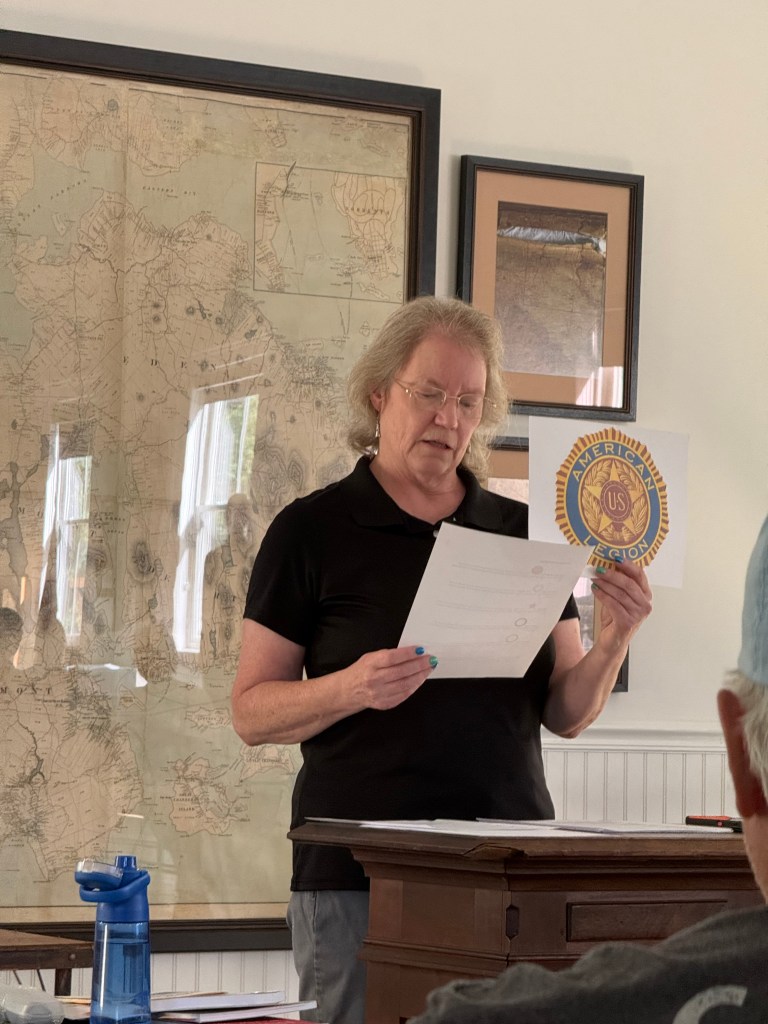
The first presenter, Marion W1GRL, shared ways to get the most from a free app called “HamAlert.” The app sends notifications when certain callsigns or locations are active. She demonstrated how to set conditions using several examples, including setting alerts for when a friend is activating a POTA park on a particular band, a needed state for WAS (worked all states) for a particular band and mode, specific needed POTA parks are activated, and when needed DXCC entities are active. One item she emphasized is the use of the spotters’ locations, choosing spotters that make it more likely a ham can hear the other station. A second item was the value of connecting ClubLog to HamAlert.

Marion W1GRL shares ways to maximize the conditions in HamAlert

The second presenter, Gerry W1VE, demonstrated how easy it is to use a remote radio connection to make a QSO. He shared stories to illustrate the value of remote radio, and busted the myth that remote radio is always an expensive operation. The information he presented can be found at https://remote.radio. Gerry also shared an app he created to show operators where propagation is in their favor, the RBN S-Meter. This app is found at https://rbsm.rm.gl/.

Gerry W1VE makes a QSO from the podium and later shares his latest app.

The third presentation, given by David and Dakota, was an introduction to MaineMesh, an off-grid Mesh Network. They shared reasons why this off-grid communication system is useful, and why they chose Meshtastic over Meshcore for their needs. For someone who would like to be a part of the mesh network, they shared tips on choosing mobile and base station hardware, and filters, as well as ways to configure the settings. You can learn more at MaineMesh.org. The pair highly recommended the Discord to find more information.

Jeff introduces David and Dakota.

Greg KC1RID was the fourth presenter, sharing tips for 3D printing ham radio-related items. He summarized some of the evolution of 3D printers, comparing previous high cost/early development printers to the current wide-ranging cost points and capabilities available today. The talk began with an introduction for anyone unfamiliar with 3D printing, moved to equipment and CAD software considerations, and then explored ham-radio related projects. Greg brought many actual examples of the items he discussed in his slide presentation. His primary message was that with current capabilities and resources, anyone can master the basics of 3D printing for ham radio-related items.

Greg shares slides and 3D printed ham radio items.

The fifth and final presentation was given by Jeff KA1DBE, highlighting the various uses for APRS (Automatic Packet Reporting System). The primary focus of the talk was to show that APRS can be used for messaging as well as tracking. He reviewed how to send messages and bulletins, check your inbox, and use QRX and APRSLink.

Jeff shares reasons to use APRS for more than tracking.

Between sessions, attendees had an opportunity to browse several information tables as well as talk with presenters and enjoy some snacks. Members of three special interest groups set up information tables and stayed close to answer any questions.

Members of the Downeast Chapter of the North American QRP CW Club, from left to right: Stan W1BOY, John KQ1P, Joan W1DLC, Phil N1EP, Dick W1KRP, and Jeff KA1DBE.
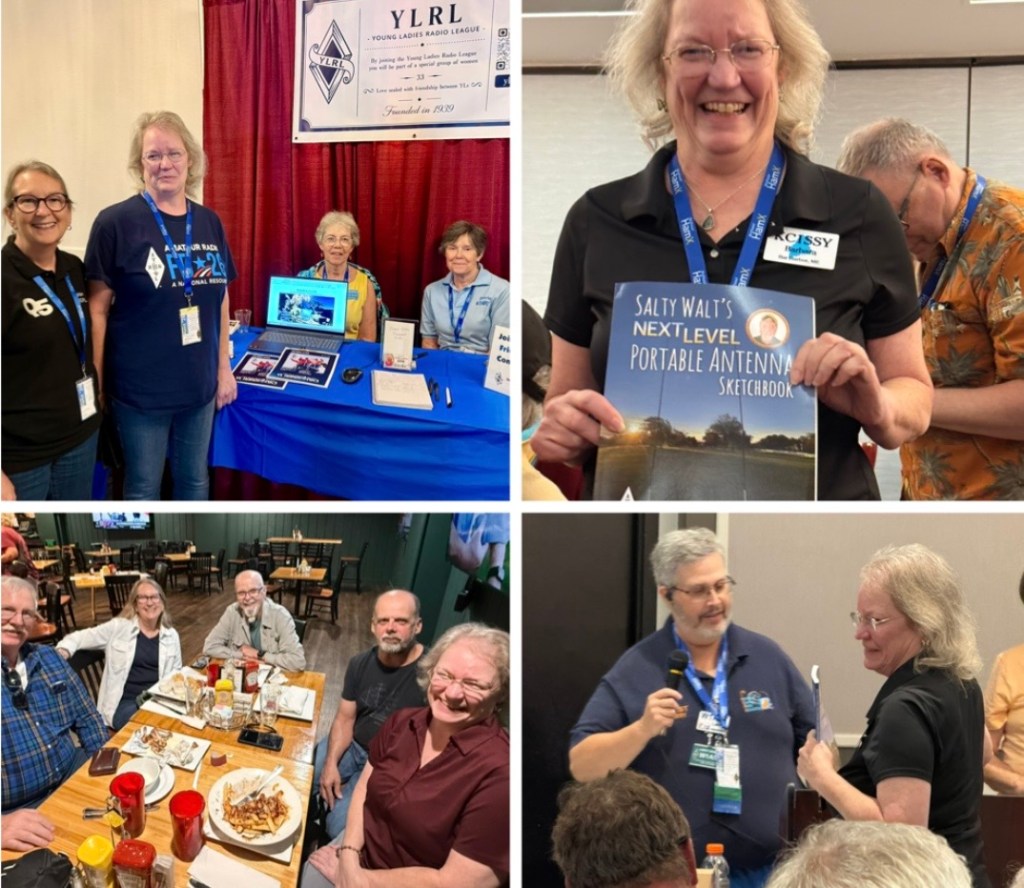
Pictured at the left, Joan W1DLC, Barbara KC1SSY, and Marion W1GRL, all members of the Women Radio Operators of Maine and the YLRL (Young Ladies Radio League), shared information about their groups and other radio women’s organizations. In the lower right, the day was shared with Judy KI4VCQ and Bernie KI4VCR.

The 2026 annual symposium ended with a 50/50 raffle drawing and many declarations of success! Special thanks goes out to Jeff KA1DBE for taking the lead on this event, the presenters, and the many helpers who made this special afternoon possible. All who attended left with new knowledge and inspiration to try some new things. It’s clear why the annual symposium is a highlight in the yearly schedule of the EAWA.
Written by Marion W1GRL
POTA Plans & Goals for 2026

As Winter turns to Mud Season in Downeast Maine, many EAWA members and friends are thinking of the upcoming Parks On The Air (POTA) season. Yes, hams can activate POTA year-round, but many of us wait for the milder temperatures of spring to start our POTA adventures. POTA is not only popular among our local hams, it’s exploding in popularity around the world. According to Kevin Thomas, a member of the POTA Board of Directors, “More than 85,000 parks are now active across 236 DX entities, with over 84,000 registered operators.” He also noted that the POTA website “processed 10.6 million QSOs in 2023, 13 million in 2024, and 15.2 million in 2025.”

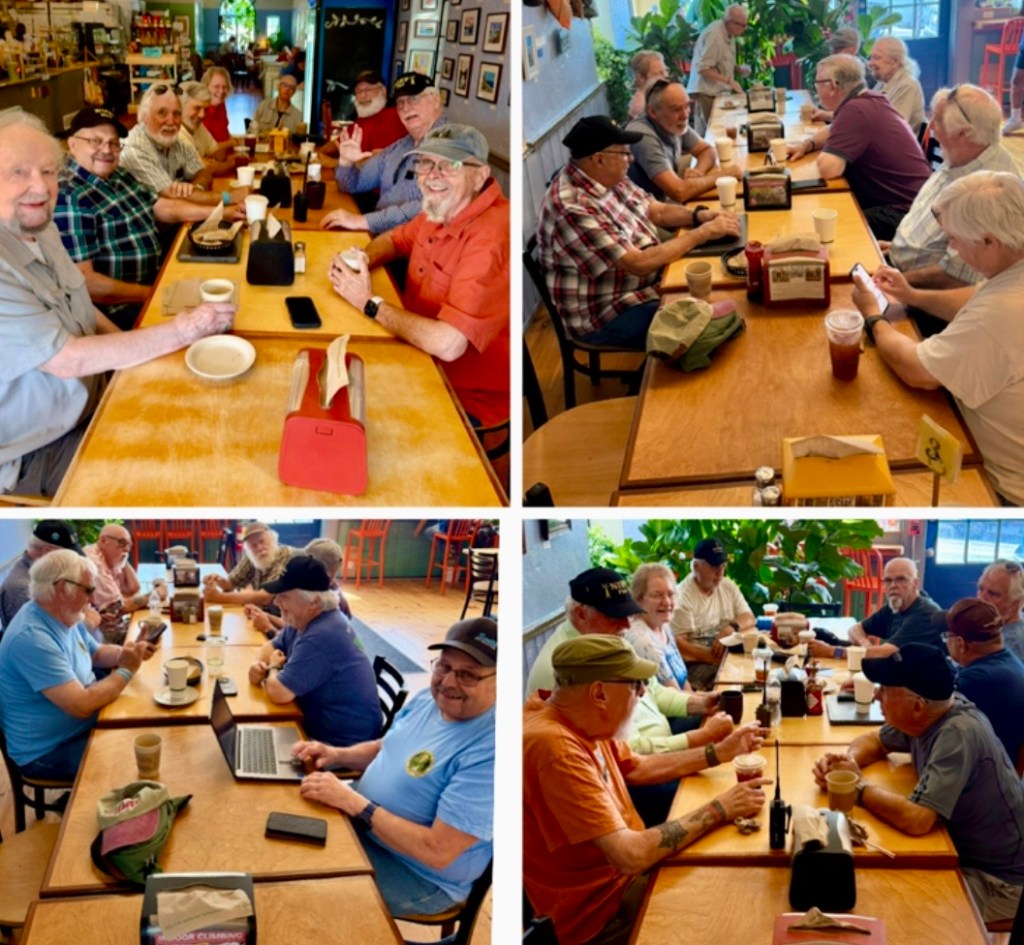
Photos from the EAWA Club POTA Activation last October. Starting in the top left is John KQ1P, Joan W1DLC, and Jeff KA1DBE.

Part of the fun of any ham radio activity is setting personal goals, then working to achieve them. In the POTA program, some of those goals may involve achieving POTA.app awards. Whether it’s that very first award, the Bronze Award, for activating/hunting 10 different parks, the Sapphire Award for activating/hunting 75 different parks, the Kilo Award for activators who have made 1,000 QSOs from the same park, or the Rhino Award for activating 10 different parks in 24 hours (a POTA Rove Award), there are many short-term and long-term challenges to consider. (See the full list here.)

The Bronze Award is the first POTA award in a long, long list of potential achievements and certificates.

There is a new POTA challenge slowly gaining popularity that comes from POTA News & Reviews, called the Pack Mule Award. This challenge involves hiking all your equipment into a park such that you are at least 1/2 mile from your vehicle. The Award requires 100 hiking activations, with at least 22 QSOs per activation. This certainly qualifies as a long-term challenge! (See more about the Pack Mule Award here.)

For some operators, the awards are nice but secondary to the personal goals and challenges that keep their POTA experiences fresh and interesting. Let’s hear from some of the EAWA members regarding their 2026 POTA goals.

Joan W1DLC plans to activate Baxter State Park, using CW and 10 watts. She added, “In addition to other camping activations, I am looking forward to operating with my POTA friends Barbara KC1SSY and Matt KC1VLH.”

Matt KC1VLH, shared “My goal is that by the end of the year I hope to add parks in the remaining 3 New England states as well as New York and Pennsylvania. I also plan to get other Maine state parks.”

The upper photo is the set-up Joan W1DLC plans to use in Baxter this summer. The lower photo shows Matt KC1VLH operating in Methuen State Park in Massachusetts last November.

Barbara KC1SSY shared that one of her goals has already started, which is to try her best to make a POTA contact everyday. Her second goal is “to increase my number of individual and group POTA activations through 2026, including some new-to-me parks and ideally at least one in another state.”

Dick W1KRP said, “2025 was a ‘year to forget’ so 2026 is going to be the opposite. POTA is at the top of my fun-list.”

John KQ1P hopes to try bicycling to a location for an activation, enjoy the EAWA club POTA activations, and to activate some new-to-him parks.

Greg KC1RID, an avid SOTA activator and hiker, said that while at Baxter State Park this year he will “at least do POTA in the evenings.” He added, “one of my goals is to hike all the Maine 4000′ mountains, so I might bag one or two other mountains outside of Baxter.”

Photos from the 2024 EAWA Club POTA Activation. In the photo are Dick W1KRP and Barbara KC1SSY in the top row, and Greg KC1RID and Chuck KA1X in the bottom photos.

Stan W1BOY stated his goals included “more activations this summer, both 100w picnic table portable and QRP hiking portable.” Stan has his eye on the Pack Mule Award.

Marion W1GRL shared that she hunts POTAs often, but hasn’t completed many activations. Her goal is “to keep up with W1BOY’s activations and use CW for POTA QSOs.”

Photo from 2025 shows Stan W1BOY and Marion W1GRL operating from the Fabbri Picnic Area in Acadia National Park.

In a club the size of the EAWA, there are likely to be active POTA hunters and operators not mentioned here. For example, Mark W1ABY is a dedicated POTA hunter. There are also those who support POTA operators, both human and canine. In a location as beautiful as Downeast Maine, combining ham radio with the natural landscape creates a perfect match!

As you make your POTA plans, mark your calendar for the Maine-wide POTA Day, Saturday, May 16. Also, keep an eye out for the traditional fall EAWA Club POTA activation, which usually comes around in September or October. If you haven’t tried POTA yet, perhaps reading these goals will inspire you to become a POTA operator. The people mentioned in this article would be happy to chat with you if you have questions. POTA ON!
Written by Marion W1GRL