Congratulations to Recent 5 Band DXCC Award Recipient: Matt W1MRH

As the award in the photo shows, EAWA member Matt W1MRH has contacted and confirmed at least 100 countries or entities on the five primary HF contest bands: 80, 40, 20, 15, and 10 meters. In addition, he has secured the required 100 confirmed contacts on 160, 30, 17, and 12 meters. At the time of this writing he had 77 confirmed entities on 6 meters. Across all bands, he has confirmed 295 countries on the DX list.
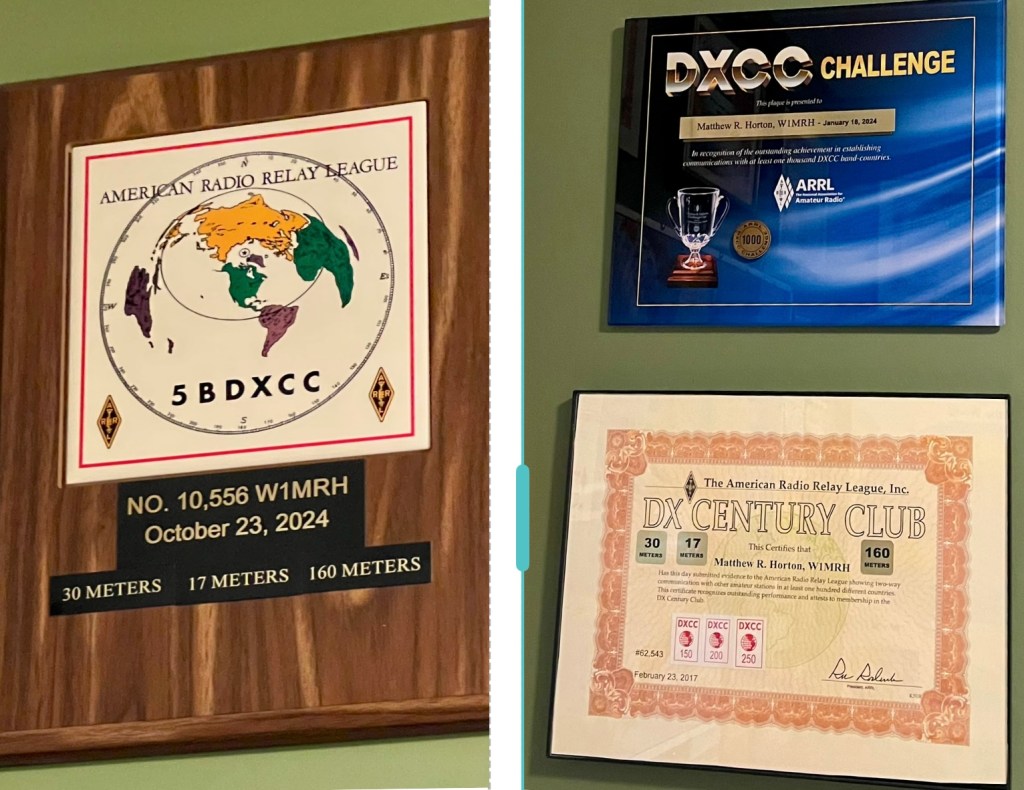
Just a few of the many awards adorning the walls of Matt’s radio room.

Matt and a few others in the EAWA who have achieved this award are in rare company. According to an ARRL article published October 4, 2021, there are approximately 780,000 hams in the U.S. and 1.75 million world-wide. Matt is #10,556 to reach 5 Band DXCC, putting him in a group of 1% of the hams in the U.S. and a group of 0.6% in the world.
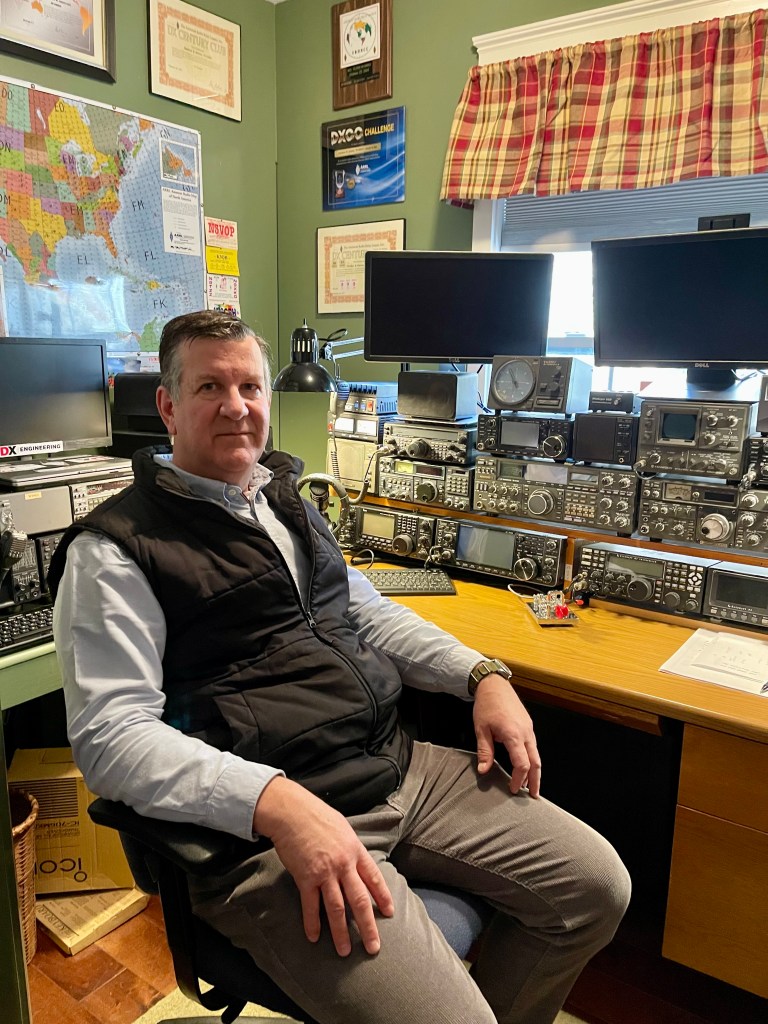
Starting with an interest in short wave listening, Matt acquired his first license in 1980, General in 1983, and Extra in 1991.

To reach his DXCC goals Matt has employed all the major modes, with most of his contacts made on phone or CW. His primary radios include an Elecraft K3, Icom IC-7300, and an Icom IC-7610. He has a tower with multiple antennas, four wire antennas, and a satellite antenna. In order to chase any DX signal quickly, he has various radios and antennas tuned to particular bands. Following a remark on the great set-up, he quickly added that most of the DXCC contacts were made with a dipole and 100 watts — sophisticated equipment is not required.
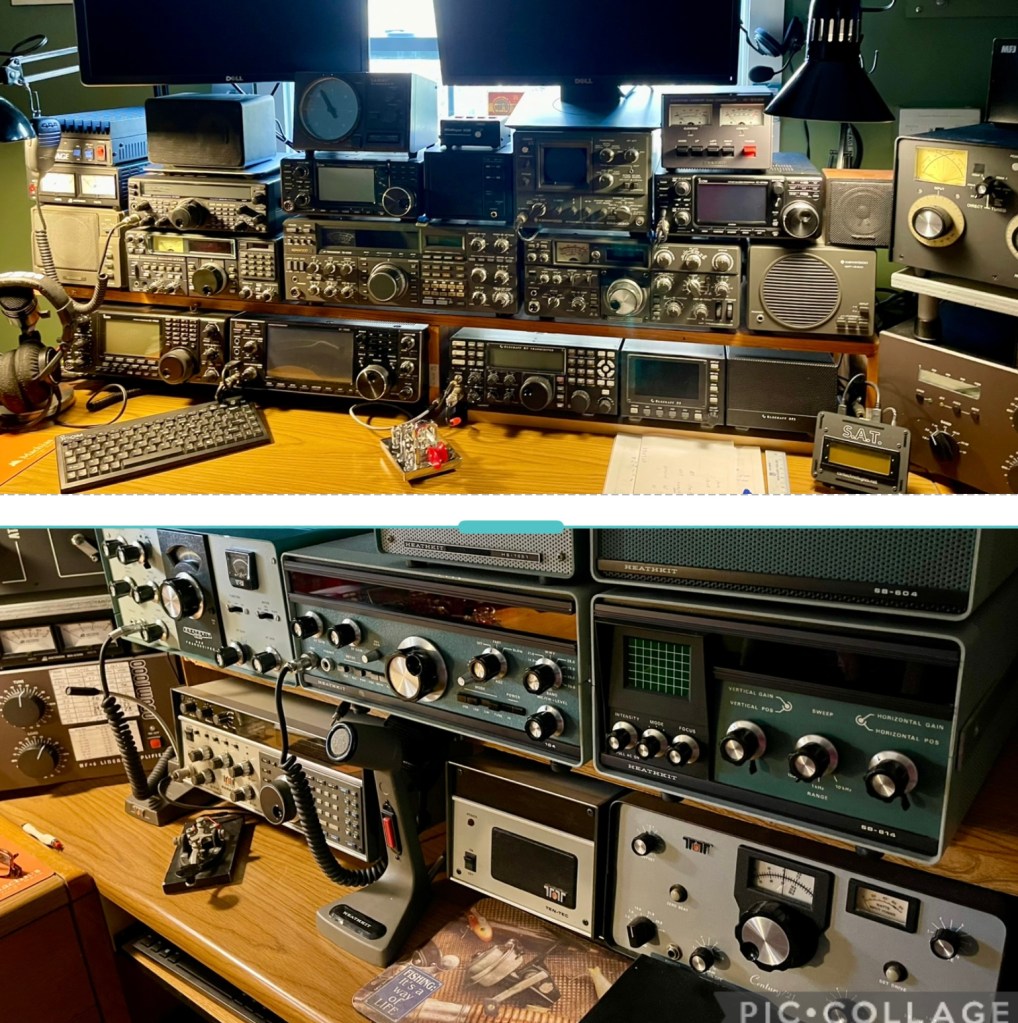
The array of buttons and knobs was mesmerizing.

Matt began a dedicated effort to complete the 5 Band DXCC Award in 2014. When asked about the countries hardest to get, he rummaged through a sizable tub of QSL cards and settled on contacting Japan and New Zealand on 6 meters, and gaining confirmations from Afghanistan, Yemen, and Somalia. Today he continues his DXCC quest, working on 6 meters and adding new countries on particular bands. Currently he works mostly CW and FT8/4, and enjoys the January and June Field Days. 
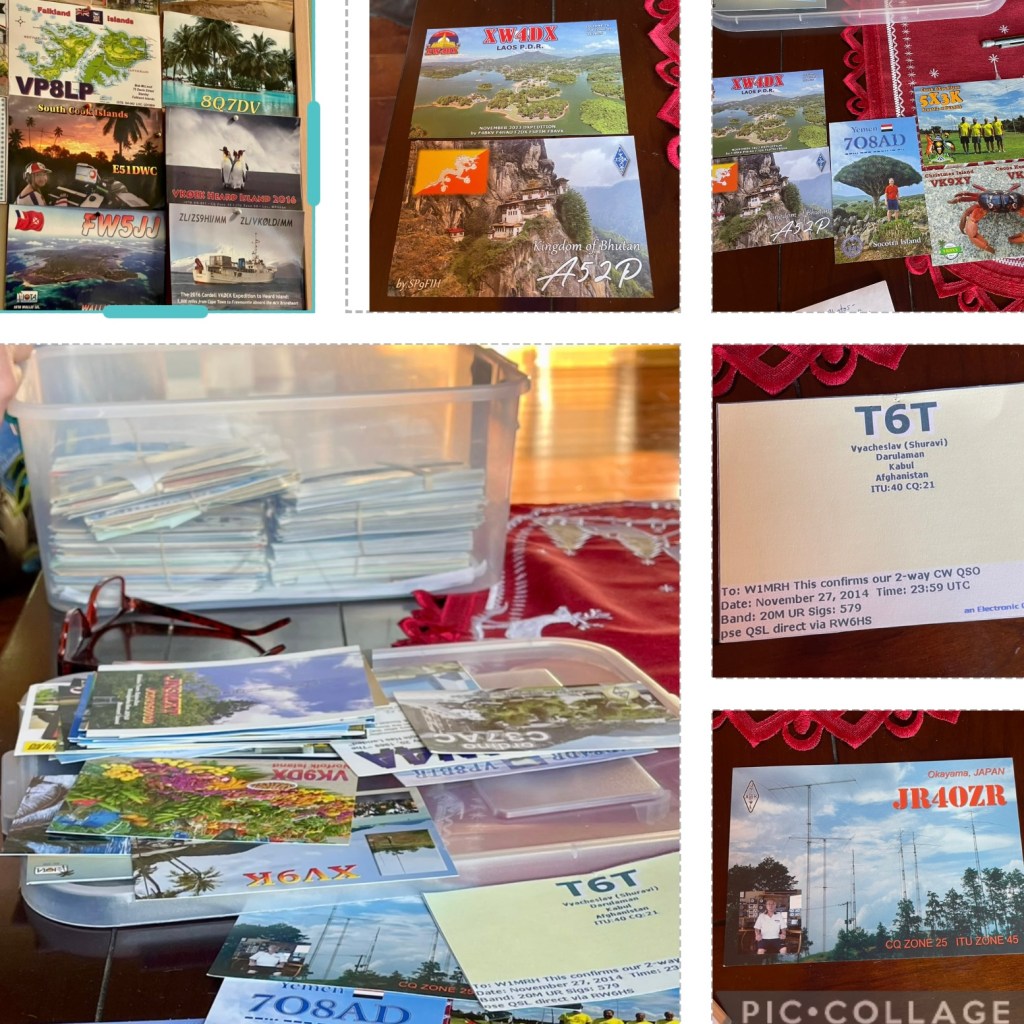
This doesn’t include the many QSL cards on the wall in his radio room.

When asked what advice he would give to someone who wants to achieve DXCC on multiple bands, Matt said to commit to it, be patient, find a DX cluster (spotting site), and use LOTW. Based on listening to his story, it also takes daily hunting and persistence in the follow-through from contact to secured confirmation, whether through international mail, LOTW, or some other means.
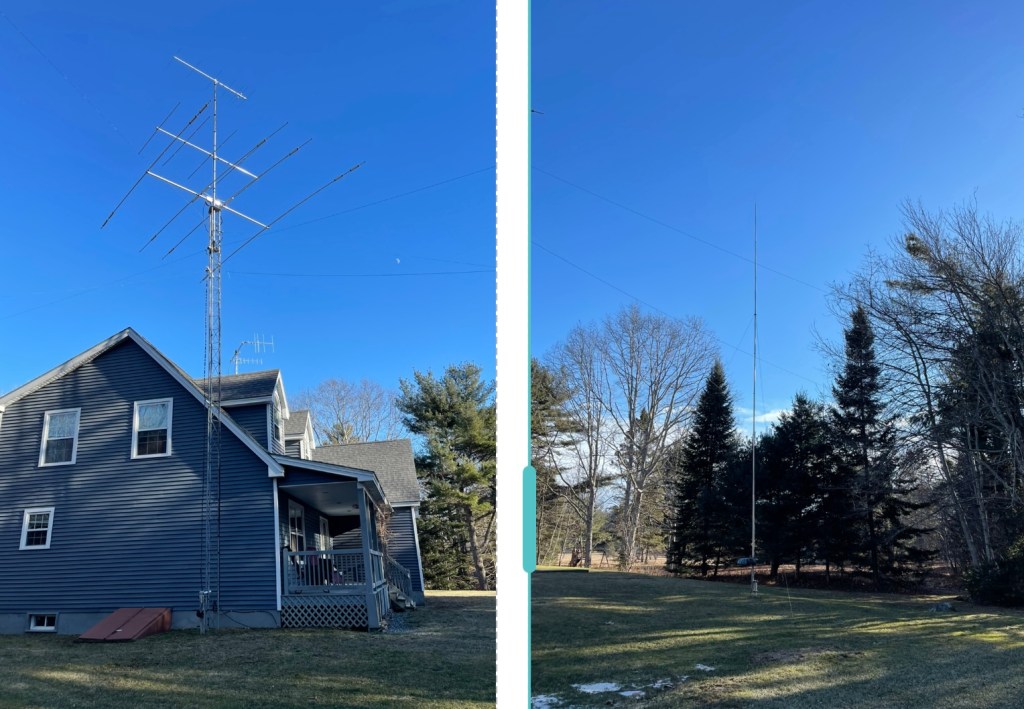
Matt uses multiple antennas to increase the opportunity to work more DX stations.

Congratulations Matt! Thanks for sharing some of your DXCC journey and inspiring others to join in the hunt for QSOs around the world.
Written by Marion W1GRL
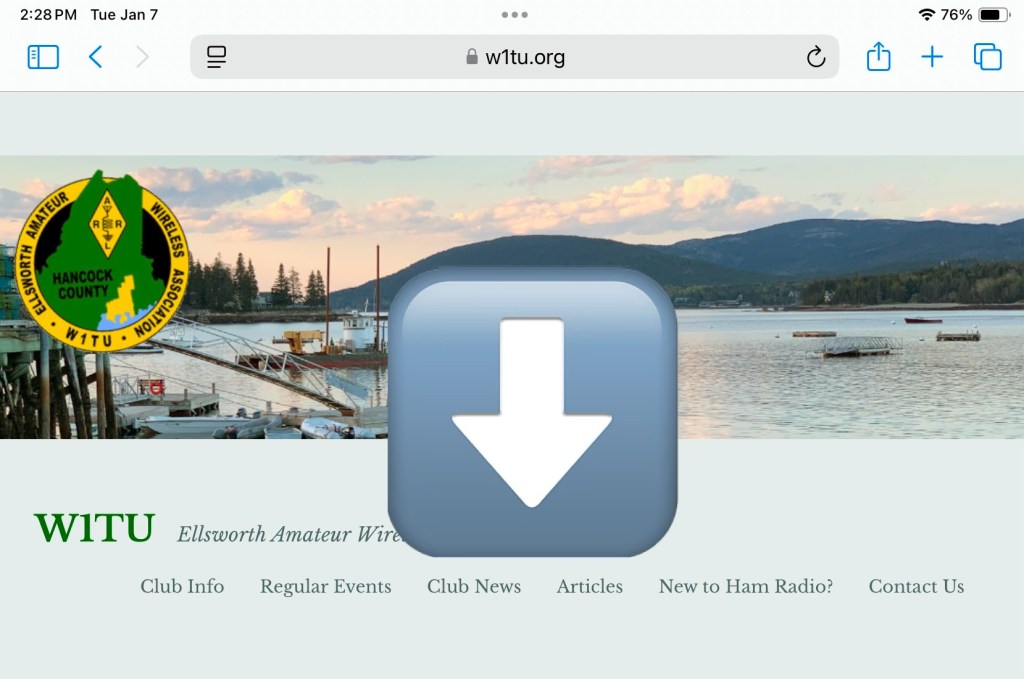
Happy 1st Anniversary to the “New” EAWA Website!

EAWA members and friends are so accustomed to the redesigned website that it feels like it’s more than a year old! The feel of the website and the articles have evolved and grown over this first year, prompting a few minor changes. The opening page of the website still looks and functions in the same way. We, Marion W1GRL and Stan W1BOY, have added Announcements to the pinned-to-the-top “Upcoming Events.”

One of our goals was to make it easier to find older posts as some of them are quite good (hi hi). Seriously, some of them, such as the post on how the weekly nets are run for someone new, should be easy to find. With that in mind, we have changed the tabs at the top from Announcements and Happenings to Club News and Articles. Club News items are tied to specific club events such as monthly meetings, whereas Articles share news about particular EAWA members or more general club functions. The post on the nets is an example of items in the Articles tab. Some posts may show up in both categories.

Finally, there is a way to get a link to a particular post, should you want to keep the address to a useful post or perhaps one you are mentioned in. Someone may, for example, want to keep the specific address to the post about how the nets are run. This process works for any post: First, find the post and click or tap on the title.

Once clicked, the post will appear in its own window, with its specific website address.

If you click or touch the address box at the top, you will find the website address that will always take you directly to that article.

Once the address appears, there are many ways to save it, such as using the copy-and-paste process.

As club grows so does the website. It’s likely that a year from now there may be a few more small changes. The important thing is that the awesome content — the awesome things happening with the EAWA — is easy for all to find. Here’s to a great 2025 for the EAWA and many of good stories and articles for the website.
Written by Marion W1GRL

2025 Arrives with Coffee and Good Cheer!

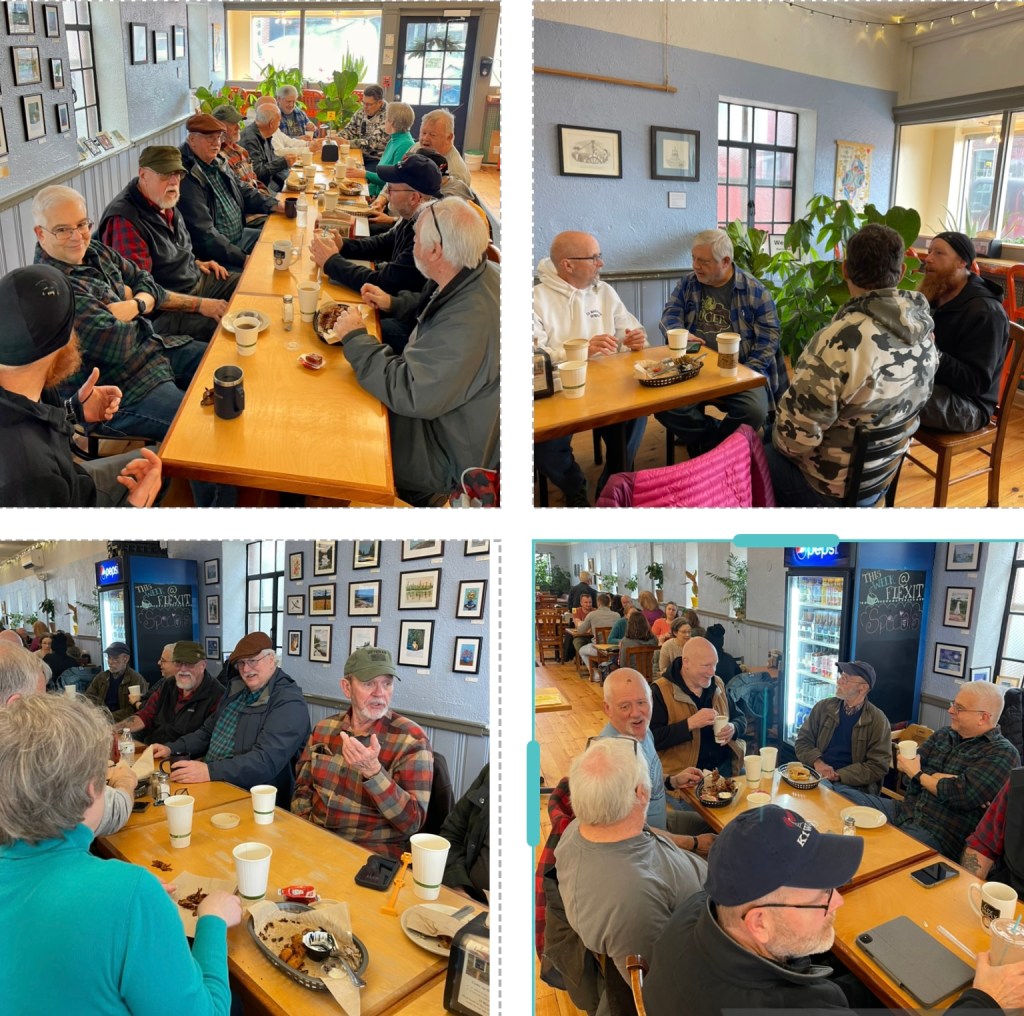
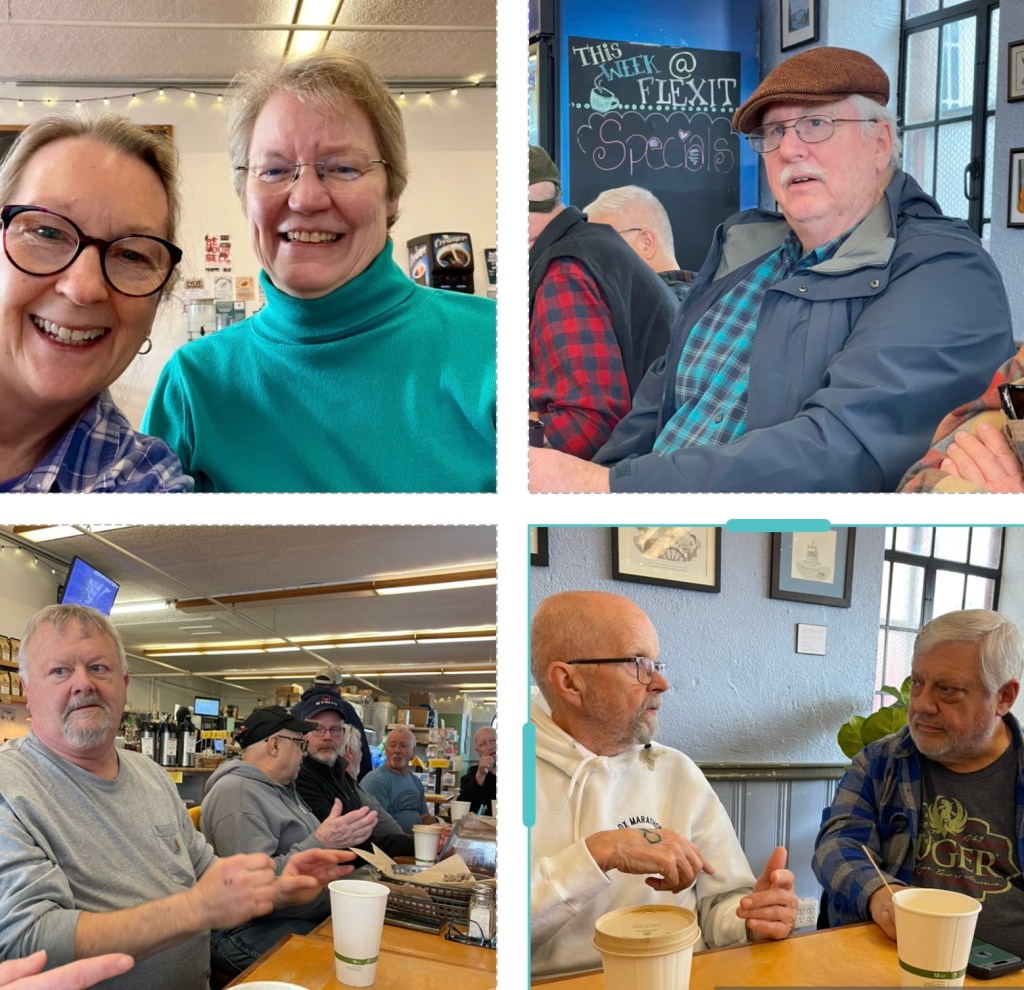
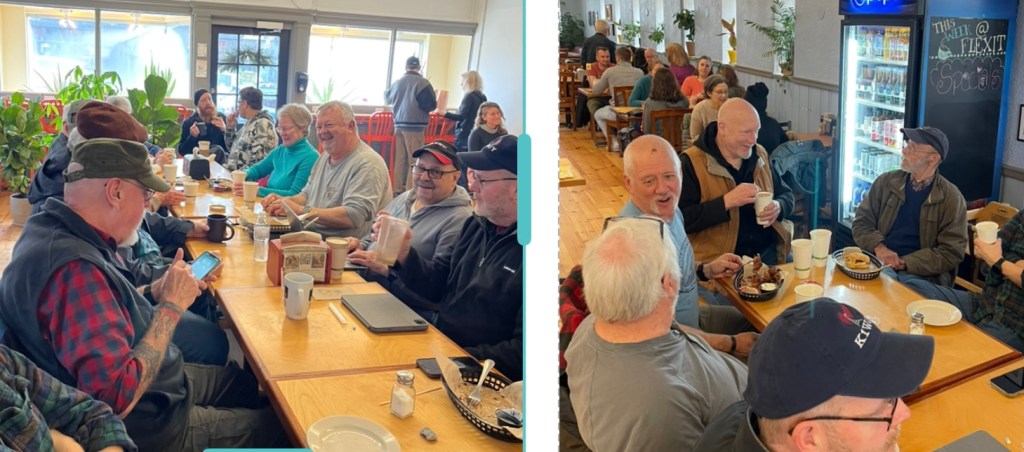
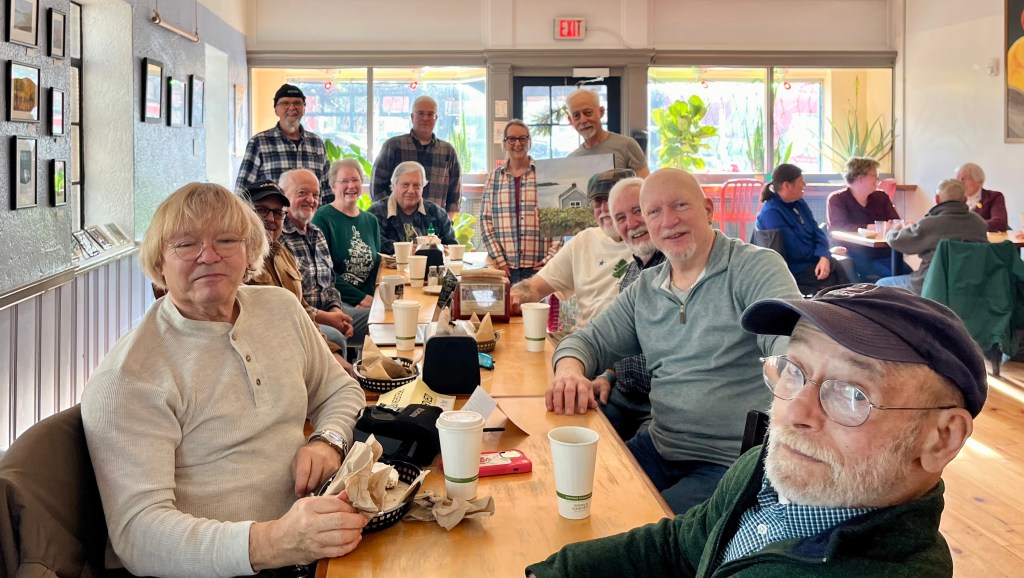
Approximately 20 (we lost count) EAWA members and friends met at Flexit Cafe for our weekly “Clandestine Coffee” gathering. It was delightful to see many new and old friends! Listening to the various conversations revealed that hardly a ham radio-related topic remained untouched during the 2+ hours of chatting.

A few things overheard around the table included studying for General or Extra licenses, moxon antennas, and who was on the net last night.
Additional topics included recent contests, APRS, and upcoming hamfests.

With such a great kick-off to 2025, it seems the Ellsworth Amateur Wireless Association and friends are ready for an active, community-building year!
Written by Marion W1GRL

The EAWA Weekly Net is 30 Years Old! 

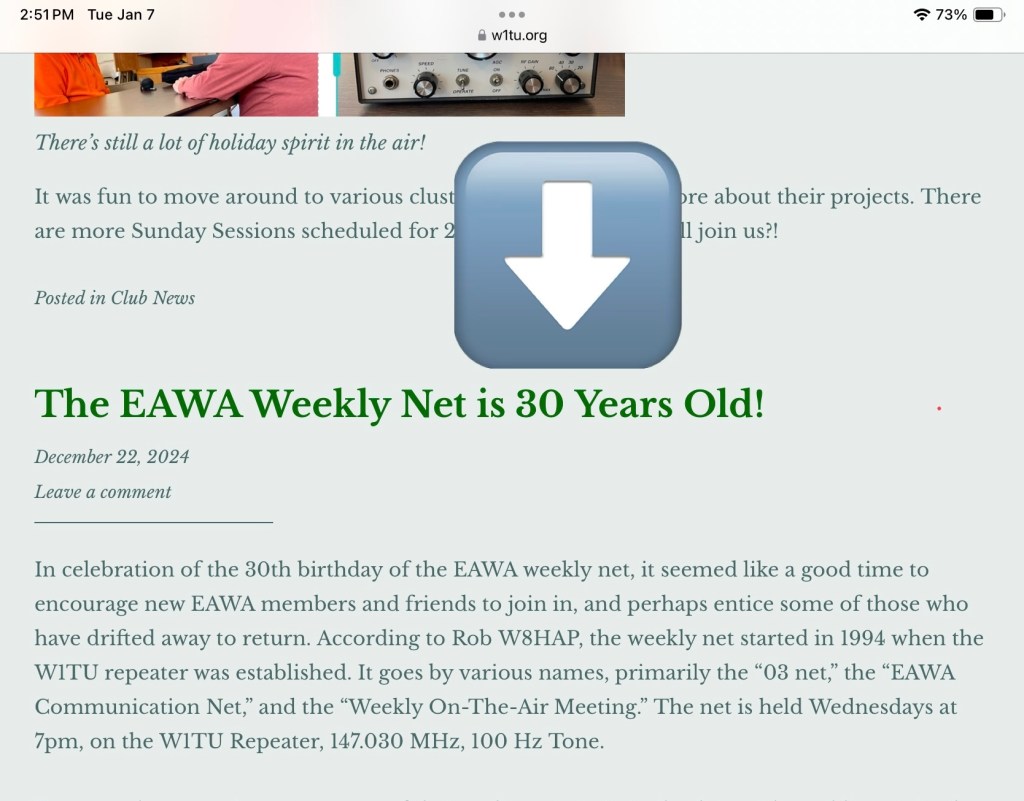
In celebration of the 30th birthday of the EAWA weekly net, it seemed like a good time to encourage new EAWA members and friends to join in, and perhaps entice some of those who have drifted away to return. According to Rob W8HAP, the weekly net started in 1994 when the W1TU repeater was established. It goes by various names, primarily the “03 net,” the “EAWA Communication Net,” and the “Weekly On-The-Air Meeting.” The net is held Wednesdays at 7pm, on the W1TU Repeater, 147.030 MHz, 100 Hz Tone.

For many hams, an important part of their radio activity is to check in with weekly nets. In the same way that Field Day is a routine practice exercise to make sure we are ready if a large scale emergency occurred, checking in to weekly nets is a routine practice exercise to make sure we are ready if critical information needed to be shared or someone on the net needed immediate help. Weekly nets let us check our equipment and practice the protocol used to organize the flow of the discussion. Participating in the net also builds relationships within the radio community. 

Net Control: On any given Wednesday evening there will be ten to fifteen people checking into the net. When it’s all voice based, there’s no waiving a hand to get permission to speak. The Net Controller is the one who is in charge, directing the listeners as to who has permission to speak (otherwise it would be like working a pile-up in a contest!). The net control position is rotated among those willing to serve in that role. The current group consists of Joan W1DLC, Barbara KC1SSY, Chuck AC1BS, and Mel W1MEB. Contact Joan if you want more information about volunteering as a net controller. She has found that being a controller has further developed her radio skills and offers her a way to give back to the radio community.

Joan W1DLC and Barbara KC1SSY, while preparing for the MDI Marthon Emergency Communications program, graciously posed for a Net Control photo.

Listen: If you are new to the net, keep in mind that it is not a conversation or a rag chew. The net controller will begin with several sentences introducing the net. Listen closely to the information and instructions. To “check in” means to give ONLY your call sign, name, and location. The time for sharing will come later.

Know when to speak: The first request will be for anyone with emergency or routine traffic to check in. Next, the controller will ask for portable/mobile operators to check in. The third group is, on a routine net, the bulk of the operators checking in. The net controller will ask for the check in information in alphabetical order by call signs, saying something like “Anyone with the A or Alpha prefix come now.” As you would expect, the call continues for those with Kilo, November, and Whisky prefixes. If you miss your turn or get to the net late, wait until the final call for anyone left to check in.

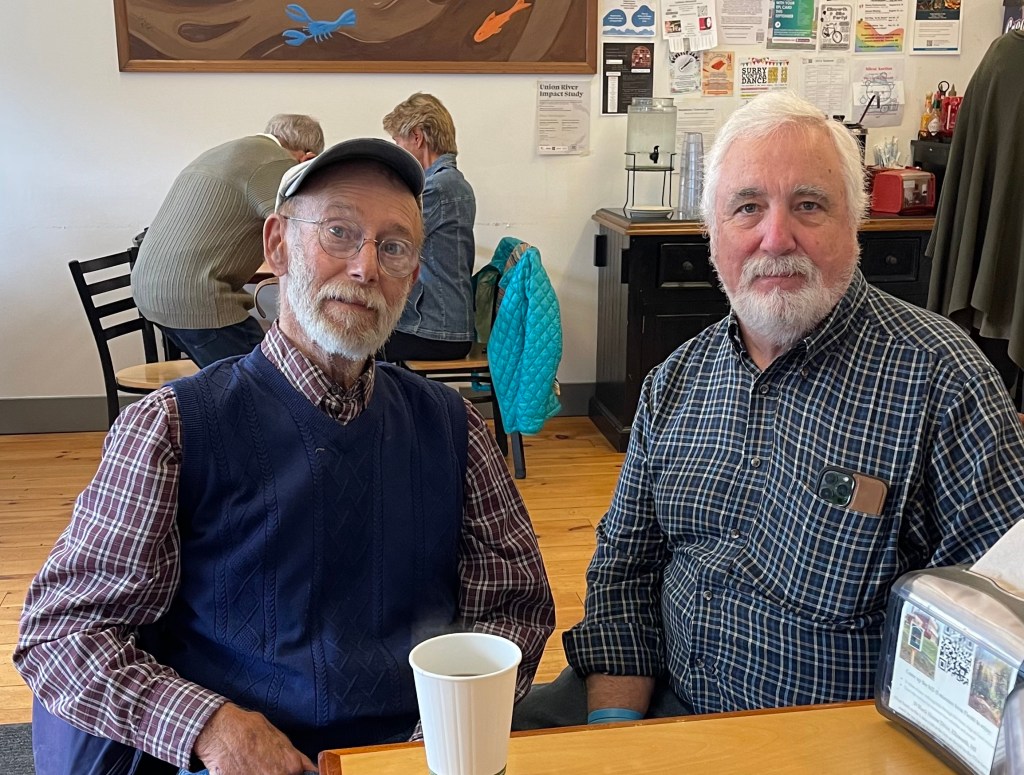
Chuck AC1BS and Mel W1MEB, while chatting at Clandestine Coffee, graciously posed for a Net Control photo.

Keep it short: The net controller will call on each person by call sign to speak. What do hams share? Usually it is radio related, such as trouble-shooting, progress on a project, or a piece of gear you recently acquired. It is important to remember that everyone has the opportunity to share, so if you do the math … 15 people speak for 15 minutes … you realize you should keep it short. When you have finished what you want to say, close with your call sign and “back to net control.” If you don’t have something you want to share, you can say “no comment,” “no traffic,” or “just listening” (and your call sign and ‘back to net control’). If you want to speak again, you’ll need to wait until everyone has had their turn and then give your call sign and say “re-check.” Then wait for the net controller to call on you to speak.

There are other nets that EAWA members and friends often participate in. These include the Maine Seagull Net (see maineseagull.net), the Hancock County EmComm Net, Tuesday 7PM, on the KB1NEB Repeater, 146.910 MHz, 151.4 Hz Tone, and the Mainely Analog Net, 146.835 MHz, 110.9 Hz Tone.

Building a strong, highly-skilled, prepared group of radio operators is foundational to the ham radio community at all levels. Local nets are one way we can support each other on our ham radio journeys. Happy 30th Birthday EAWA weekly net! Here’s to many, many more years of service!
Written by Marion W1GRL

Clandestine Coffee is Thankful for Flexit Cafe

The morning of Wednesday, December 18, started like any given Wednesday morning with the Clandestine Coffee radio operators drinking coffee and enjoying breakfast items at Flexit Cafe in Ellsworth. The group usually mingles for a couple of hours, with attendees coming and going. This morning, however, there was a surprise.

The EAWA members and friends who attend the Clandestine Coffee wanted to give a big THANK YOU to Flexit for their hospitality. The tables are always arranged nicely with “reserved” signs when the group arrives. The service is great, and everyone is friendly. To show appreciation, Dick W1KRP, painted a scene from Monhegan Island that Paul, the owner of Flexit, is particularly fond of. The smile on Paul’s face was genuinely heart-warming. The gift came with a card signed by all of the attendees.

Paul, the owner of Flexit Cafe, opening his gift

Please feel free to join us for Clandestine Coffee at Flexit Cafe, 142 Maine Street in Ellsworth. As Christmas and New Year’s Day fall on Wednesdays this year, the group will meet on Thursdays at 9:30am — December 26 and January 2 — before returning to Wednesdays at 9:30am.

Clandestine Coffee attendees after a round of applause for Flexit Cafe!