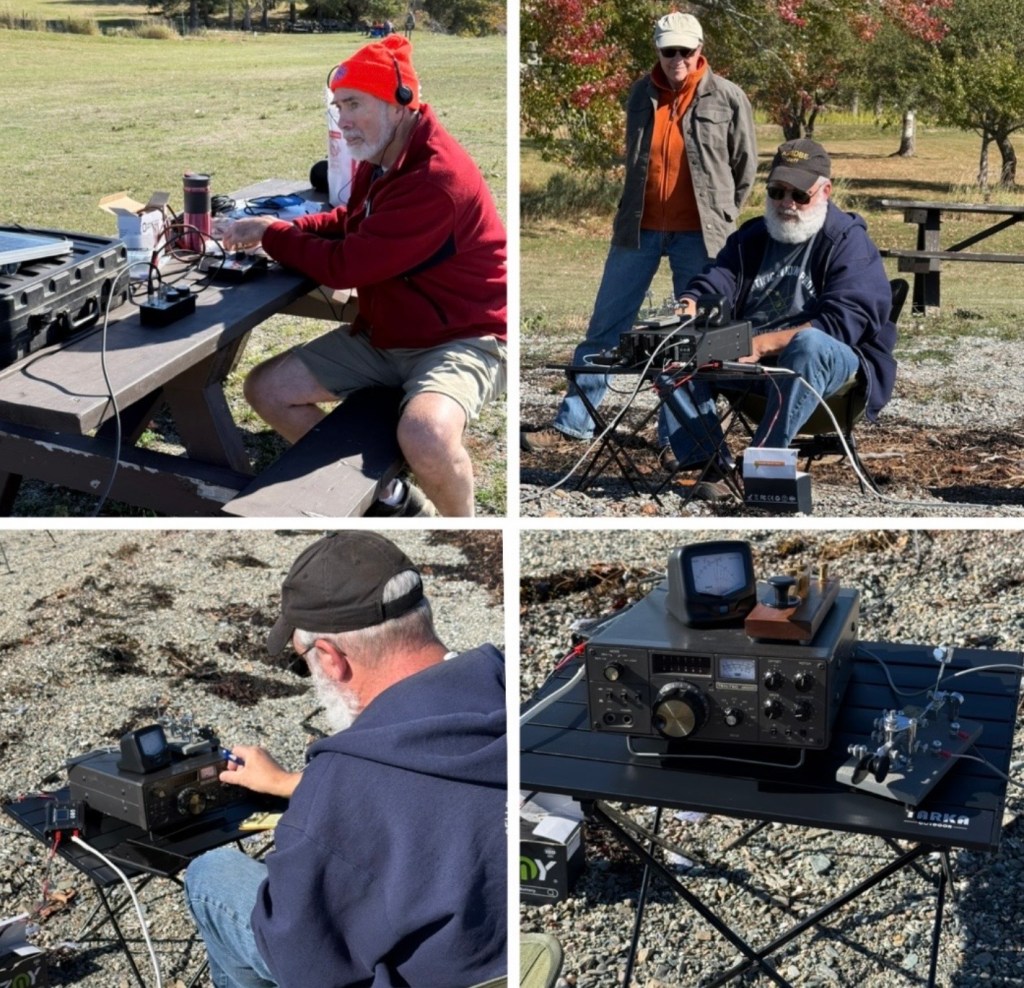
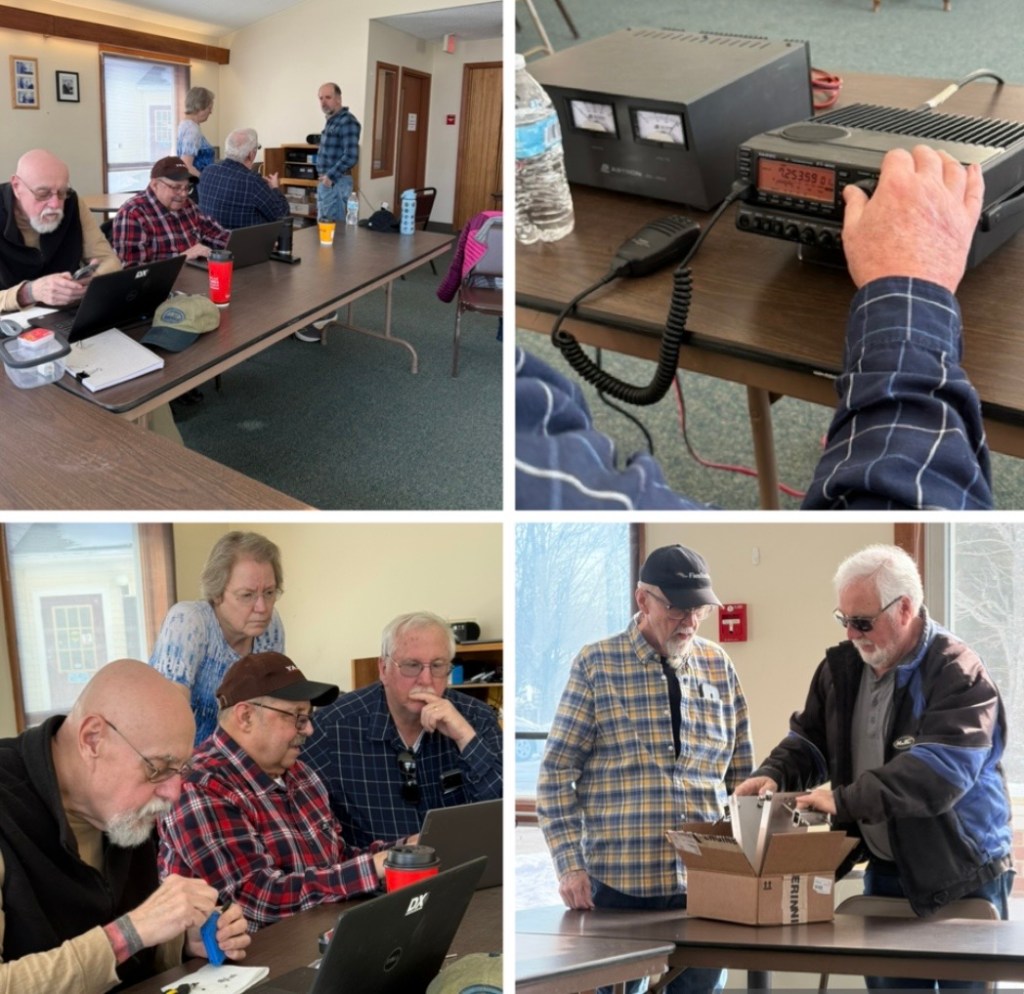
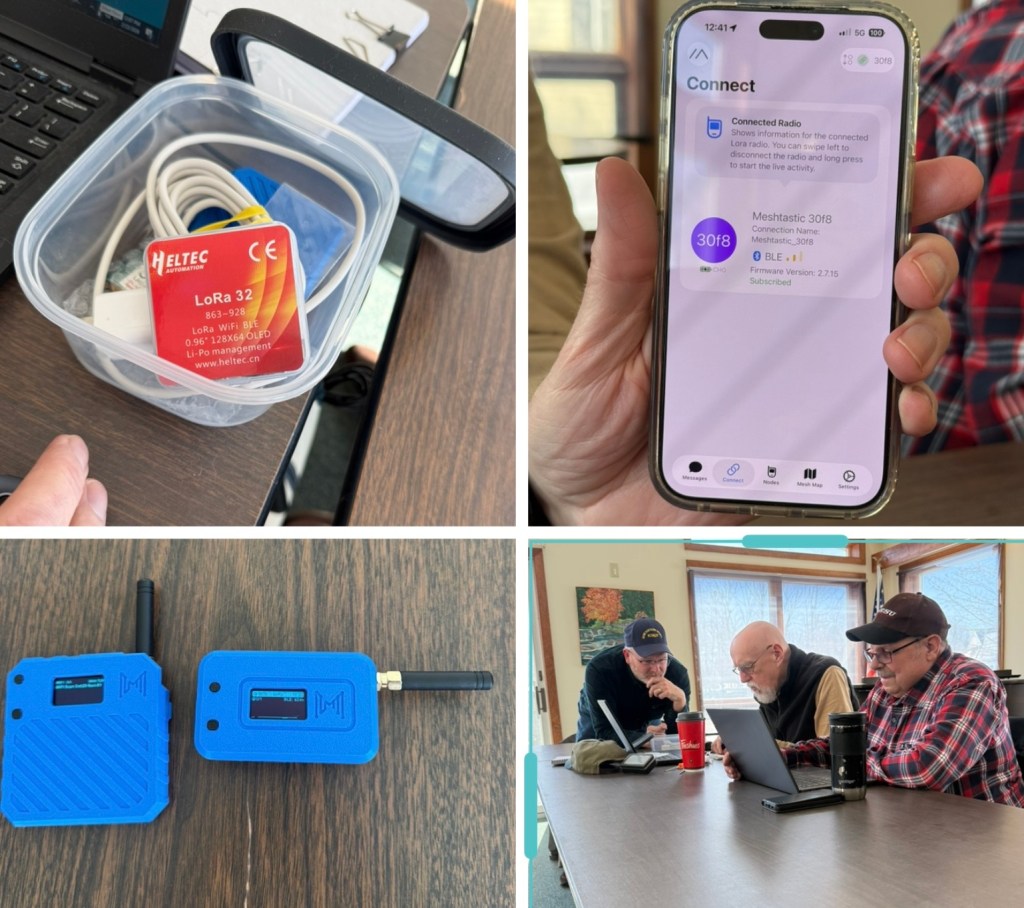
EAWA Members Prep for ARRL America250 WAS Awards

The ARRL has several initiatives for 2026 commemorating the Year of the Club and the 250th anniversary of the signing of the Declaration of Independence. The EAWA has sent in a club photo for a chance to be featured in QST, and has entered this website in the club website competition.

This article is focused on how you can participate in the largest initiative, the “America250 WAS,” is a year-long event offering several special awards through the ARRL’s Logbook Of The World (LoTW).

Using the terms in LoTW, there are new WAS endorsements available for 2026. Endorsements are are like branches on a tree, indicating specific achievements. For example, the tree is the Worked All States Award, completed in any combination of bands and modes. An endorsement, or branch on the tree, is added when the operator works all states in just one mode (CW, Phone, Digital), or just one band, or even one mode/band combination (for example, SSB only on 20 meters). The America250 WAS offers several new endorsements.

America250 WAS awards are certified through Logbook of the World (LoTW)

One of the awards or new endorsements is for contacting each state when hams in that state are using the ARRL callsign of W1AW/Portable. The “Portable” is the number corresponding to the state’s ARRL region or territory. For example, New York hams will use W1AW/2, while Louisiana hams will use W1AW/5. Across the year each state will have two separate weeks when W1AW/Portable will be on the air, and for Maine those are the weeks of January 28 and December 16. Maine will use W1AW/1 as will all states in the 1 call area, however we will be distinguished from other 1 call area states by our designated weeks. It would be ideal to have W1AW/1 activated on all bands and in all modes often during our two weeks.

U.S. Call Areas

You can participate in this award chase in two ways. The first is to follow the ARRL calendar and make QSOs with W1AW/Portable operators in each state – on any band or mode. The first two states, New York W1AW/2 and Nebraska W1AW/0 start their first weeks on Wednesday January 7th. The second way you can participate is to represent Maine as W1AW/1 in the modes and on the bands of your choice during our specified weeks. The exchange is a typical one, with the addition that W1AW/1 is a special event station, part of the ARRL America250 WAS. To learn more or sign up, please contact club member and Maine Section Manager, Phil N1EP, at was250me@gmail.com. Several club members have volunteered, including Matt KC1VLH, Rob W8HAP, and Bob AB1EP.

Another award is for making a QSO with an ARRL Affiliated Club station in all 50 states. You don’t have to wait for a specific week for this activity. The ARRL has a search mechanism for affiliated clubs in each state. Not only can you search for them, but if you happen upon an affiliated station there will likely be a statement about America250 WAS in the exchange. Announcements will be made as plans are finalized to put W1TU on the air.

Once in LoTW, click “Awards” in the top yellow row of tabs, and then scroll down to “Your LoTW ARRL WAS (Worked All States) Account(s). (W1GRL’s Account is called MDI; you can pick your own account name.)

A third award, the WAS Triple Play, is earned by contacting operators all 50 states, using W1AW/Portable and/or Affiliated Club calls on all three modes (CW/Phone/Digital). Just like the first two awards, you apply for this endorsement through LoTW after you have achieved the award requirements. 

There are also awards for contacting all 50 states on one band, using one mode, or by satellite.

A summary of the event can be found in the ARRL’s On The Air magazine. You can check the event webpage for more details. America250 WAS is a great way to make sure you get all the states this year, and also a way to give back to the hobby by representing Maine as a special event operator.
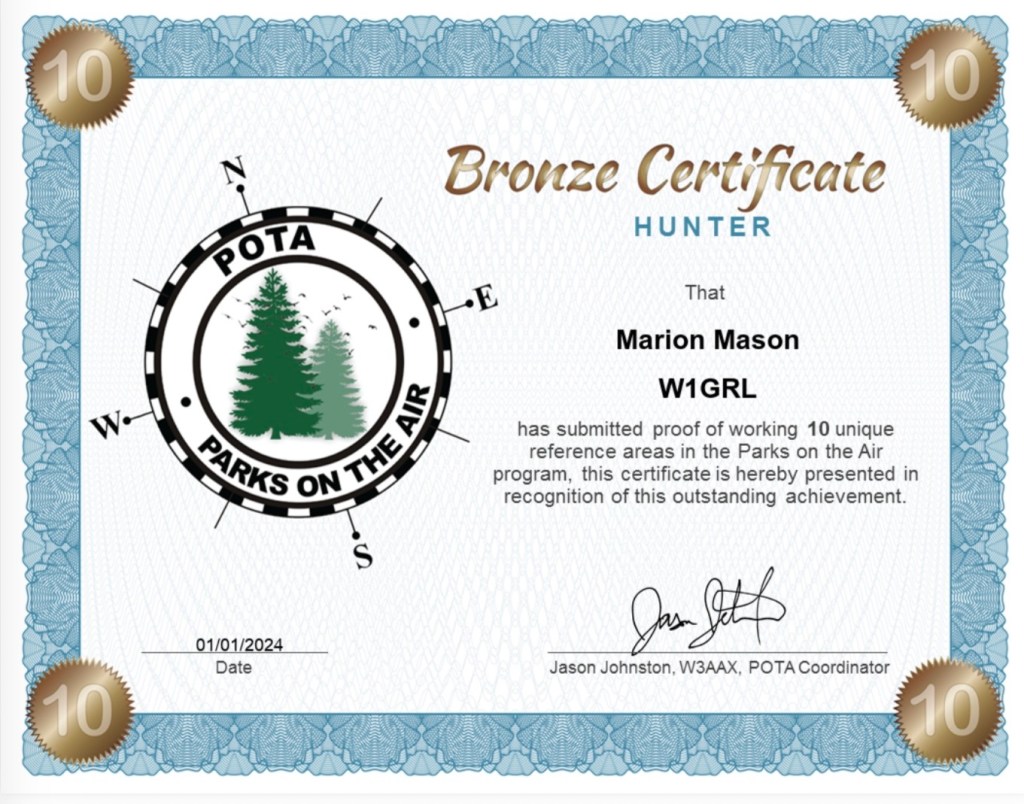
Written by Marion W1GRL

Join EAWA Members in the DX Marathon!

The EAWA and the DX Marathon program have crossed paths numerous times. Several EAWA members have participated in the program over the last couple of years. Last spring the program administrator, Mark WC3W, gave a Zoom presentation to the club. Also, the EAWA sponsors a winner’s plaque for the highest score in the Formula Unlimited Class. (The sponsorship was a gift from Marion W1GRL and Stan W1BOY to the EAWA as a way to honor the club for being the special group that it is!)

The DX Marathon homepage (dxmarathon.com)

The DX Marathon program is free, easy, and fun to participate in. “Free,” as in no fees or registration. It’s easy because all you need is an ADIF file that includes this year’s DX contacts — no filtering is needed on your part. You can give them your whole QRZ file or download from your logging program if you’d like. It’s fun to see what you have accomplished this year, and to see how you’re doing compared to others with similar power-levels and antennas. The program gives seasoned DX hunters a reason to contact the easy-to-find countries and CQ zones each year. Also, if you spend time in DX contests, you may be surprised at how high your DX Marathon score is!

In a recent email exchange with Marion W1GRL, Mark WC3W emphasized that ALL participants will receive a “beautiful” certificate listing all their accomplishments (including standing among EAWA submissions). Your score is the sum of the number of DX entities contacted and CQ zones worked in 2025. Operators may choose to enter a with a specific mode, such as digital only, or mixed modes. The DX Marathon is a program, not a contest, so all bands count toward your score )similar to the State QSO Party Challenge). There are overlays for youth and YLs. At the time of this writing there were 1,007 entries from hams around the world, including EAWA members Barbara KC1SSY, Phil N1EP, Stan W1BOY, and Marion W1GRL. Mark W1ABY was among those who entered in 2024.

The DX Marathon website Resources page (here) provides many useful links to find pirate calls, invalid call signs, and other issues. (Even if you don’t participate in the program, these tools are worth checking out.)

When you submit your file (here), it’s a good idea to use the Entry Editor that explains options and gives tips for choosing the best QSO to represent each entity. Recently, Marion W1GRL entered a mini DX Marathon sprint, didn’t bother with the Entry Editor, and promptly received 11 deductions because of invalid call signs, incorrect entities (call signs didn’t match expected entity), and incorrect CQ zones. It’s easy to mix up CQ and ITU zones on QRZ, in logging programs, WSJT-X, or other software. It’s worth a few minutes to go over the entries in your submission — Marion could have chosen different QSOs and saved those points.

If the Entry Editor doesn’t appear, click the HELP button in the top right to start it.

Once you’re satisfied with your submission, the website will present questions regarding your modes, power-levels and antennas in order to place your entry in the appropriate category. Don’t forget the EAWA! Use the dropdown box for clubs to find the EAWA. You can also choose whether to make your results public on the Leaderboard or keep them private.

The deadline for submissions is 7:00pm EST, Monday, January 5, 2026. So, in addition to planning New Year’s Resolutions and ham radio goals, perhaps you will also choose to post your DX contacts on the CQ DX Marathon website. It would be great to see the list of EAWA entries grow!
Written by Marion W1GRL

The Thanksgiving Ham

This article is the result of a simple question: When it comes to the hobby of ham radio, what are you thankful for? The responses were immediate, genuine, and passionate. The emotional depth of the responses demonstrated that ham radio is so much more than a hobby. This story tells itself, written in the words of the experiencers.

“My appreciation for our Amateur Radio community extends back to my very first encounters with those that would become my elmers. And my thankfulness continues now almost several decades into this wonderful hobby, for all those I’m privileged to know as volunteers or merely as a distant voice (or digital contact!) out there on the bands.”
–Andrew W1AXS

“I am thankful for the friendships and family that being a ham radio operator has brought me. The contacts with people all over the world who you are “part of the group” with. And locally, the family that accepted me as one of them when I got licensed and are now family to me. Ham radio gave me a purpose when I didn’t feel like I had a purpose. Ham radio is a community that I am a member of and that is what I am thankful for.”
–Barbara KC1SSY

Community – that’s the real answer.”
–Bill KC2NMK

“It’s all about the people. Sure, there’s equipment and things, but really, it’s all about the people.”
–Bob AB1EP

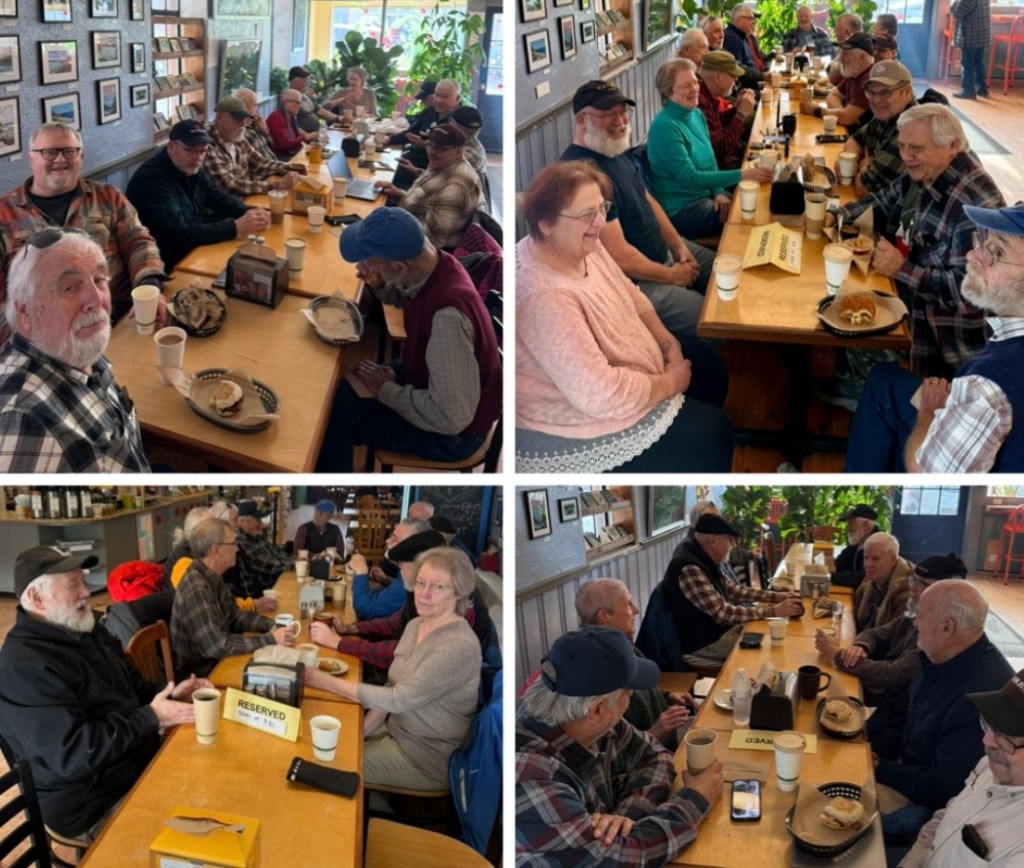
Clandestine Coffee on the day before Thanksgiving

“I just can’t put into words all the good things ham radio has brought to me.”
–Chuck AC1BS

“For me it is the education. I went to get a book on simple electronics and ended up a ham realizing there is no “simple” electronics. But there are endless opportunities every day.”
–Dick W1KRP

“I am thankful that I was introduced to this hobby when I was young. It put me on a path of learning and improving myself. It has always brought me joy and lifelong friends and mentors.”
–Jeff KA1DBE

“I am truly thankful for the friendships I have made with members of EAWA and the special people I have met through ham radio. The social aspect of ham radio has enriched my life: learning and sharing with others, including my father and my son; supporting others through community service; sharing the thrill of making that special contact. It has been fun building radios and antennas that actually work; a thrill making a Clean Sweep in Sweepstakes, working a station through a satellite, and making the contacts for a POTA activation. But it is the relationships with other hams for which I am most thankful.”
–Joan W1DLC

EAWA YLs – The Radio Sisters

“Getting that license and getting on the air pulled me out of teenage depression and literally saved my life. … I have met thousands of hams since and I am thankful for all the interesting people attracted to amateur radio. The EAWA has become something special for me and it is great to see how amateur radio and our club brings together many different people.” 
–John KQ1P

“I’m thankful for the my local ham community, who are like family to me, and the larger, world-wide ham community who have embraced me on this new journey. This hobby has become my lifestyle. I appreciate how it challenges me to learn and build new skills.”
–Marion W1GRL

“I like the challenges of the hobby. Whether it’s building an antenna, making a distant country contact or tuning the equipment for best performance. Also the camaraderie of the people has been excellent!”
–Mark W1ABY

“I am thankful for all of the club members who have shared their knowledge with and encouraged me at every step. I’m also thankful for the club members who showed me what I needed to do POTA because it combines my love of the outdoors with ham radio.”
–Matt KC1VLH

Community service and helping hands

“Just plain super thankful for not only the opportunities ham radio provides, but also for the service aspect of the “hobby.” I enjoy the technical side of it, the challenges, chasing new DX opportunities and the camaraderie we hams have with each other. Also, when I went to Montana this spring, I was given the opportunity to attend another club’s Field Day. No matter where you go there is a bond between ham operators. We’re like a brotherhood and sisterhood kind of fraternity. They welcomed me like I was one of their long term friends they knew for years. That is one of the great things about the service/hobby.”
–Matt W1MRH

“I’m thankful for being a part of this great group called the Ellsworth Amateur Wireless Association.”
–Mel W1MEB

Friendship, by far, is the best aspect of ham radio. It is what bonds us together in this amazing hobby. I am so thankful for the many friendships I have with hams throughout Maine, and beyond. … I’m thankful for the hams that step up in leadership positions.”
–Phil N1EP

“I am thankful for a hobby that both my wife and I enjoy whether we’re doing something together or independently.”
–Stan W1BOY

There is always an outlier who reminds us to enjoy each other’s company and to laugh! Phil N1EP also included, “I am thankful that Mel W1MEB will come to his senses and just gift me his amplifier, because I did buy him a piece of pumpkin pie. Equitable trade, no doubt!”

HAPPY THANKSGIVING to you, your family, and our special ham-ily!

Written by the EAWA, organized by Marion W1GRL

Simulated Emergency Test: Practice in Action

We should all be thankful for the ham radio operators who volunteer their time, energy, and equipment, to prepare for what we hope never happens. On Saturday, October 25, several members and friends of the EAWA participated the Maine Simulated Emergency Test (SET) Exercise. The VHF/UHF/HF component of the exercise tested the coordinated abilities of the local members of the Amateur Radio Emergency Service (ARES), the Radio Amateur Civil Emergency Service (RACES), and EmComm groups. They were challenged to communicate with other operators and agencies within their own counties, across counties, and across the state, just as they would if they had been called on to do so during a hazardous event.

Andrew Sankey W1AXS, the Hancock County EMA Director was Net Control for the Hancock County Net, coordinating information with other county EMA Agencies. Phil N1EP, the ARRL State Section Manager, served as Net Control for 4 nets, one held each hour during the exercise. Several EAWA members and friends checked into the statewide HF nets. Along with Andrew and Phil, EAWA members Barbara KC1SSY, the Hancock County Emergency Coordinator (EC), Jeff KA1DBE, and Matt W1MRH, participated in key roles during the event.

Although SETs are open to all licensed hams for participation, those with key positions have likely joined an organization designed to train and coordinate participation in exercises and real-time disasters. One such group is the ARRL’s ARES group. Members are licensed operators who have voluntarily registered their qualifications and equipment with their local ARES leadership.

You can learn more about ARES by exploring the ARRL’s ARES website at https://www.arrl.org/ares
This 34 minute YouTube, produced in 2024 by the New England ARES Academy, also provides a good introduction to the ARES program. You can view it here: https://www.youtube.com/watch?v=T8moBMuhe-A

Another group often called upon in emergencies and preparedness training is referred to as RACES (pronounced ray-seas), created by the Federal Emergency Management Agency (FEMA). This group consists of licensed radio operators who have been trained and certified by a civil defense agency. You can learn more about RACES at usraces.org

The SET exercise on Saturday also included a second component which tested the ability of members of the Shared Resources Group (SHARES) and local ham radio operators to communicate and pass along messages with very specific information. This arm of the SET exercise involved using WinLink to receive and respond to messages. Information flowed through a SHARES bulletin board service (BBS) via HF to amateur radio operators who responded by sending specific information back up the chain. More specifically, the goals of this test were to evaluate this method of obtaining specific information quickly from a large group of people, the ability to tabulate those responses into a spreadsheet, and then to pass that information to appropriate agencies. 

Through the SHARES program, amateur radio operators voluntarily work with national security and emergency preparedness (NS/EP) personnel to transmit critical messages when landlines and cellphones are not working.

You can learn more about this Department of Homeland Security program at https://www.cisa.gov/resources-tools/programs/shared-resources-shares-high-frequency-hf-radio-program

The purpose of any simulated exercise is to learn what processes worked well and which need exploration and improvement. Whether we participated or not, and whether we are licensed amateur radio operators or not — all of us benefit from our neighbors working through these exercises in preparation for any emergency. If you are interested in becoming active in local emergency communication efforts or want more information about the SET exercise, please contact Barbara KC1SSY through QRZ or the Contact Us page on this website.
Written by Barbara KC1SSY and Marion W1GRL

EmComms & the 2025 MDI Marathon: A Winning Pair!

Long before the running of the 22nd annual MDI Marathon began, members of the EAWA, Pine State Amateur Radio Club, and the Penobscot County ARES were making their way to various assigned stations, assembling power sources (batteries, generators, solar panels), radios and antennas, and testing their systems. Before the race began, there were check-ins to the net control and final tweaks. For the radio operators, this would be a 10-12 hour event.

Before daybreak Rob W8HAP, Mel W1MEB, and Stan W1BOY were busy in the Hancock County Emergency Management Agency trailer at the finish line, while (bottom photos) the spectacular sunrise signaled the time for the Emergency Coordinator, Barbara KC1SSY, and Marion W1GRL, to begin checking in with all the stations.

While there are many published stories about the struggles and celebrations of the runners, this is a story about the planning, preparation, and performance of these dedicated hams and family members, and friends who supported them. The thirty-two member EmComms crew worked together throughout the day to keep up with events along the race route, including the current top three male and female runners in both the full and half marathons, and runners who decided to leave and not complete the race. In the down times, operators were among the many spectators cheering on the hundreds of racers. Responsible for their own needs, operators also took advantage of down times for snacks.

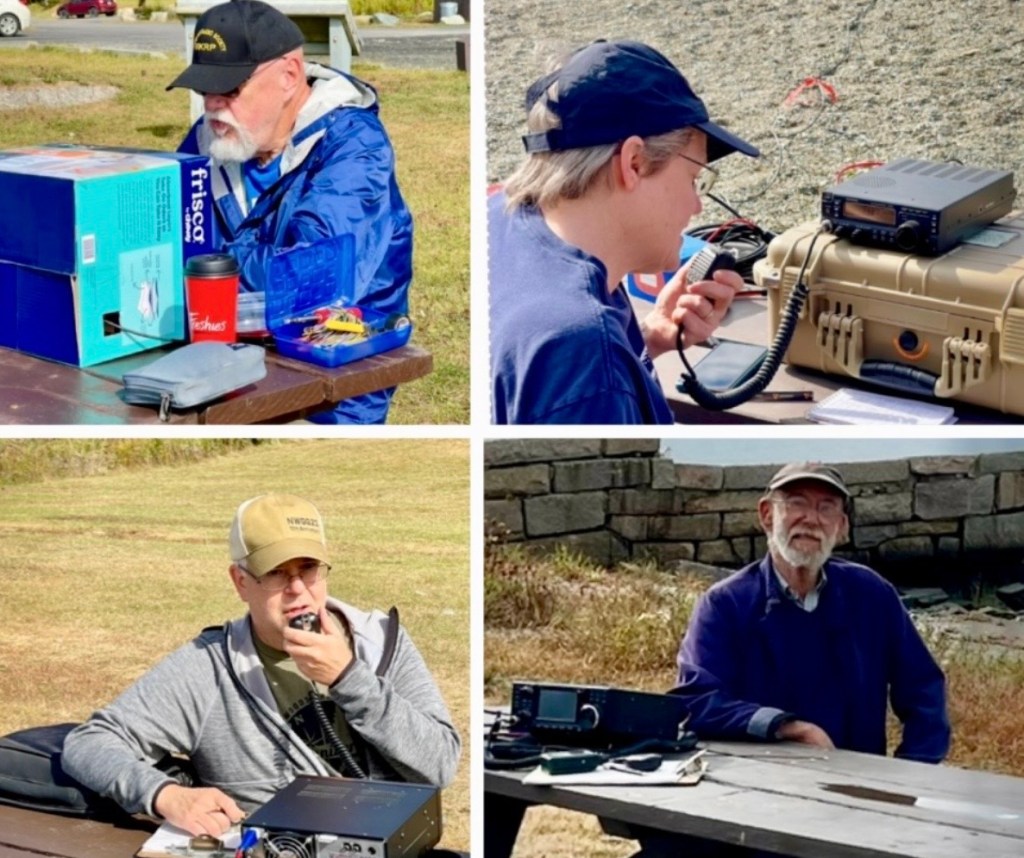
The following is a round up of photos of the 10 stations positioned along the race route. Not featured in the photos are the two hams riding with police in the lead and sweep vehicles, Olin KC1IRK and Greg KC1RID.

Top photos: Station 1 ( and moving to Station 8), Chris K1WJY and Andy N1WTQ, and Station 2, Jeff KA1DBE, Bernie KI4VCR, Amber (no call), and Chris KC1YDE. Bottom photos: Station 3 Mike KA1UMG and Fred KC1CMN.
Top photos: Station 4, Ed WI1Z and John K1QLN, and Station 5, Tom N1NEL and Mark W1ABY. Station 5 is also featured in the bottom photos.
Top photos: Station 6, Dave N1DAE, Matt KC1VLH, and Susan (no call). Bottom photos: Station 7, Joan W1DLC and Jean (no call).
Top photos: Station 9, Elias (no call), Luke KC1AXY, and Bill KC2NMK, and Station 10, Bill N1EMF and John K1JO. Bottom photos: Taking down the net control trailer, Mel W1MEB and Stan W1BOY.

The lion’s share of the work, starting months before the race, was done by the Hancock County Emergency Coordinator and EAWA member Barbara KC1SSY. She attended numerous meetings, gave a presentation for those involved at the last EAWA club meeting, and met with various participants working on different aspects of the event, such as mapping the course with the operator stations and working on the forms for recording information at net control. THANK YOU BARBARA! This operation would not be as well planned and professional without your efforts!

From the beginning, with Rob W8HAP starting the set-up, to Andrew W1AXS, the Hancock County EMA Director closing the last windows, the event was a success!

So much of what we do as hams, including the fun contests and operating portable in parks, is to hone our skills should we be called upon to help with an emergency. The MDI Marathon, along with the annual Field Day in June, are the two primary large scale exercises for the EAWA and friends. You probably won’t find us mentioned in any of the new stories about the marathon, and that’s how it should be! We blended in seamlessly in the race, and thankfully we weren’t tested with a real emergency. Thanks to everyone who gave up their Sunday, shared their equipment and expertise, and encouraged the runners, and performed with tasks with precision. We were a great team!
Written by Marion W1GRL