
With two large RTTY contests on the horizon, this is a good time to consider adding RTTY to your ham radio experience. If you are a RTTY operator, this a friendly reminder that the CQ World Wide RTTY WPX happens the weekend of February 14th, and the North American QSO Party RTTY is scheduled for Saturday February 28th. Unlike Phone or CW, it can be difficult to find a RTTY station to work outside of a contest. RTTY contesting is similar to other modes in that some hams enjoy the speed of running a frequency while others prefer the more causal pace of search and pounce.
Radio Teletype, abbreviated RTTY, refers to the use of a radio and modem connected to a basic teleprinter. Some call it the “original keyboard to keyboard mode.” Amateur radio use of RTTY became popular as the first generations of commercial teleprinters were being retired. As technology developed, the physical teleprinters were replaced with computers making the mode much more accessible. RTTY is a digital mode, often grouped along with FT8, JS8Call, and PSK31 in contests. RTTY uses Frequency Shift Keying (FSK) or Audio Frequency Shift Keying (AFSK) to transmit data at a standard 45.45 baud rate. It is less automated than FT8 and requires operator skill in tuning.
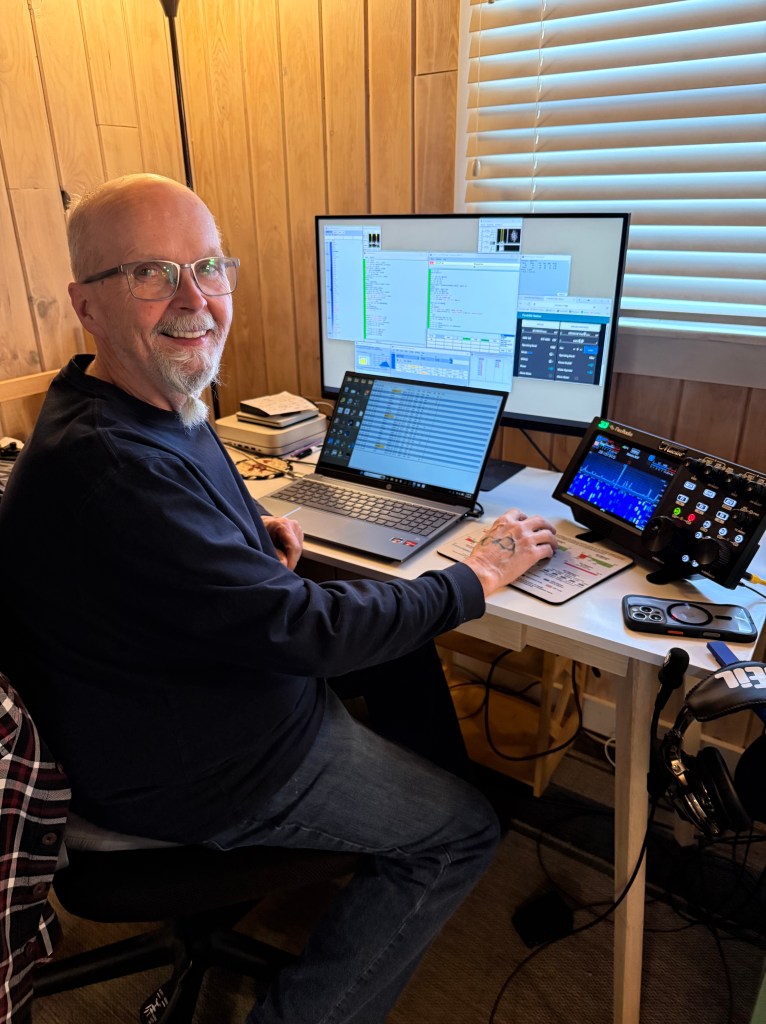
It’s often said that if your radio is configured for FT8, you can easily setup for RTTY with the addition of some software. Stan W1BOY put that claim to the test, and found RTTY contesting to be compelling and fun! His first RTTY contest experience was the Worked All Europe DX RTTY contest in November 2024. He was hooked and worked all of the major and many of the smaller RTTY contests in 2025. In fact, he has more RTTY contacts in his log for 2025 than any of the other mode and he’s looking forward to a better year in 2026!
RTTY is a relatively recent addition to Stan’s radio journey. His interest began when as a schoolboy he heard his principal taking about amateur radio. After being licensed in his early 20s, he was been active off and on as life got busy. Once retired and had more time, he focused mostly on station building and home-brew radios. When his wife, Marion W1GRL, decided to get active in the hobby, Stan started spending more time operating. RTTY suddenly became more attractive as a way to be in a contest, flex his technical muscles, and celebrate a traditional HF mode.
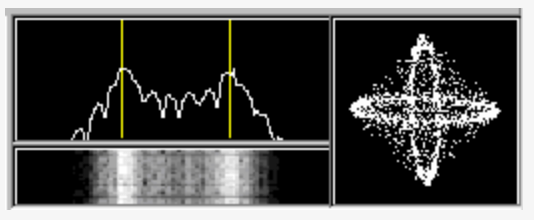
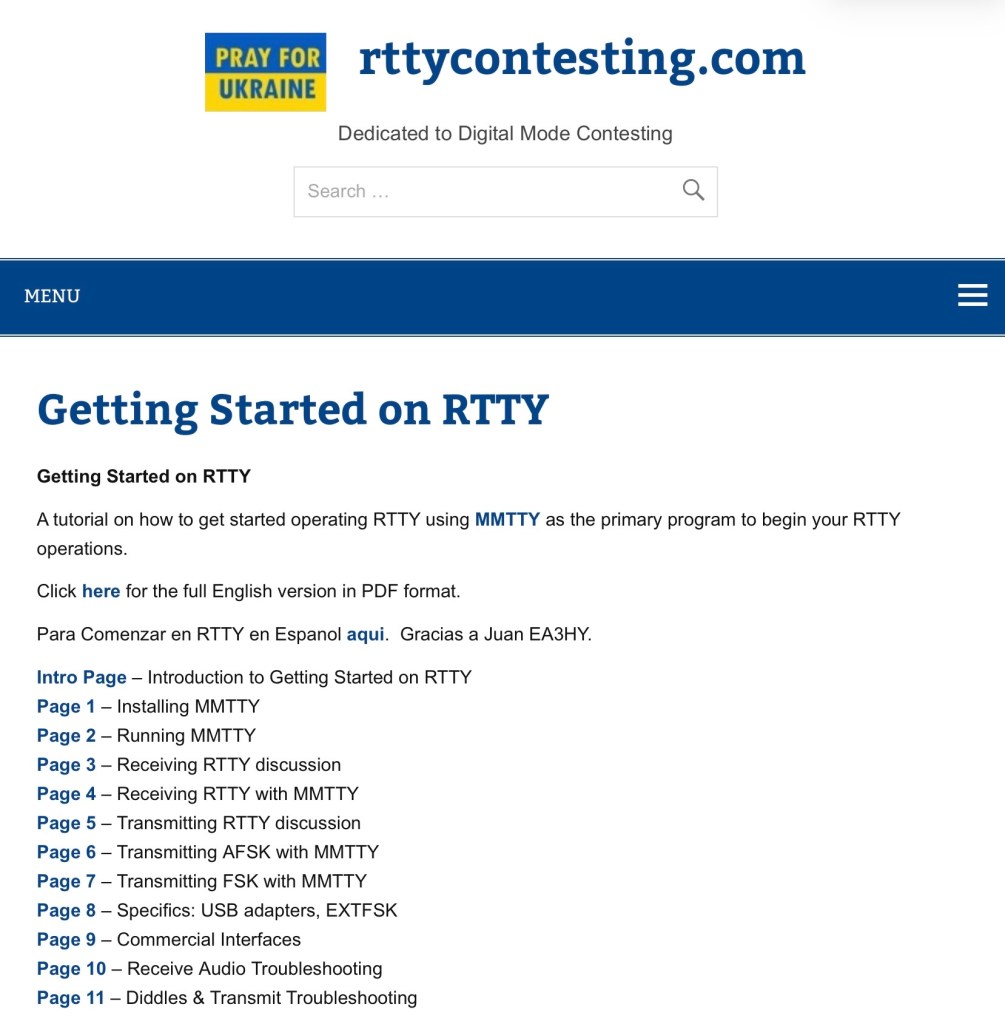
Tuning RTTY signals involves aligning the transceiver’s frequency so that two FSK or AFSK signals, comprised of ‘mark’ and ‘space,’ properly fit within the receiver’s passband. Typically, software tools such as MMTTY or 2Tone are used to match signal peaks on a waterfall or an X-Y display. Often operators will have two programs individually working to decode signals, watching to see which program is doing the best at the moment to pull out the accurate call sign or exchange. As mentioned above, if you’ve setup your radio for FT8, half of the work is done. Setting up RTTY involves using CAT to control your radio and using a modem to send and receive audio to and from the radio. For help with RTTY software and just learning more about the mode, Stan recommends https://www.rttycontesting.com/rtty/.
One of the best things about the ham radio hobby is that if you find the type of operating you really enjoy, then you can settle in and have fun! And if you are ready for a new challenge or just something different, there’s lots to choose from! RTTY provides a way to celebrate a long-standing amateur radio mode and enjoy either casual or serious contesting. Maybe you can give it a try in the upcoming contests.
Written by Marion. W1GRL
 W1TU
W1TU 