
You can see the joy on their faces and hear the commitment in their voices as Barbara KC1SSY and Bill KC2NMK talk about their respective roles in the Military Auxiliary Radio System (MARS). They volunteer their time, radios, and skills to assist in various operations in the U.S. Air Force and U.S. Coast Guard. MARS includes the U.S. Army, Navy-Marine Corps, Coast Guard, and Air Force.

Barbara KC1SSY has had some connection to the military for many years. In high school she was in the Civil Air Patrol, later served in the U.S. Air Force for 8 years in the 1990s, and has remained active in veterans organizations. As her interest in amateur radio grew and she gained her licenses, she also began to learn more about the MARS. At the 2024 HamXposition in Marlborough, Massachusetts, she took the opportunity to meet with MARS operators and decided to join.
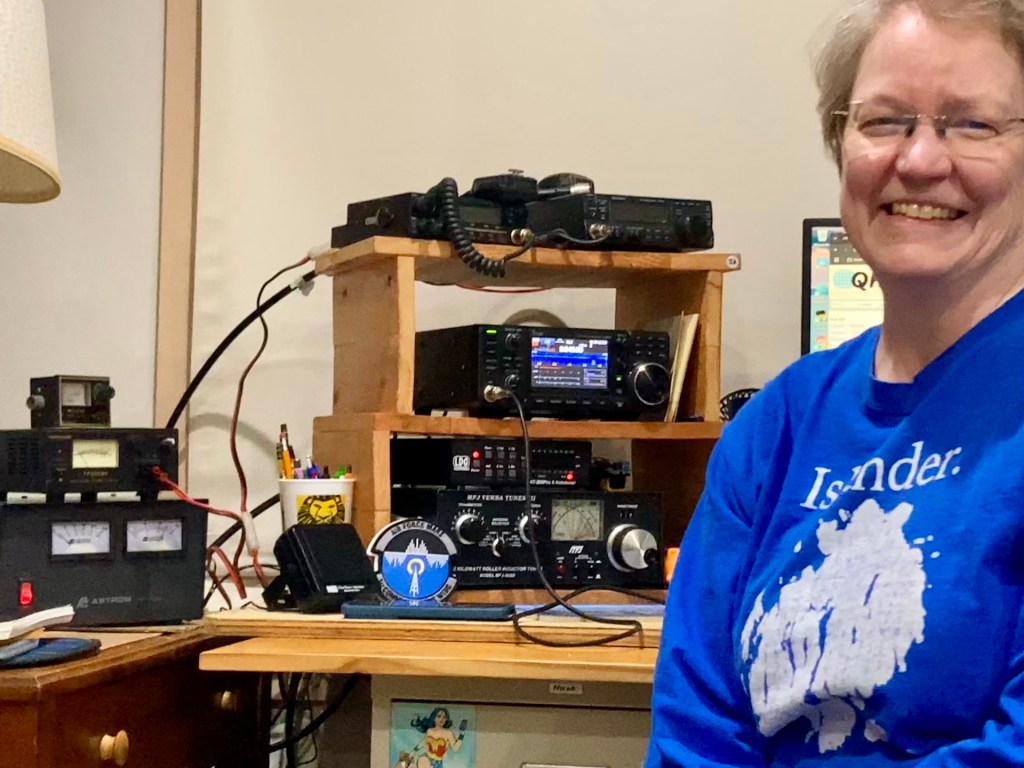
Barbara uses her equipment at home to execute her responsibilities.
Barbara is in the 1st wing of the U.S. Air Force MARS. The U.S. has 10 wings, with each operating up to two nets a day with digital and voice capabilities.They also engage in numerous preparatory exercises, from the wing to transglobal levels, along with providing services such as HF radio-telephone service for personnel. MARS support reaches to the DOD and the Pentagon by providing communications to airborne assets, message handling and delivery to the National Command Center. As a member of the MARS, Barbara spends approximately 8 to 10 hours a week in training or educational exercises and engagement with weekly nets. It’s clear that the friendships she’s made and the frequent contacts with MARS members brings Barbara much happiness and a sense of purpose.

Bill KC2NMK served in the U.S. Navy for 4 years in the 1970s, and then life took him in other directions. He reconnected with the military, specifically, the U.S. Coast Guard, when he relocated in Maine. After some inquiries, he quickly learned that amateur radio operations and being a part of the Coast Guard were good matches for him, and the station in Southwest Harbor, Maine, provided the perfect location.
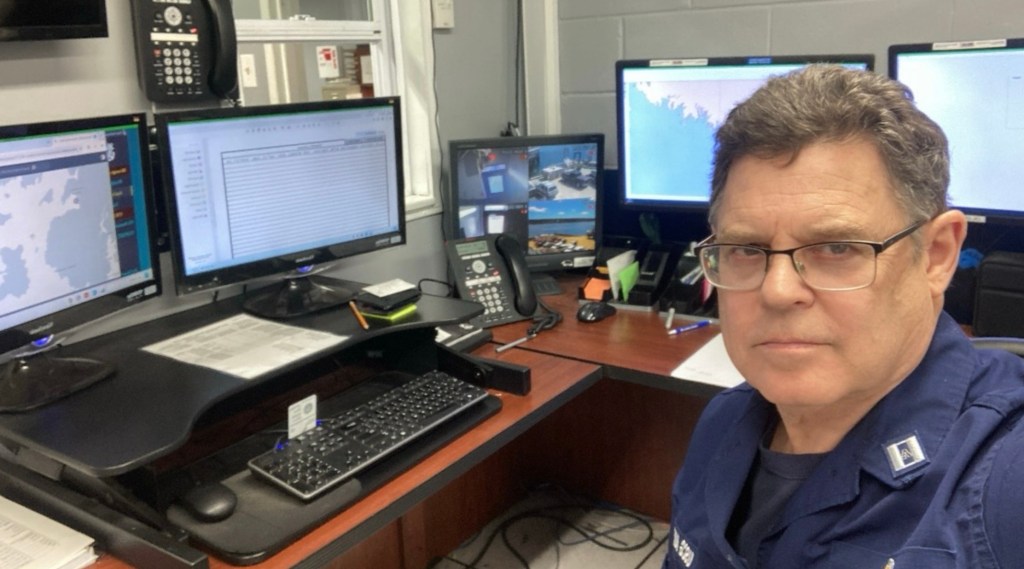
As a part of the U.S. Coast Guard Auxiliary Telecommunication system, Bill engages in many roles, including quality control for weather monitoring. One of his primary roles is to serve as a Watchstander. Along with telecommunications assets, Watchstanders use HF, VHF, and repeater communications to support surface and air missions, including Marine Domain Awareness and joint military operations. Watchstanders participate in preparatory exercises so that during the loss of normal communications they can provide radio-based support for alerting, personnel recall, and the distributions of messages to officers and agencies in need of such information. In addition, participating in regional and district nets is essential. Bill spends approximately 16 hours a week in his auxiliary work, with most of that happening at the coast guard station. During this interview, his biggest smile came as he talked about times he has received a phone call asking if he could come to the station to help out. Similar to Barbara’s account, it’s clear Bill finds much happiness and sense of purpose in his auxiliary role.

Both Barbara KC1SSY and Bill KC2NMK possess a wealth of knowledge and enthusiasm for their respective programs. It’s gratifying to know that, in addition to the many facets of radio operations most of us know, there is a strong, dedicated group working quietly to support our military personnel, exercises and missions.
Written by Marion W1GRL
 W1TU
W1TU 